


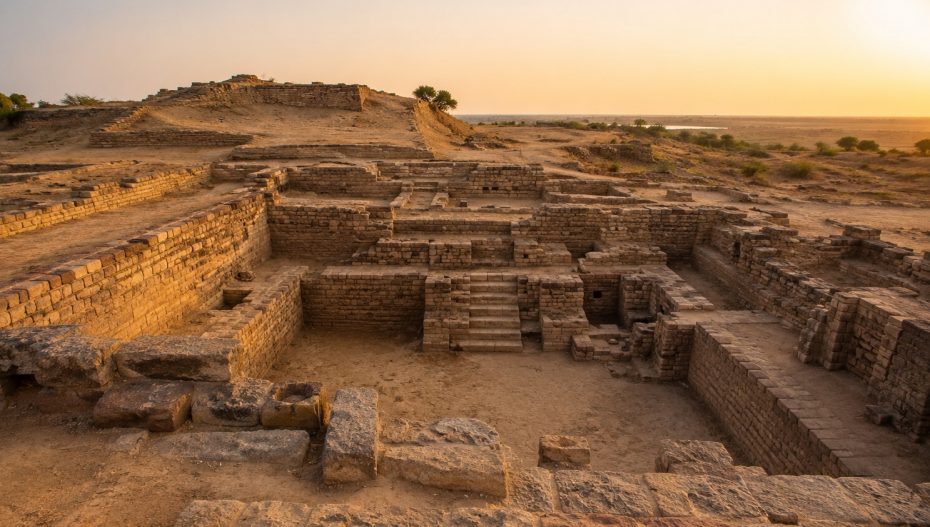
One of Gujarat’s greatest archaeological mysteries is set to be explored through a new international research partnership. Krantiguru Shyamji Krishna Verma Kachchh University (KSKVKU) and the University of Oxford have launched a three-year collaborative project to better understand how the Harappan civilisation thrived in the unique landscape of Kutch more than 4,000 years ago.
The partnership was formalised through a Memorandum of Understanding (MoU) signed earlier this year, and researchers have now begun work on the ambitious study.
Studying One of the World’s Oldest Urban Civilisations
The project, titled “Excavations at Dholavira and Associated Harappan Sites in Gujarat: Investigating Palaeo-Environments, Sea Levels and Early Seafaring Traditions,” aims to uncover how ancient Harappan communities adapted to changing environmental conditions and built successful settlements in what are now the Great and Little Ranns of Kutch.
The research is being co-led by Dr. Gaurav D. Chauhan, Assistant Professor and Head of the Department of Archaeology at KSKVKU, and Ajay Yadav, a DPhil candidate at the University of Oxford’s School of Archaeology, under the guidance of Professor Damian Robinson.
Why Did Harappan Settlements Flourish Here?
One of the biggest questions researchers hope to answer is why so many Harappan settlements were established across the islands of the Great and Little Rann of Kutch.
These regions are considered environmentally fragile today and are not ideal for large-scale agriculture. Despite these challenges, archaeological evidence shows that Harappan communities lived and prospered here between 2600 BC and 1900 BC.
Scientists believe these settlements may once have stood along active estuaries or coastal landscapes. If this theory is correct, the region would have provided easy access to inland and maritime trade routes, making it an important centre for commerce and cultural exchange during the Harappan period.
Looking Back 8,000 Years
To understand how the region has changed over thousands of years, the research team will study environmental changes dating back nearly 8,000 years, during the mid-Holocene period.
The project brings together experts from different fields, allowing scientists to examine the past from multiple perspectives rather than relying on archaeology alone.
Modern Science Meets Ancient History
The research will use a wide range of modern scientific methods to better understand life in ancient Kutch.
These include archaeological excavations at the fortified city of Dholavira, GIS-based mapping to study ancient landscapes, pottery analysis to trace trade and movement, and ancient DNA (aDNA) studies to distinguish between marine and land-based environments.
Researchers will also examine local place names, folklore and traditional memories related to seafaring. These cultural records could provide valuable clues about ancient coastlines and help reconstruct landscapes that have changed dramatically over time.
Understanding Climate, Trade and Sea Levels
The findings are expected to provide fresh insights into how changing sea levels and shifting coastlines influenced Harappan settlements.
Researchers hope the study will reveal how ancient people adapted to environmental changes, developed trade networks and used maritime routes to support thriving communities. The project could significantly improve our understanding of the role that the sea played in the growth and survival of Harappan civilisation in western India.
Fieldwork Already Underway
Preliminary surveys have already been conducted in the western Thar region and across the Great Rann of Kutch to identify priority research areas and prepare excavation strategies.
The project will now move into a more intensive phase, with one major excavation season planned every year at Dholavira between December and March.
During the months between excavation seasons, researchers will focus on laboratory analysis, interpreting discoveries and combining data from different scientific disciplines.
A Step Forward for Indian Archaeology
Experts believe this collaboration brings together India’s deep archaeological knowledge with Oxford University’s international research expertise. By combining field excavations, advanced scientific techniques and historical evidence, the project has the potential to answer long-standing questions about one of the world’s earliest urban civilisations.
As the three-year study progresses, it is expected to provide a clearer picture of how the Harappans lived, traded and adapted to changing landscapes in Kutch—offering new insights into India’s rich ancient past and the remarkable story of Dholavira.
Also Read: Dholera Village Turns Island As Bhogavo River Overflows Near Greenfield Smart City Hub https://www.vibesofindia.com/gujarat-floods-vanitalav-bhal-village-island-bhogavo-river-overflows/