


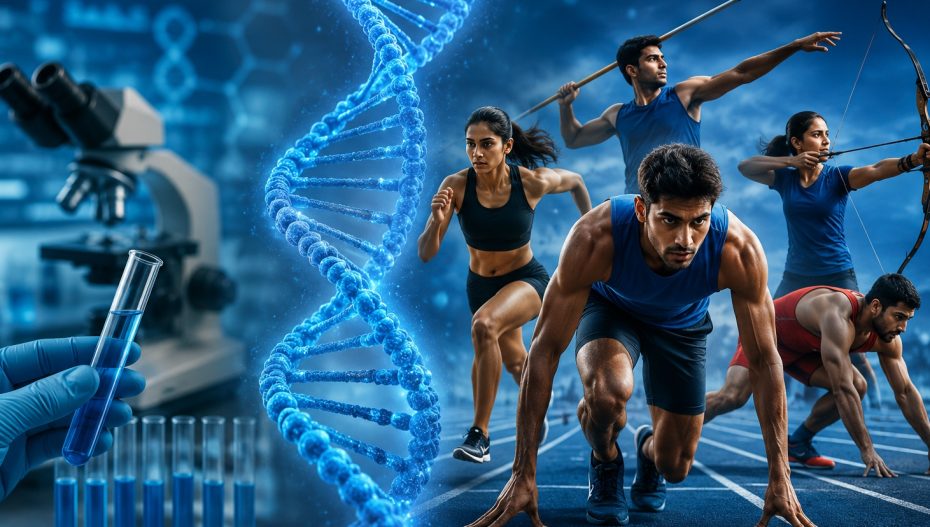
Gujarat is taking a new approach to finding and developing sporting talent by looking beyond traditional trials and physical performance. The state has started collecting DNA samples from athletes as part of a sports genomics programme that aims to understand how genetic, physical and performance-related factors may help in identifying promising athletes and improving their training, recovery and injury management.
The initiative is being implemented by the Gujarat Biotechnology Research Centre (GBRC) under the state’s Department of Science and Technology. At the centre of the programme is the proposed Gujarat Athlete Genome Database (G-AGD), which will bring together athletes’ genetic information with their physical and sports-performance data.
Using Genetics Alongside Sports Science
The programme is designed to combine genomics with sports science, physiology and nutritional science. The objective is to create a more detailed and evidence-based understanding of individual athletes.
According to the state, sports genomics can help researchers study whether certain genetic variations are associated with characteristics such as muscle composition, endurance, metabolism, response to exercise, recovery and susceptibility to injuries.
The information could then be used to help identify promising talent, understand possible injury risks and develop more customised approaches to training and nutrition.
Science and Technology Minister Arjun Modhwadia has described the programme as the first of its kind in India. The initiative is intended to bring a scientific approach to talent identification and athlete development instead of relying only on conventional methods.
From Tennis Players to More Sports
GBRC scientists have already started collecting DNA samples from athletes involved in different sporting disciplines.
The first phase of the programme covered tennis players associated with the Gujarat State Tennis Association. The next phase is expected to include athletes in archery, fencing, judo and shooting associated with the Vijayi Bharat Foundation.
The state plans to collect and analyse around 2,000 samples during the current year and expand the programme to 10,000 samples over the next five years, according to Digvijaysinh Jadeja, mission director of the Gujarat State Biotechnology Mission.
The programme will cover athletes across different age groups, including children below 14, athletes aged 14 to below 18, and those above 18. State and national champions will be given priority.
A Database Covering 19 Sports
The proposed Gujarat Athlete Genome Database is planned to cover athletes from a wide range of sporting disciplines.
These include athletics, swimming, boxing, wrestling, judo, taekwondo, gymnastics, fencing, football, hockey, handball, volleyball, basketball, badminton, table tennis, lawn tennis, kabaddi, kho-kho, archery, shooting and chess.
By combining genetic, physical and performance information, officials hope to develop a more comprehensive profile of individual athletes.
P Bharathi, secretary of the Department of Science and Technology, said the approach represents a shift from the traditional way of discovering sporting talent. Talent has historically been identified through physical characteristics, coach observations and trials. Gujarat’s model aims to add genetic and biological information to those existing methods.
What Could Sports Genomics Help With?
Sports genomics is being explored for its potential to understand why athletes may respond differently to exercise and training.
The programme will examine whether genetic variations are connected with factors such as endurance, muscle characteristics, metabolism, recovery and injury susceptibility. Such information could potentially help coaches and experts understand an athlete’s strengths and limitations more closely.
Officials believe this could support talent identification, injury-risk assessment and customised training and nutrition plans.
However, the programme is not being presented as a replacement for traditional sporting skills or coaching. Instead, the aim is to combine biological information with existing physical and performance assessments to build a broader picture of each athlete.
Gujarat Sets Large-Scale Sampling Target
The programme has ambitious targets for the coming years. Around 2,000 DNA samples are expected to be collected and analysed this year, with the number planned to reach 10,000 over the next five years.
The database will cover athletes from different age groups and sports, while giving priority to those who have already demonstrated strong performance at the state or national level.
The larger database could allow researchers to study patterns across different sporting disciplines and age groups as more samples are collected.
Programme Gains Importance Ahead of 2030 Commonwealth Games
The initiative comes as Gujarat prepares to host the 2030 Commonwealth Games in Ahmedabad, giving the programme added importance.
Officials believe scientific profiling could help the state identify promising athletes and prepare them for competition at national and international levels. The broader goal is to use science and data to support the development of athletes over time.
With the programme expanding beyond its initial tennis phase, the state is looking to create a system in which sports talent can be studied through a combination of genetics, physical characteristics, performance data, training and nutrition.
Data Protection Will Be Critical
The collection of genetic information also brings an important responsibility: protecting athletes’ personal and biological data.
Officials have said genomic information will need to be handled with strict safeguards. A two-level barcoding system has been proposed to protect athletes’ identities.
Controlled access and responsible use of the information will also be important as the database grows.
The success of the programme, therefore, will depend not only on how effectively genetic and sports data can be studied, but also on how carefully the sensitive information of athletes is protected.
For Gujarat, the initiative represents an attempt to bring biotechnology and sports science together in the search for future champions, moving talent identification towards a more data-driven and scientific approach.
Also Read: Ahmedabad Peaceful Reading Session Turns Violent: Bajrang Dal Attack Youth, Tear Books