Maharashtra has been seeing a steady rise in protests over the past few months, with people from different sections of society taking to the streets over issues ranging from farm loans and land acquisition to education, reservations, recruitment exams, women’s welfare and environmental concerns.
The protests are not limited to one community or one part of the state. Farmers, students, tribal groups, women, doctors, social organisations and local residents have all raised their voices over issues that directly affect their lives.
Some of these agitations have received widespread attention, while others have remained largely local. But taken together, they present a larger picture of a state where several groups are demanding answers from the government.
The latest developments have brought this growing protest activity back into focus. On October 2, the Cockroach Janata Party (CJP) staged a protest in Mumbai demanding the removal of Chief Election Commissioner Gyanesh Kumar. The Thackeray cousins also held a protest on a similar issue.
At the same time, a group of tribal students began a march from Nashik towards Mumbai, bringing attention to concerns faced by tribal students.
But these are only the latest additions to a longer list of protests across Maharashtra.
Students are also increasingly on the streets
Students have been another major group involved in protests.
A long-running agitation has involved aspirants preparing for Maharashtra Public Service Commission (MPSC) examinations. For more than two years, students have raised concerns about examination fees, online examinations, delays in results and alleged irregularities.
The appointment of Vivek Bhimanwar as MPSC chairman further intensified the protests.
Education-related concerns have also appeared elsewhere. Students in Pune protested against hostel-related rules, while the deaths of tribal students in Gadchiroli following snake bites brought renewed attention to the living and safety conditions of students staying in hostels.
Medical students and professionals have raised their own concerns. In September 2026, resident doctors and interns at government medical colleges across Maharashtra protested against the proposal to allow homoeopathy practitioners to be registered with the Maharashtra Medical Council.
At IIT Bombay, students have also been protesting following the death of student Sahil Wakode on September 18.
Reservation and community issues
Reservation has emerged as another major flashpoint.
Social activist Manoj Jarange-Patil went on a 20-day hunger strike demanding reservation for the Maratha community. The issue, in turn, led to counter-mobilisation by OBC organisations, which accused the government of weakening existing OBC reservation safeguards.
Meanwhile, members of the Dhangar and Banjara communities have also been holding protests seeking Scheduled Tribe status.
So while the demands are different, the underlying issue remains similar: communities are seeking greater recognition, representation or protection of their interests.
Farmers’ concerns remain a major trigger
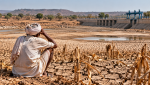
Agricultural issues have continued to bring farmers onto the streets.
In June and July 2026, farmers protested seeking relaxation in the eligibility criteria for the Punyashlok Ahilyadevi Holkar farm loan waiver scheme.
The issue resurfaced in September, when the All India Kisan Sabha organised protests demanding a ₹2 lakh incentive for farmers who regularly repay their crop loans.
Earlier, onion growers had also taken to the streets. In June, farmers blocked the Pune-Nashik highway to demand a minimum support price for onions, highlighting the continuing concerns over agricultural prices and farm incomes.
Land acquisition has emerged as another major issue. Farmers in western Maharashtra and Marathwada have been opposing the proposed Shaktipeeth road project for around a year, with many objecting to the acquisition of their agricultural land.
Women and welfare issues add another layer
Women beneficiaries of the Majhi Ladki Bahin scheme who were left out of the programme have protested, alleging that the exclusion was unfair and discriminatory.
Women’s groups and citizens have also organised demonstrations in Pune, Nagpur and Mumbai in solidarity with survivors of sexual violence across the country.
Tribal students bring their concerns to Mumbai
The march by tribal students from Nashik to Mumbai has added another dimension to the ongoing protests. Their mobilisation has drawn attention to issues affecting tribal students and their access to basic facilities, particularly hostel infrastructure and safety.
Their march also reflects how local issues are increasingly being taken to the state capital, where protesters hope their demands will receive greater political and administrative attention.
From railway routes to environmental concerns
Not all of Maharashtra’s protests are linked to politics, agriculture or reservation. In August 2026, residents across Pune, Nashik and Ahilyanagar participated in a road blockade demanding the restoration of the original direct railway alignment between Pune and Nashik.
Environmental concerns have also triggered protests.
In Nashik, citizens and environmental groups have been opposing the cutting of trees linked to preparations for the upcoming Sinhastha Kumbh Mela.
In Pune, residents protested against the use of DJs during festivals and religious events, demanding a blanket ban on their use because of concerns over noise pollution.
Data centre project faces local opposition
A proposed hyperscale data centre in Thane has also become a point of contention. Residents of Balkum, Majiwada and Dhokali have protested against the project, raising concerns about its expected consumption of resources.
The proposed facility is expected to require around 422 MW of electricity, use approximately 125 kilolitres of treated water every day and have 193 diesel generators on standby.
For residents, the debate is therefore not simply about a new technology project but also about its potential impact on local power, water and environmental resources.
A state where grievances are appearing on many fronts
What makes Maharashtra’s current protest landscape notable is the sheer variety of issues.
A farmer is demanding better returns and relief from debt. An MPSC aspirant wants a more reliable examination system. A tribal student is demanding safer and better hostel facilities. Women are questioning exclusion from welfare schemes. Communities are fighting over reservation. Residents are opposing projects they believe could affect their land, water or environment.
Even political and institutional issues have found their way onto the streets, as seen in the recent protests concerning the Election Commission.
These are separate movements with different demands and different groups behind them. They should not necessarily be treated as one coordinated wave of agitation.
But together, they show something important about the current mood in Maharashtra.
People across different sections of society are increasingly choosing public protest to make their concerns visible.
Also Read: Power Poles, Crop Insurance & Protests: Why Gujarat’s Farmers Are Fighting On Multiple Fronts