


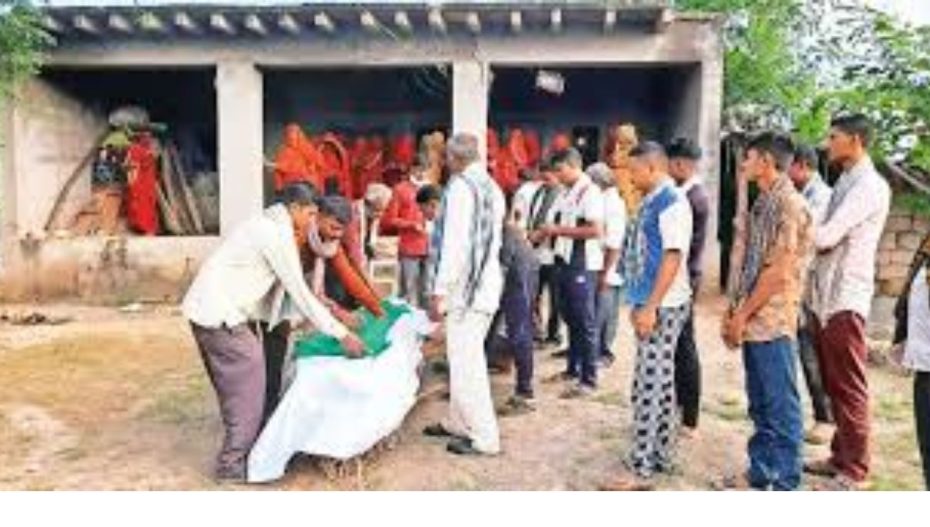
Pakistan on Friday handed over the body of a 37-year-old fisherman from Gujarat who died last month while lodged in a Karachi jail, once again drawing attention to the long-pending issue of Indian fishermen held across the border.
The deceased has been identified as Bhagabhai Bambhaniya, a resident of Chikhli village in Una tehsil of Gir Somnath district. Officials said the body was transferred to Indian authorities at the Wagah border in Punjab on Friday morning.
According to media reports, a team from the Gujarat government’s Fisheries Department received the body and began the process of transporting it back home.
“The body was handed over around 10.30 am. After completing the necessary documentation, it will be flown to Ahmedabad and then taken to his native village in Gir Somnath,” a senior fisheries official said, adding that it is expected to reach Una by Saturday.
According to community representatives, Bambhaniya was detained by Pakistani authorities in February 2022, after his boat allegedly strayed into Pakistani waters — a common occurrence in the poorly demarcated maritime boundary of the Arabian Sea.
He is survived by his mother, wife, three children and a brother.
The death was first reported publicly in January by peace activist and journalist Jatin Desai, who has for years raised concerns about Indian fishermen imprisoned in Pakistan.
Desai pointed out that Bambhaniya had already completed his sentence, and his nationality had been verified, yet he remained behind bars.
Under the 2008 Bilateral Agreement on Consular Access, both India and Pakistan are supposed to release and repatriate prisoners within a month of confirmation of nationality and completion of sentence.
However, activists say the reality is very different.
“The agreement is there on paper, but most fishermen remain in jail long after their sentences are over,” Desai had said in his earlier statement.
The incident has renewed concern for the nearly 200 Indian fishermen currently lodged in Pakistan’s Malir Jail in Karachi, most of them belonging to Gujarat and the Union Territory of Diu. At least 19 fishermen are from Maharashtra, officials and activists said.
Fishermen are frequently arrested on both sides when boats cross the maritime boundary unintentionally. Once detained, many remain imprisoned for years due to delays in legal procedures, nationality verification and diplomatic clearances.
Families of detained fishermen have repeatedly approached Indian authorities seeking faster repatriation.
In December, a delegation of women from fisherfolk families met External Affairs Minister S. Jaishankar in New Delhi and submitted a representation urging the government to expedite the release of Indian fishermen in Pakistani custody.
Such meetings have taken place over the years, alongside petitions by civil society groups and appeals by peace activists, highlighting the humanitarian aspect of the issue.
Activists have also expressed alarm over the conditions inside Malir Jail, claiming several fishermen suffer from poor health and inadequate medical care.
“Every year, three to four Indian fishermen die in Malir Jail,” Desai had warned, adding that prolonged detention and uncertainty have left families distressed and prisoners losing hope of returning home.
As Bambhaniya’s body makes its final journey back to Gir Somnath, his death has once again underscored the urgent need for a sustained mechanism to ensure that fishermen who have completed their sentences are brought home without delay.
Fisherfolk leaders in Gujarat said Bambhaniya’s death has once again exposed the human cost of prolonged detentions. Community representatives have long demanded that both countries create a faster, humanitarian process for the return of fishermen, many of whom are poor daily wage earners who accidentally drift across maritime borders. Over the years, India has periodically shared lists of detained fishermen with Pakistan and sought their early repatriation through diplomatic channels, while occasional prisoner releases have taken place as part of goodwill measures. However, activists say the absence of a regular, time-bound mechanism means families continue to wait for years, even after sentences are completed and nationality is confirmed.
Also Read: Government Says 2661 Indian Fishermen Repatriated From Pakistan Since 2014 https://www.vibesofindia.com/government-says-2661-indian-fishermen-repatriated-from-pakistan-since-2014/