Dogs have worked alongside humans long before uniforms and badges existed. In Gujarat, that ancient bond is now being harnessed as a modern policing tool.
The Gujarat Police K9 squad has achieved breakthroughs in recent cases with canine-led operations.
The state’s dog squad draws on Labradors, German shepherds, Dobermans, Belgian shepherds and Belgian Malinois. Each breed is selected for a specific role. All are trained for focus, aggression control and loyalty under pressure, according to reports.
These are not ordinary pets pressed into service. From a young age, the dogs are moulded into reliable assets for law enforcement and security. The training programme is reportedly headed by Col Chandan Singh Rathore (retd) at the State Police Dog Training Centre in Naroda, Ahmedabad.
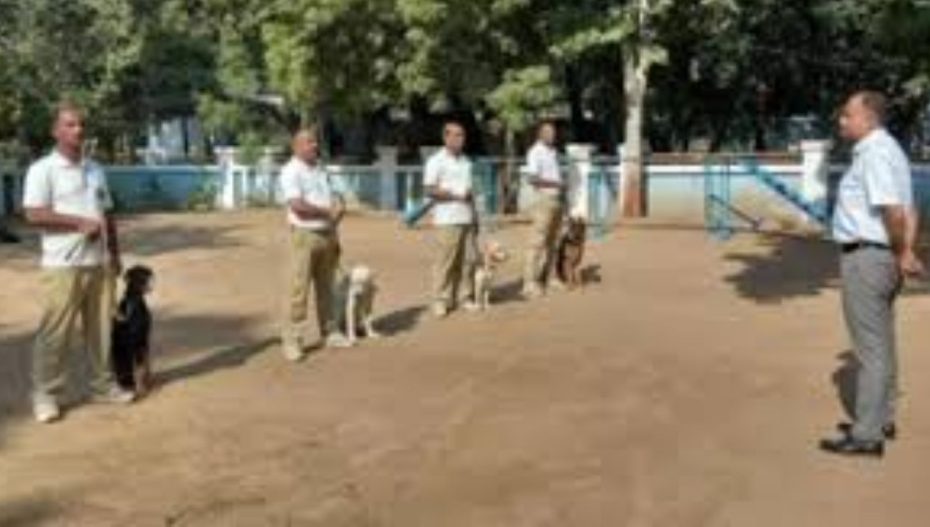
Gujarat Police has more than 250 dogs deployed across districts. Rathore told a section of the media while overseeing morning drills at the centre. Nine cadets are currently undergoing structured training, with emphasis on discipline and task-specific skills.
For example, nine-month-old cadet Creta is being taught to sniff out a narcotic. She is exposed to the scent many times so that she can single it out from a mix of other smells when required.
The work is operationally serious for the force, but the dogs experience it as play. Every pup begins with a three-month obedience course. This phase forms the base of its working life. A test follows. Training is extended only if gaps remain, which is uncommon.
Specialisation comes after that. Police headquarters decides how many dogs from each batch will be trained for tracking, explosives detection, narcotics or alcohol detection, and assault duties. Commands in Hindi are reinforced with praise and food rewards.
Correct behaviour is rewarded. Punishment is not used. If a dog fails to respond or responds incorrectly, treats and praise are withheld. Rathore says this method keeps motivation high while shaping precision.
Assault and alcohol detection are the newest disciplines added to the programme. A first batch of five assault dogs has recently been inducted into the Chetak and marine commando units.
Breed lineage is treated as essential. The force sources three-month-old pups from breeders registered with the Indian Kennel Club. Gujarat Police has also set up its own breeding centre under the direction of the director general of police, which recently produced 30 pups.
Each pup is paired early with a handler and sent to the handler’s district. Over the next three months, the two develop familiarity. At six months, the dogs report to the academy. Before training begins, they are assessed on 10 globally accepted parameters covering temperament, drive and aptitude.
A handler and his dog operate as a unit. Both move towards danger first. One understands the risk. The other believes it is a task to be completed. Communication goes beyond commands, extending to leash pressure, body movement and eye contact.
Handlers must lead the partnership, Rathore explains. They are expected to be alert, physically capable and emotionally attuned to their dogs. Inadequate handling can compromise operations ranging from narcotics detection to bomb searches.
Sniffer dogs are trained to detect narcotics, explosives, arms and alcohol. Training lasts six months. Dogs are exposed to explosives used by civilians, the military and terror groups, as well as chemical and natural narcotics. They are also conditioned to remain silent on detection to avoid triggering sound-activated devices.
This expanding canine programme had been reinforced with new tools and expertise. Gujarat Police had procured explosives and narcotics scent kits from the US-based firm Scentlogix at a cost of Rs 23 lakh. The kits replicate odours without containing actual substances, helping avoid procedural complications and the risk of misuse, according to director general of police (Training) Vikas Sahay.
According to an earlier report, the Gujarat Police K9 squad had a sanctioned strength of 158 dogs and handlers. Thirty-two were deployed with bomb detection and disposal squads, six with Chetak commandos, and the rest across commissionerates and district headquarters. Some dogs are deputed to railway authorities. Qualified dogs and handlers were periodically recalled for 45-day refresher courses.
Also Read: Cadaver Dogs Deployed in Telangana Tunnel Rescue Operation https://www.vibesofindia.com/cadaver-dogs-deployed-in-telangana-tunnel-rescue-operation/