

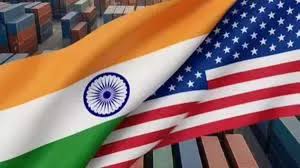
For much of the past two decades, the India–US relationship has deepened across defense cooperation, expanding trade, counterterrorism, and shared concerns about China’s growing influence in Asia. The two democracies have consistently projected alignment, not just in strategic interests, but also in their commitment to democratic values.
Naturally, a strain in the India–US relationship impacts not only India but hits Gujarat the hardest.
As one of India’s leading export hubs, Gujarat accounts for over a quarter of India’s total exports, especially in textiles, leather goods, and pharmaceuticals — key sectors in India–US trade.
It deserves mentioning that Surat is renowned for textile and diamond processing sectors, producing synthetic fabrics and garments that find substantial demand in the US market.
Ahmedabad stands at the forefront of India’s export sectors, particularly in textiles, chemicals, and footwear, making it a critical player in the trade relationship with the US.
In the fiscal year 2024–25, Gujarat alone accounted for 26.6% of India’s total exports. This makes the state’s economy deeply intertwined with the US market and extremely vulnerable to any shifts in bilateral policy.
As is well-documented, the US has hiked tariffs (first to 25%, and later to 50%) targeting key Indian exports such as textiles and leather goods.
And Gujarat, like the rest of India, has bled deep. These tariff increases threaten millions of jobs in hubs such as Surat and Ahmedabad. And it has put economic stability and livelihoods at serious risk.
But who would have thought things would come to such a pass?
Trouble in friendship’s paradise
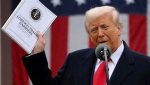
The recent events are ironic given that the US–India bonhomie appeared to reach a high point during Donald Trump’s presidency, with Indian Prime Minister Narendra Modi going so far as to personally campaign beside Trump at joint rallies.
But, as a US daily notes, the US–India relationship has sharply deteriorated under Donald Trump’s second term. What has caused this strain?
To recap the recent well-documented events, Trump reportedly grew resentful after India failed to publicly acknowledge the US’s role in brokering a ceasefire with Pakistan. India rejected the US president’s claim that he had threatened to stop trade with India and Pakistan to get them to agree to a “ceasefire.”
Trump’s frustration is as much personal as strategic; accustomed to public displays of loyalty and praise, the lack of acknowledgment from Modi stoked his resentment.
Pakistan, the daily notes, lavished praise on the US president and even suggested Trump deserved a Nobel Peace Prize.
This perceived snub added to Trump’s mounting frustrations over India’s continued purchases of Russian oil. The US president used strong words publicly calling the alliance a “Russia–India nexus.”
Can India be faulted?
For a background, after Russia invaded Ukraine, few countries bought Russian oil. India was one of the exceptions. India has had a long history of fruitful partnership with Russia. Russian oil was also available at a discounted price.
The Modi government was concerned about inflation and its potential impact on elections — especially after nearly a decade in power.
As the US daily observes, India bought Russian oil under the G-7 price cap. This ensured India did not violate international norms or Western sanctions.
Still, there’s a perception that India has been importing oil in excess of its needs. Trump’s former trade advisor Peter Navarro alleged that a couple of large Indian firms were buying cheap Russian crude, refining it, exporting the finished products, and raking in billions. In short, India was accused of profiteering.
India’s multipolar foreign policy — which includes maintaining ties with Russia while deepening cooperation with the US — adds another layer of complexity.
It’s abundantly clear that this strategic balancing act doesn’t sit well with Trump’s transactional view of alliances and his general ‘my way or highway’ policies.
That framing reflects his broader belief that India reaps the benefits of US goodwill without offering enough in return. The result: a dramatic shift in tone and policy, including aggressive tariff hikes on Indian goods.
Collateral damage beyond trade
Compounding the economic strain, the US has also increased H-1B visa fees. It has adversely impacted thousands of Indian professionals. The move strained ties with the Indian diaspora, a crucial pillar of power in the relationship, whose influence is often undermined.
The fallout poses serious economic risks for Indian export sectors. And needless to say, when India–US sneeze, Gujarat catches pneumonia.
It also sends a broader message: that PM Modi’s personal diplomacy, once seen as a strategic asset, may no longer be enough to manage complex bilateral interests.
As the US daily notes, PM Modi has long cultivated an image of a global statesman, a “teacher to the world,” who elevated India’s standing on the international stage, especially in dealings with major powers. But, his inability so far to manage this version of Trump, when others seem to have navigated him more deftly, risks puncturing that perception.
Domestically, PM Modi’s more perceived vulnerable flank has always been the economy: jobs, livelihoods, and day-to-day growth.
How long can he defy political gravity? With Trump’s stance hardening, further retaliation could follow, especially if the perceived slights continue. India will be watching. But few will be watching more anxiously than Gujarat, whose economy sits closest to the line of fire.
Also Read: Muskan Sharma Stands Tall Beating Odds https://www.vibesofindia.com/muskan-sharma-stands-tall-beating-odds/