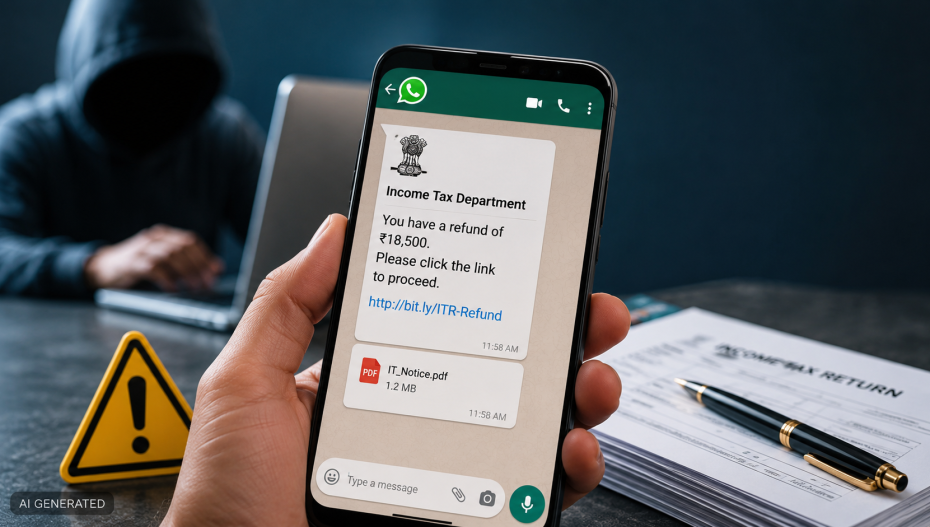
As thousands of taxpayers wait for their Income Tax (IT) refunds after the July 31 Income Tax Return (ITR) filing deadline, cybercriminals have launched a new scam by sending fake Income Tax notices through WhatsApp.
Cybercrime officials and tax professionals have warned people to stay alert, saying fraudsters are taking advantage of the refund season to trick taxpayers into revealing sensitive banking and personal information.
Officials have made it clear that the Income Tax Department does not send official notices through WhatsApp, and taxpayers should ignore such messages.
Fraudsters Exploiting Refund Season
With many taxpayers eagerly waiting for their refunds, scammers are creating fake messages that appear to come from the Income Tax Department. These messages often claim that:
A tax refund is pending.
There is an urgent Income Tax notice.
Immediate action is required to avoid penalties.
The taxpayer must verify details to receive a refund.
Because many people are expecting refund-related updates, these fake notices appear convincing and increase the chances of victims falling into the trap.
Fake Messages Carry Dangerous Files and Links
According to an advisory issued by the Indian Cyber Crime Coordination Centre (I4C) and CyberDost, fraudsters are sending WhatsApp messages containing suspicious attachments and malicious links. These messages may ask recipients to:
Download files with .zip or .exe extensions.
Click on links to verify refund details.
Submit banking information or personal details.
Cybersecurity experts warn that these files may contain malware capable of stealing:
Internet banking credentials.
Passwords.
Personal information.
Financial data.
Once installed, the malware can lead to financial fraud, identity theft, and unauthorized access to bank accounts.
Income Tax Department Does Not Use WhatsApp
Tax professionals have stressed that taxpayers should remember one important fact:
The Income Tax Department does not communicate with taxpayers through WhatsApp. Officials say all official communication is made only through:
SMS
Email
The official Income Tax e-filing portal
Experts advise taxpayers to verify every tax-related message through the official Income Tax website and consult their Chartered Accountant (CA) if they have any doubts.
Fraudsters Rely on Panic, Not Technology
Cybercrime officials say these scams are designed to create fear and urgency rather than relying on sophisticated hacking techniques.
The fake notices often pressure recipients into acting immediately without verifying the authenticity of the message. Officials warn that panic can lead people to share confidential information such as:
Bank account details.
Debit or credit card information.
Passwords.
One-Time Passwords (OTPs).
Once this information is shared, fraudsters can quickly misuse it to steal money from victims’ bank accounts.
Simple Verification Can Prevent Fraud
Chartered accountants have advised taxpayers to spend a few minutes verifying any refund-related message before taking action. Experts say checking the message through the official Income Tax e-filing portal can prevent:
Financial fraud.
Data theft.
Malware attacks.
Identity theft.
If there is any uncertainty, taxpayers should contact their CA before responding to any communication claiming to be from the Income Tax Department.
How the Public Can Stay Safe
Cybercrime officials have issued several precautions to help taxpayers avoid becoming victims of these scams. They recommend:
Never download unsolicited .zip or .exe files.
Avoid clicking unknown or suspicious links.
Never share OTPs, passwords or banking credentials.
Keep mobile phones and computers updated with the latest security software.
Verify every tax-related communication through the official Income Tax portal.
Consult a tax professional if any message appears suspicious.
Report Suspicious Messages Immediately
Authorities have also urged people to report fraudulent messages without delay.
Victims or anyone receiving suspicious tax-related messages can report them through the National Cyber Crime Reporting Portal or by calling the Cyber Crime Helpline 1930. Early reporting can help authorities investigate the fraud and may reduce the chances of financial loss.
Stay Alert During Refund Season
Officials believe cybercriminals will continue targeting taxpayers throughout the refund season, as many people remain anxious about receiving their refunds.
The safest approach is to ignore unexpected WhatsApp messages claiming to be from the Income Tax Department and verify every communication through official government channels.
Experts say a few minutes spent checking the authenticity of a message can prevent serious financial losses and protect taxpayers from identity theft and cyber fraud.
Also Read: Gujarat Wastes 58,000+ Units Of Donated Blood, Report Highlights Serious Lapses https://www.vibesofindia.com/gujarat-discards-over-58000-units-of-blood-in-2025-amid-blood-bank-management-concerns/