


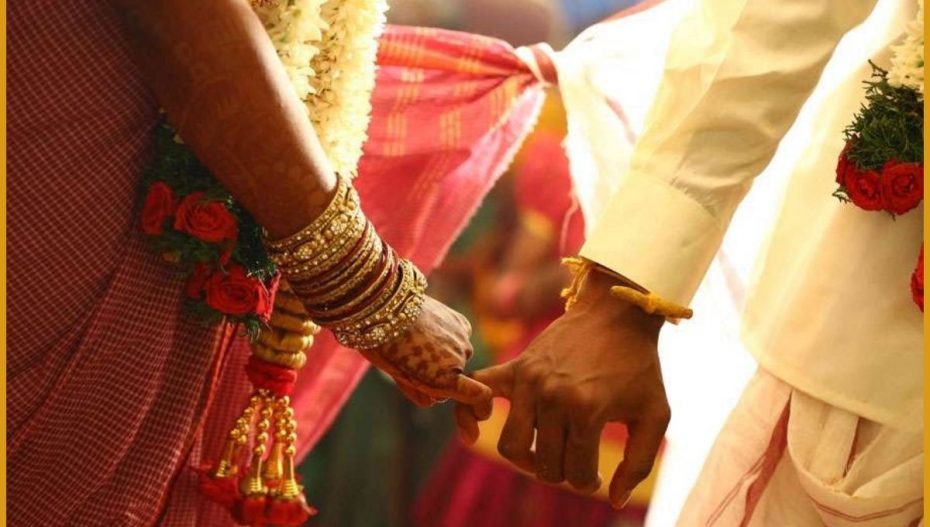
The Gujarat High Court has ruled that the essential Hindu marriage ceremonies, including Saptapadi (the seven sacred steps around the holy fire), are mandatory for a marriage to be legally valid under the Hindu Marriage Act. The court observed that without these customary rites, a Hindu marriage cannot be considered complete or binding.
The ruling came while hearing an appeal by a UK-based man who challenged a family court’s refusal to declare an alleged marriage as void.
UK-Based Man Challenges Alleged Marriage
The case was filed by Kaushal Sonar, who lives in the United Kingdom. He approached the Gujarat High Court after a family court rejected his plea seeking to declare an alleged marriage with a woman from Ahmedabad as null and void.
According to Sonar, he came to know about the alleged marriage only after the woman approached his parents with a marriage certificate claiming that she was his legally wedded wife.
Man Denies Marriage Ever Took Place
Sonar told the court that he had never solemnised any marriage with the woman. He stated that:
No Hindu marriage rituals or ceremonies were performed.
The couple never lived together as husband and wife.
His signature on the marriage-related documents had allegedly been obtained fraudulently without his free consent.
The woman, during proceedings before the family court, also admitted that no marriage rites or ceremonies had taken place between them and that they had never shared the relationship of husband and wife.
High Court Finds Error in Family Court Order
A division bench of Justices Ilesh Vora and R.T. Vachhani quashed the family court’s November order, saying it had committed an error by dismissing Sonar’s petition despite both parties admitting that no marriage ceremonies had taken place.
The High Court’s order, dated June 23 and made available later, held that the absence of essential Hindu marriage rites meant the basic legal requirements for a valid marriage were not fulfilled.
Saptapadi Is the Foundation of a Hindu Marriage
Referring to Section 7 of the Hindu Marriage Act, the court said that a Hindu marriage must be solemnised according to the customary rites and ceremonies of either party.
It specifically highlighted Saptapadi, the ritual in which the bride and groom jointly take seven steps around the sacred fire. According to the court, this ceremony gives the marriage its spiritual, social and legal status as a sacrament (samskara).
The bench observed that performing essential ceremonies like Saptapadi forms the very foundation of a Hindu marriage.
Marriage Is More Than a Social Celebration, Says Court
The High Court also made detailed observations on the institution of marriage under Hindu law.
It said that in Hindu tradition, a wife is regarded as Ardhangini—one-half of her husband—while also being recognised as an individual with her own identity and as an equal partner in marriage.
The court noted that Hindu marriage is treated as a sacrament (samskara) and forms the foundation of a new family.
Court Urges Youth to Understand Sanctity of Marriage
The bench urged young men and women to carefully understand the institution of marriage before entering into it.
According to the court, marriage should not be viewed merely as an occasion for “song and dance” or “wining and dining,” nor as a commercial transaction. Instead, it described marriage as a solemn and foundational event through which a man and a woman enter into a lifelong relationship and build a family.
The court further observed that a marriage creates a lifelong, dignified, equal, consensual and healthy union between two individuals.
Customary Ceremonies Hold Spiritual Importance
The High Court also stressed the spiritual significance of customary Hindu marriage ceremonies.
It observed that although traditions may differ across regions and communities, these ceremonies are believed to purify and transform the spiritual being of an individual. Therefore, they cannot be ignored while determining the legal validity of a Hindu marriage.
Final Verdict
Allowing the appeal, the Gujarat High Court held that since no marriage rites or ceremonies, including Saptapadi, had been performed, the essential legal requirements of a Hindu marriage were absent.
The court consequently set aside the family court’s order and reaffirmed that under the Hindu Marriage Act, customary ceremonies remain indispensable for a Hindu marriage to be legally complete and binding.
Also Read: Groom Dragged Off Mare As Wedding Procession Sparks OBC Caste Clash https://www.vibesofindia.com/gujarat-groom-dragged-off-mare-wedding-procession-assault/