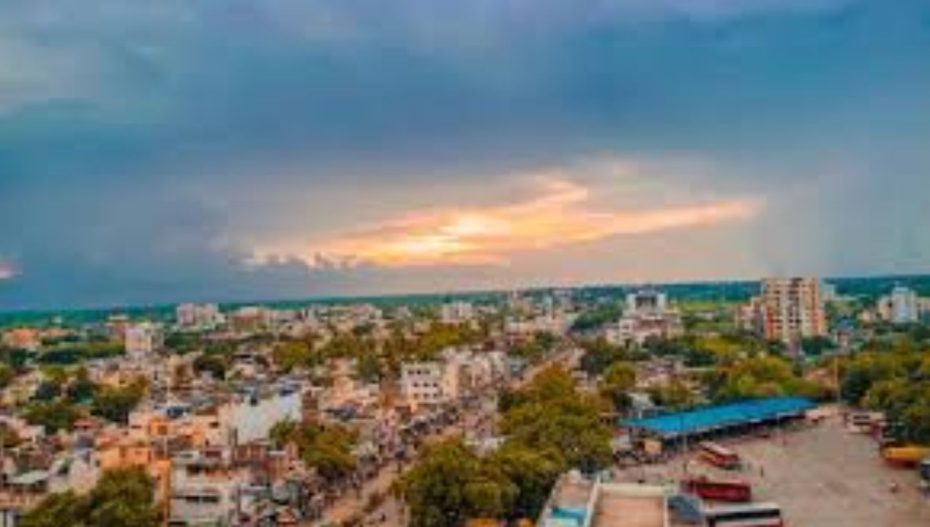
Small towns are doing big things. In Maharashtra and Gujarat, cities with fewer than four lakh people are showing the way in strong climate action initiatives.
According to a report in a national newspaper, Vita, Karad, and Ichalkaranji in Maharashtra, and Anjar and Gandhidham in Gujarat, have worked with the Centre for Water and Sanitation (CWAS) at CEPT University to transform how water is managed, waste is treated, and communities live.
Take for instance the work done at the first Rainwater Harvesting Theme Park in Gujarat. Through rainwater harvesting projects, over 40,000 litres of fresh water have been made available to more than 3,000 residents in Anjar and Gandhidham.
In both towns, over 56 million litres of groundwater are recharged each year. That’s enough drinking water for more than 10,000 households. The government invested around Rs 3 crore in over 50 recharge structures, including 35 in institutional and school buildings. These efforts also help prevent urban flooding.
In Maharashtra’s Vita, Karad, and Ichalkaranji, forests were planted on 6,170 square metres of land. These trees have sequestered 95 tonnes of CO₂ equivalent in three years, with the potential to reach about 4,280 tonnes over 25 years.
Sanitation services have also improved, the report highlighted. More than 30,000 households now receive inclusive services. Faecal sludge treatment capacity increased by 25 KLD, and all safely collected faecal waste is treated at Sewage Treatment Plants (STPs) and Faecal Sludge Treatment Plants (FSTPs).
The cities have also shifted to clean energy. In three years, 350 MWH units of electricity were produced using 215 KW of solar power, reducing emissions by 230 tonnes of CO₂ equivalent. With time, this is expected to mitigate 5,412 tonnes over 25 years. Separately, cities have installed 1,940 KW of solar panels through their own funding. These installations could produce over 72,000 MWH of clean energy, reducing 58,000 tonnes of CO₂ equivalent over 25 years.
Women are central to the progress. They have been formally contracted by cities to manage sanitation facilities and care for urban forests. They work through Self-Help Groups (SHGs), creating livelihoods, spreading awareness, and bringing dignity to public services.
Generally, small cities are often overlooked in India’s climate narrative. Yet these towns are proving they can make meaningful contributions.
Additionally, toolkits have been created for over 28,000 local bodies. The work is influencing flagship programmes like Swachh Bharat Abhiyan and the National Urban Livelihood Mission at the national level.
At the state level, CWAS is working with the Urban Development Department and the Department of Environment and Climate Change under a formal MoU. They impart knowledge through technical working groups, provide feedback on policies and guidelines, and contribute through the National Faecal Sludge and Septage Management (NFSSM) Alliance and as an independent institution.
Over 100 professionals, including engineers, teachers, and plumbers, have been trained in rainwater harvesting and groundwater recharge, the report outlined. They are building both capacity and awareness. Not just that, more than 1,200 people from across sectors, MPs, MLAs, government officials, development authorities, the armed forces, villagers, and citizens, have attended Jal Sanrakshan Melas to educate themselves on the work being done.
While the change is local, its impact is definitely spreading.
Also Read: Trump Leader’s Comment On Lord Hanuman Statue Sparks Fury https://www.vibesofindia.com/trump-leaders-comment-on-lord-hanuman-statue-sparks-fury/