Everyone wants something these days.
Start a business.
Get fit.
Make money in stocks.
Build an audience.
Write a book.
Become financially independent before your hairline becomes emotionally independent.
And the first thing people ask is:
“How do I do it?”
So naturally, they rush to Google, YouTube, ChatGPT, podcasts, gurus, monks with microphones, and a 23-year-old “mindset coach” renting a Lamborghini by the hour.
“How to build an audience.”
“How to become rich.”
“How I made ₹10 crore working 10 hours a week.”
The internet is basically one giant buffet of:
“Here are 7 habits that changed my life.”
Usually written by someone whose life changed because they started selling habits.
Tony Robbins told us:
“Success leaves clues.”
Which sounds inspiring.
But so do serial killers.
Copying successful people only works for straightforward things.
Want to run a marathon?
Fine. Wake up. Run. Suffer. Repeat.
But creative work? Careers? Business? Investing? Building something original?
That’s chaos wearing a blazer.
You can copy Elon Musk’s routine all you want.
You’ll just become sleep-deprived with stronger opinions.
You can follow a billionaire morning routine:
- Wake up at 4 AM
- Drink lemon water
- Journal gratitude
- Ice bath
- Meditation
- Protein shake
- Podcast
- Cold plunge
- 17 supplements
Meanwhile your actual achievement is:
replying to one email before noon.
Here’s the real problem:
People study success stories like they’re recipes.
But success is often:
- timing,
- luck,
- personality,
- connections,
- judgment,
- and one deeply unhealthy obsession.
Nobody writes:
“How I succeeded after inheriting three buildings from my grandfather.”
There’s a smarter question to ask.
Not:
“How do I succeed?”
But:
“How do I absolutely destroy my chances?”
Now we’re talking.
Want to build an audience?
Easy:
- Post once every three months
- Fight with strangers in comments
- Change your niche every Tuesday
- Take advice from people with anime profile pictures
Guaranteed results.
Want financial independence?
Simple:
- Buy things because influencers pointed at them
- Call gambling “investing”
- Believe crypto bros named “WolfXAlpha”
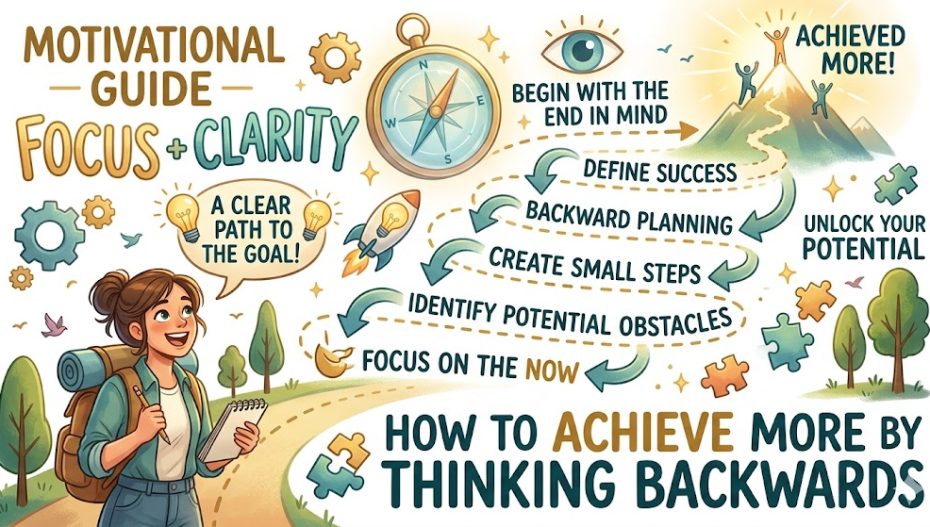
This idea is called Inversion.
Which is basically:
“Instead of chasing genius, avoid stupidity.”
A 19th-century mathematician named Carl Jacobi discovered that hard problems become easier when you flip them backward.
His rule:
“Invert, always invert.”
Which sounds either profoundly wise or like instructions from a haunted yoga instructor.
Charlie Munger loved this idea.
His philosophy was legendary:
“Try consistently not to be stupid.”
That’s it.
Not:
- manifest abundance,
- align your vibrations,
- unlock alpha energy,
- or dominate the quantum wealth frequency.
Just:
Don’t be an idiot repeatedly.
A surprisingly elite strategy.
Forward thinking sounds sexy.
“I will conquer the world.”
Inversion sounds like your grandmother giving advice:
“Beta, just don’t ruin your life.”
And honestly?
Grandmothers outperform motivational speakers most of the time.
Forward thinking says:
“Here’s how I’ll become successful.”
Inversion says:
“Here’s how I’ll avoid becoming a disaster documentary.”
One creates optimism.
The other prevents catastrophe.
And preventing catastrophe is wildly underrated.
Munger had another classic line:
“All I want to know is where I’m going to die, so I’ll never go there.”
Morbid? Yes.
Useful? Also yes.
It’s basically Google Maps for bad decisions.
The best careers, businesses, relationships, and investments are often built less by brilliance…
…and more by avoiding obvious stupidity long enough.
Which is comforting.
Because most of us are only three bad decisions away from becoming:
- a podcast host,
- a day trader,
- or someone selling “personal branding” courses on Instagram.
So next time you want success, don’t ask:
“What should I do?”
Ask:
“What would completely wreck this?”
Avoid that consistently.
And congratulations.
You’re already ahead of half the internet.
Also Read: