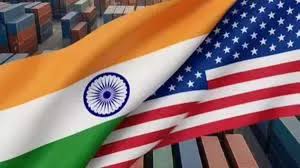
Agriculture has emerged as the flashpoint in the interim trade framework released by India and the US.
Recent developments indicate that a warm handshake for a full agreement is still a long way off.
For those who came in late, the framework aims at a change in energy ties and tariffs that are less harsh. It should also deepen economic cooperation as both countries seek to reposition supply chains.
That said, concessions on farm trade have triggered political and market reactions in India. New Delhi resisted US efforts to broadly open India’s agricultural market.
However, India reportedly agreed to lower trade barriers on select farm goods. The move didn’t go down well with farmers.
As Vibes of India reported, the heavily subsidised US agricultural products threaten to undercut Indian prices. This holds especially for dairy and staple crops, threatening incomes and local rural economies.
Even a modest inflow of cheaper imports can pull prices down. For a farmer whose margins are already thin, a fall in price is the difference between surviving the season and slipping into debt.
Meanwhile, India is reportedly expected to allow imports of protein-rich distillers dried grains with solubles (DDGS). It’s a byproduct of ethanol made from corn and other grains, from the US. These imports will add to surplus supplies in the domestic market. Experts believe it could benefit India’s nearly $30 billion poultry sector, where feed costs account for around 60–70% of total production expenses.
Domestic oilseed processors and soybean farmers could be hit if US imports rise. India already has surplus DDGS supplies, weakening demand for oilmeals such as soyameal, pressuring oilseed prices and prompting farmers to shift from soybean and peanuts to corn and rice, despite government efforts to boost oilseed cultivation and curb imports.
Rising DDGS supplies could also weigh on ethanol producers. Producers are already facing idle capacity and slowing demand after India achieved its 20% biofuel blending target, and lower domestic DDGS prices may further reduce earnings.
Concerns have also been raised over duty-free soyoil imports from the United States. Under the framework, such imports will be allowed only under a tariff-rate quota, with volumes beyond the quota facing standard duties to protect domestic producers.
India currently imposes an 11% duty on cotton imports. Allowing duty-free imports from the world’s largest exporter could pressure domestic prices, though the impact is expected to be limited.
The government has restricted imports to extra-long staple cotton and capped volumes under a quota. India, the world’s second-largest cotton producer, does not meet domestic demand for extra-long staple cotton and imports it from the US, Egypt, Brazil and Australia.
India is the world’s fifth-largest apple producer. However, domestic supplies fall short of demand driven by population growth and rising prosperity.
The country imports about 500,000 metric tons of apples annually from Iran, Turkey, Afghanistan, the US and Chile.
Now, US apples will be allowed at a concessional duty of 25% and a minimum import price of 80 rupees per kg. This blocks shipments below 100 rupees per kg thereby protecting Indian farmers interests.
Consumption of dry fruits such as walnuts, almonds and pistachios has also been rising.
Domestic production remains limited, making concessional imports unlikely to affect local growers.
Indian producers of tea, coffee, spices and fruits should benefit from duty-free access to the US market. A cut in rice import duties to 18% is also expected to support exporters of both basmati and non-basmati varieties.
Also Read: India-US Trade Deal Cuts Tariffs To 18%: Exporters Gain, But Indian Farmers Face Uncertainty https://www.vibesofindia.com/india-us-trade-deal-cuts-tariffs-to-18-exporters-gain-but-indian-farmers-face-uncertainty/