

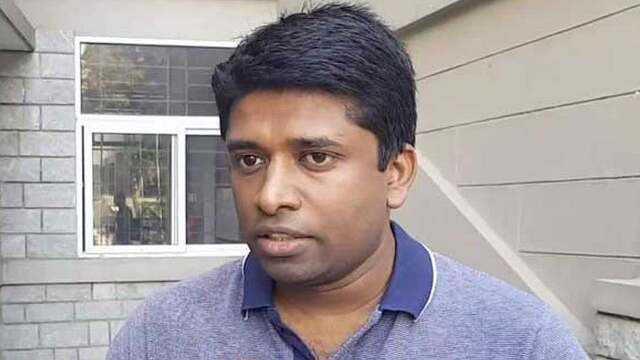
Six years after his 2019 resignation, Kannan Gopinathan still awaits government processing.
Kannan Gopinathan handed in his papers in August 2019. His reason was unambiguous: the clampdown on Jammu and Kashmir after the scrapping of Article 370, and what he called the government’s throttling of free expression. For an IAS officer to resign on a matter of political conscience was striking enough. What followed has been stranger still.
Despite his resignation, the government did not accept it. Gopinathan, from Kerala and well-known in Gujarat, served as a collector and stepped down over what he described as the ‘denial of freedom of expression’ to the people of Kashmir. Gopinathan, an AGMUT cadre officer, last served in a key position in the Union Territories of Dadra Nagar Haveli and Daman. He was instrumental in turning a loss-making government electricity distribution firm into a profitable one and completing the long-delayed ring road project in Silvassa. He also served as Collector of Diu and in 2017 was recognized as someone who made a significant difference in the North East where he had served efficiently. Kannan was known to be an empathetic officer, always available for those who needed him. Currently, Kannan draws no salary and holds no post, but on paper, he remains a government servant—a status with real consequences. Abut five months back, Kannan joined the Congress. He was keen to contest the Kerala Assembly elections from Palakkad.
But then, the rules caught up with him. A serving government official cannot join a political party. Since his resignation remains unprocessed, he is still, technically, serving indefinitely. As a result, the UDF fielded film star Ramesh Pisharody in Palakkad instead.
Gopinathan posted on X: “Dear PM Narendra Modi, just wanted to bring to your attention that your government has refused to process my resignation for nearly 5 years. No salary and no release. This has stopped me from professionally moving on. And has also prevented me from contesting elections in Kerala. This is pure harassment and nothing else.” He wrote that blocking his right to resign and participate in the democratic process is “pathetic and petty,” urging the government to process his resignation immediately.
The process for resigning from the IAS is not complicated. For AGMUT cadre officers, resignations travel from the concerned ministry to the state cadre, which checks for pending dues and disciplinary matters before sending its recommendation to the Department of Personnel and Training. The final authority rests with the minister in charge of DoPT, who is, in effect, the Prime Minister.
A DoPT circular states plainly that retaining an unwilling officer is not in the government’s interest. The unwritten convention, followed across administrations, has been to let people go. RTI data shows 31 IAS officers resigned between 2010 and 2019 without incident. The number of officers who have resigned after BJP assumed power in 2014 is more than previous decades. In last few years, OP Chowdhary resigned from the Chhattisgarh cadre in 2018, joined the BJP, and is now the state’s Finance Minister. Ashwini Vaishnaw left the Odisha cadre in 2011 and is now a member of the Union Cabinet. Even a fellow AGMUT cadre officer, Kashish Mittal, resigned in 2019 — the same year as Gopinathan — and was released that very year.
If nothing flags, it sends its recommendation up the chain. For AGMUT cadre officers, who cover Arunachal Pradesh, Goa, Mizoram, and the Union Territories, the Ministry of Home Affairs handles the routing.
Gopinathan belongs to this cadre. At the very top, the final call rests with the Minister in charge of DoPT. That minister is, in effect, the Prime Minister.
There is no law requiring the government to act within a fixed number of days. But a DoPT circular says
It is plain that keeping an unwilling officer is not in the government’s interest. The unwritten rule, followed in case after case, is to let people go.
Gopinathan’s case remains unresolved, stuck in bureaucratic limbo.
Meanwhile, a rule amended in November 2014 continues to apply to him. Rule 3(1) of the All-India Services Conduct Rules requires every government employee to stay politically neutral and uphold democratic values at all times. As long as the resignation gathers dust, so does his right to step into the political arena he chose when he walked out of the service.
He resigned to speak freely, but six years later, bureaucratic delays have ensured he still cannot.
Also Read: The Story Of The Fake PMO Official Who Took The Government For A Ride https://www.vibesofindia.com/the-story-of-the-fake-pmo-official-who-took-the-government-for-a-ride/
—