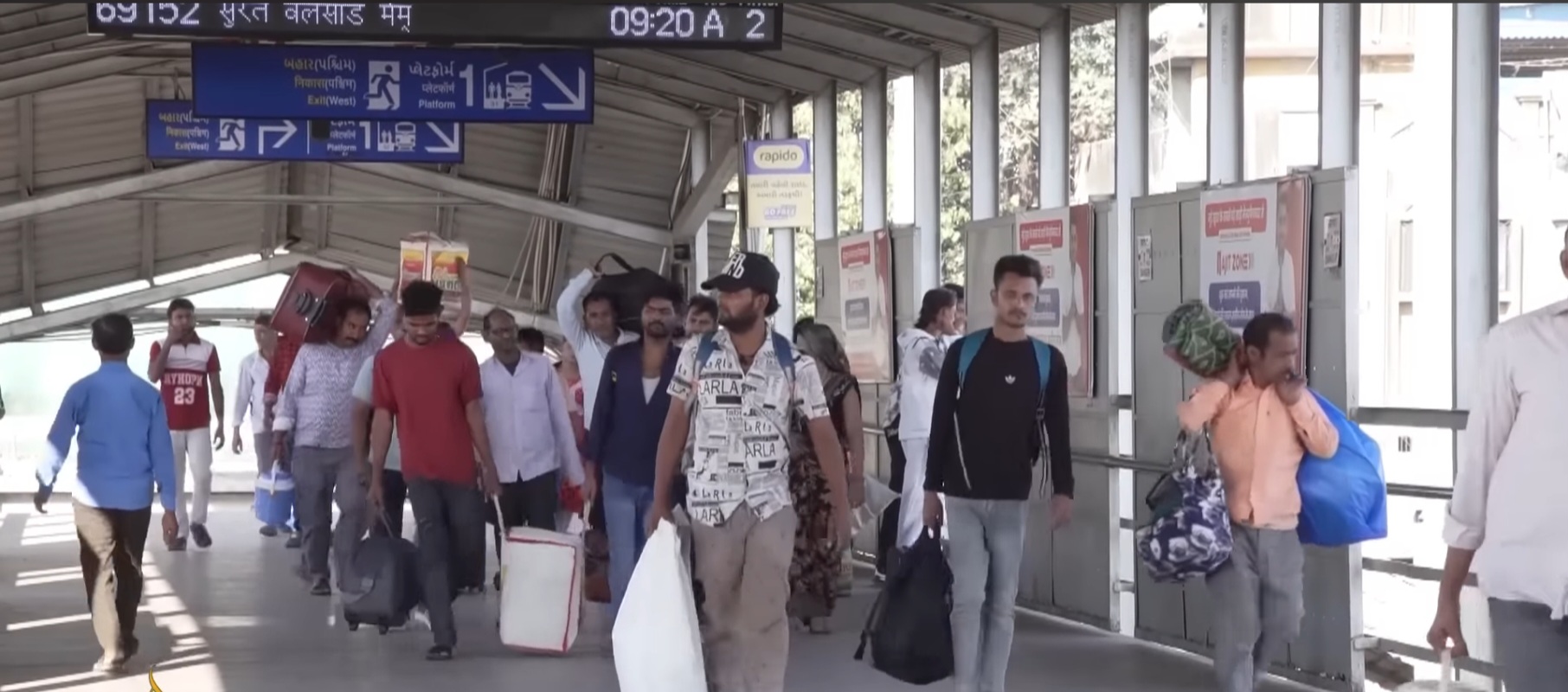
With the Special Intensive Revision (SIR) exercise drawing to a close, Gujarat is expected to publish its final electoral roll on February 17.
It has emerged that the updated roll is likely to record a marginal rise over the draft list released on December 19. It carried over 4.34 crore voters.
The draft roll reportedly recorded 4,34,70,109 voters. This marked a decline of 73.73 lakh from the previous electoral roll of 5,08,43,436 voters. Of the 73.73 lakh deletions, more than 54 per cent were placed in the “permanently migrated” category.
Nearly 14 lakh Form 7 applications were received from across the state. Barely 1.8 lakh were termed valid after scrutiny.
During the revision, the office of the Chief Electoral Officer (CEO) issued around 90 lakh notices to voters flagged for “logical discrepancies” and to those categorised as “unmapped”.
Only around 30 per cent appeared for hearings held on February 10. According to media outlets, not even 30 per cent of the 90 lakh people turned up for the last hearing.
To conduct the hearings, the Gujarat CEO’s office reportedly deployed more than three times the usual number of election officers. Around 800 Assistant Electoral Registration Officers (AEROs), Electoral Registration Officers and Booth Level Officers (BLOs) were mobilised to manage the verification process initiated by the Election Commission.
Cases under logical discrepancies reportedly involved mismatches in names, fathers’ names, surnames, addresses and age. Discrepancies were found between documents submitted, enumeration forms and the 2002 electoral list.
In several instances, fathers’ names were uploaded along with voters’ names. There were also cases where the listed age did not match the current age, or where the age gap between father and voter appeared unusually low, reports revealed.
The deadline for filing claims and objections to the draft roll was January 18. The Election Commission later extended it to January 30. All claims and objections were disposed of by February 10.
Among the 73,73,327 deletions in the draft roll, the largest segment comprised permanently migrated voters at 40,25,553. This was followed by 18,07,278 deceased voters, 9,69,662 absent voters and 3,81,470 voters registered at two places. Another 1,89,364 names were classified under “others”.
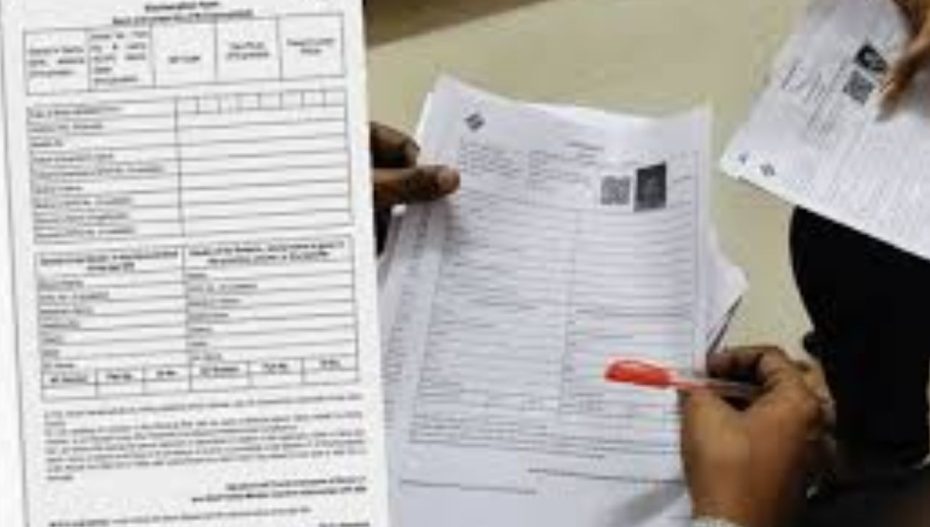
Of the nearly 14 lakh Form 7 applications received during the SIR, only about 1.8 lakh were found valid after scrutiny by Electoral Registration Officers (EROs). Form 7 is used to object to the inclusion of names on the electoral roll.
As regards Form 7, Gujarat Congress spokesperson Dr Hiren Banker told Vibes of India that it was a systematic way of the ruling BJP to harm democracy. He alleged that the majority of the forms were filled up by BJP men. Dr Banker questioned whether the Election Commission would initiate action against those who raised incorrect objections.
Mujahid Nafees, convener of the Minority Coordination Committee in Gujarat, alleged that the Election Commission was under pressure from the ruling BJP.
He told VOI that the discrepancies between valid and invalid Form 7 applications had been brought to light by aware citizens’ groups and asserted that the Election Commission had nothing to do with it.
He further mentioned that so far the Election Commission had not filed a single FIR against those who raised incorrect objections.
Nafees said that in Navsari district, a BJP leader had raised objections in thousands. He added that while many questions are asked if an individual files a Form 7, nothing was asked in such cases.
Meanwhile, Anand district recorded the highest number of such applications, with over 40,600 forms submitted. Dang district reported only 55 Form 7 submissions. These forms are filed physically to seek deletion of names due to death, shifting out, or to object to the inclusion of other persons.
There is no limit on the number of Form 7 applications an individual may file. However, Booth Level Agents (BLAs) are permitted to submit up to 10 Form 7 applications per day within their constituency.
During the verification period, 14,70,125 valid forms were received from citizens statewide. Of these, 7,25,920 were Form 6 applications for new voter registration, 1,83,235 were Form 7 applications, and 5,60,970 were Form 8 applications for corrections in the electoral roll.
For the processing of 5.08 crore enumeration forms under the SIR exercise, the state reportedly engaged 33 District Election Officers, 182 Voter Registration Officers, 855 Assistant Voter Registration Officers, 50,963 BLOs, 54,443 BLAs and 30,833 volunteers.
In urban areas, personnel from municipalities and municipal corporations were also deployed.
Also Read: ECI Revises SIR Schedule In 12 States, Including Gujarat https://www.vibesofindia.com/eci-revises-sir-schedule-in-12-states-including-gujarat/