One of India’s most powerful parties had never chosen its leader this way.
This day sixty years ago, following the sudden death of a sitting Prime Minister, the Congress was forced into an open, bruising contest that exposed internal rivalries, regional muscle, and the mechanics of power within the party.
Over four tense hours inside Parliament’s Central Hall, a reluctant transition turned into a decisive verdict, producing not just a new Prime Minister but a new template for succession.
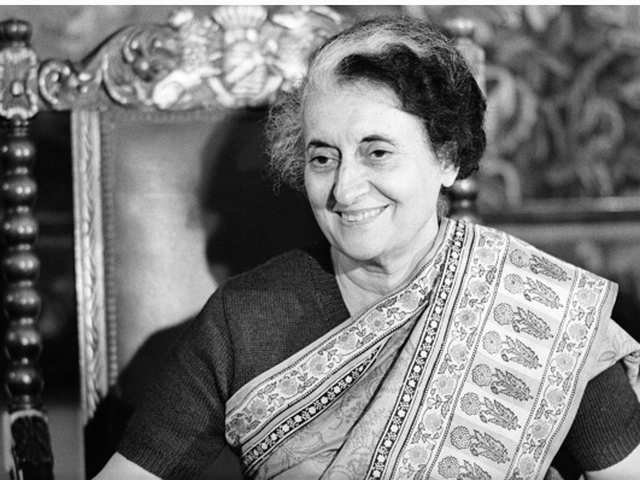
Indira Gandhi, 48, was elevated to office as the country’s first woman Prime Minister.
That winter on Jan 19, 1966, unfolded beneath the high dome of the Central Hall of Parliament, the same chamber where India’s Constitution had been adopted. For the first time since Independence, the Congress Parliamentary Party (CPP) elected its leader through a full-fledged contest.
“She was cheered as she entered the hall, clad in a white sari with a light brown shawl wrapping her shoulders,” a leading national daily had reported. When the returning officer announced, “I declare Mrs Gandhi elected,” the hall broke into “thunderous cheers”. The moment went beyond personal victory. The vote marked a turning point for the Congress party.
The contest, as the same newspaper has highlighted in an editorial, was triggered by Lal Bahadur Shastri’s sudden death in Tashkent in Jan 1966, which left India without a Prime Minister yet again. Acting Prime Minister Gulzarilal Nanda stepped in as the party searched for a successor.
Indira Gandhi’s claim was neither automatic nor uncontested. Jawaharlal Nehru’s only daughter, she had spent years in his shadow, first as his companion, later as a political figure in her own right. Her credentials included a term as information minister under Shastri and an earlier stint as Congress president in 1960.
As the editorial adds, the momentum shifted just days before the vote when powerful regional leaders (chief ministers from 11 of India’s then 16 states) rallied behind her. Their backing became public four days ahead of the ballot. Nanda withdrew from the race. Morarji Desai, former finance minister and a formidable presence within the party, did not.
“Why should I form a separate party? I am a true Congressman and I will remain in the Congress,” Desai was quoted as saying. What had been widely expected to pass as a smooth succession hardened into one of the most bitter leadership contests in India’s parliamentary history.
Caught in the middle was Congress president K Kamaraj, who attempted to prevent a contest altogether. Desai refused to yield, demanding a ballot and alleging “pressure” on MPs to support a particular candidate, the editorial notes.
Chief ministers, he argued, had “no business” dictating terms to the CPP. Kamaraj responded that in a federal democracy, the views of the states could not be dismissed.
On the eve of voting, Desai sharpened his attack. MPs, he told reporters, were “not dumb cattle”. He framed the fight as one between the party establishment and ordinary parliamentarians. Though he claimed to possess evidence of pressure, he declined to name names, saying disclosure could expose supporters to victimisation if he were defeated.
As the decisive day approached, Delhi buzzed with activity. Chief ministers held meetings with MPs from their states, while journalists staked out the homes of Kamaraj, Desai and Indira Gandhi.
Detailing the version of the events, the daily notes that a record 526 Congress MPs assembled in the Central Hall on January 19. Desai arrived first, greeting colleagues with folded hands. Indira Gandhi followed minutes later, walked up to Desai, said “namaste,” and posed with him as photographers urged the two to clasp hands.
The formalities left no ambiguity. Desai’s nomination was proposed by K Hanumanthaiya. Indira Gandhi’s was proposed by acting Prime Minister Nanda and seconded by Sanjiva Reddy.
Counting stretched deep into the afternoon, heightening suspense and fuelling rumours of an imminent declaration. Four times, word spread that a result was moments away. Finally, at around 3pm, the returning officer emerged.
“I declare Mrs Gandhi elected.”
The margin was decisive. Indira Gandhi secured 355 votes to Desai’s 169 — nearly 68% of the valid votes, a two-thirds majority that even her supporters had scarcely dared to anticipate.
The aftermath matched the drama of the contest. Amid applause, the rivals shook hands and posed for press photographers and television crews. Outside Parliament House, crowds had waited all day. When the result was announced, cheers greeted Gandhi as she left for Rashtrapati Bhavan to meet President S Radhakrishnan and form a new government.
Desai publicly accepted the verdict, but not without qualification. He said he hoped that “at least in future, an atmosphere of fearlessness” would prevail in the party and country. At her first press conference as Prime Minister-elect, Indira Gandhi dismissed any suggestion of impropriety.
“The insinuation that unfair play had a part in this election was unjustified,” she had said, while agreeing that fearlessness in public life mattered.
Across India, reactions followed swiftly. C Rajagopalachari said Gandhi might prove more broad-minded, and closer to Nehru’s outlook, than Desai. Women’s groups marked the moment with celebrations.
International response was immediate. The Soviet news agency Tass flashed the news within minutes. Lord Mountbatten described her election as one bound to have a stabilising effect in India.
As Kamaraj summed it up aptly for MPs that day, “We have elected Mrs Gandhi to take over the burden of the Prime Ministership of the country.”
Also Read: Remembering Indira Gandhi On Her 37th Death Anniversary https://www.vibesofindia.com/remembering-indira-gandhi-on-her-37th-death-anniversary/