

As she prepares to release her memoir, 79-year-old Sonia Gandhi reflects on her journey from Italy to India, her life with the Gandhi family and the events that shaped one of the most controversial decisions in Indian political history.
When Sonia Gandhi arrived in India in 1968, she was a young Italian woman who had fallen in love with Rajiv Gandhi in Cambridge. She had little idea that her life would become closely connected with India’s political history or that she would eventually lead one of the country’s oldest political parties.
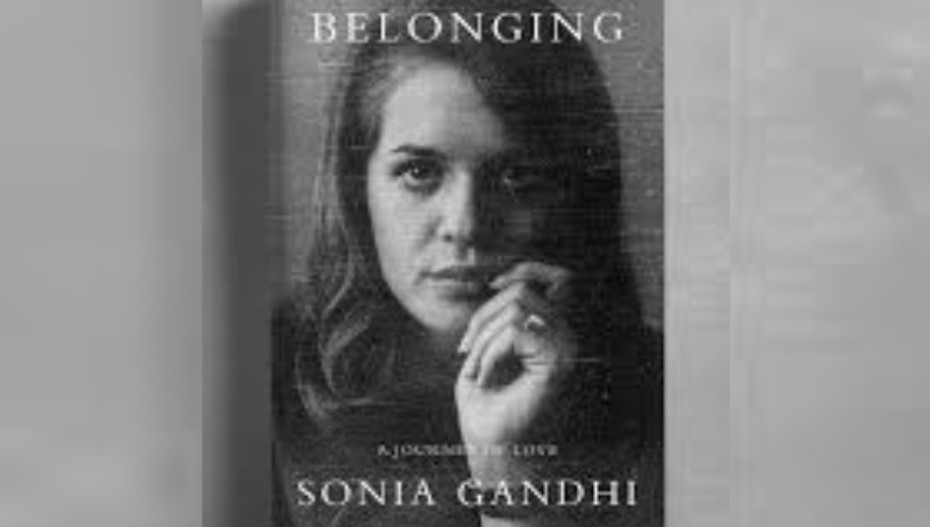
Nearly six decades later, Sonia Gandhi is looking back at that journey in her upcoming memoir, Belonging: A Journey of Love. In a interview with The Guardian, she has shared personal memories of the Gandhi family, the loss of her husband and mother-in-law, and the political decisions that shaped India’s history.
Among the most significant subjects she revisits is the Emergency imposed by former Prime Minister Indira Gandhi in 1975. Sonia has described the decision as a mistake and believes that controlling Sanjay Gandhi’s influence could have prevented much of the damage that followed.
According to The Guardian, Sonia Gandhi met Rajiv Gandhi at a Greek restaurant in Cambridge when she was 18 and studying at a language school. Unaware of his political background, she fell in love with him and moved to India after their marriage in 1968. The couple had two children, Rahul and Priyanka. Sonia recalls those early years as happy, but her life changed after Indira Gandhi’s assassination in 1984 and Rajiv Gandhi’s killing in 1991.
She entered politics in 1998, led the Congress to victory in 2004, declined the post of Prime Minister and remained party president until 2017, when Rahul Gandhi succeeded her. But her life changed dramatically as the Gandhi family faced one tragedy after another.
While the Emergency is often discussed as a political decision taken by Indira Gandhi, Sonia Gnadhi’s memoir offers a glimpse into the disagreements that took place within the family.
According to The Guardian, Rajiv Gandhi was against imposing the Emergency and advised his mother to wait for the next election. Sanjay Gandhi, however, strongly supported the move.
Sonia Gandhi recalls a family dinner during which Sanjay warned Indira that the Opposition would destroy her and reportedly told her, “They must be stopped.”
Rajiv tried to challenge his mother’s decision, but she refused to listen.
In her memoir, Sonia Gandhi writes that keeping Sanjay under control could have prevented much of the damage that followed.
Sanjay Gandhi, who did not hold a Cabinet or government position, nevertheless exercised considerable influence during the Emergency. His controversial campaigns, including forced sterilisation and slum-clearance drives, became some of the most criticised aspects of that period.
According to The Guardian, Sonia Gandhi’s account also describes how Sanjay Gandhi’s influence created tensions within the family, not just within the political establishment.
More than five decades after the Emergency, Sonia Gandhi believes her mother-in-law was not entirely comfortable with the decision.
She further said that although many might laugh at this view, she believes Indira was never comfortable with the Emergency and that the decision weighed heavily on her.
The Emergency lasted from 1975 to 1977. During this period, civil liberties and democratic freedoms were suspended, political opponents were detained and the media faced restrictions.
According to The Guardian, Sonia Gandhi believes Indira Gandhi was struggling to deal with the deteriorating political situation, which included violent protests, damage to government offices and public transport, and widespread unrest.
Sonia Gandhi also said that she only understood the full extent of what had happened during the Emergency after it ended.
Indira Gandhi announced fresh elections in January 1977. She and Sanjay Gandhi lost the Lok Sabha elections in March, and the Emergency officially came to an end on March 21, 1977.
Sonia Gandhi’s memoir also revisits events beyond the Emergency. According to The Guardian, she recalls being deeply affected by the demolition of the Babri Masjid in 1992.
She believed that the incident marked the beginning of a long struggle to protect the secular values that Mahatma Gandhi, Jawaharlal Nehru and other leaders had worked to build.
Interestingly, Sonia Gandhi has also acknowledged that Congress cannot entirely distance itself from the rise of the BJP and its hardline Hindutva politics.
Her remarks come at a time when the Emergency continues to be a major political issue. The BJP has repeatedly criticised Congress over the suspension of democratic rights during Indira Gandhi’s rule and has described the period as a dark chapter in Indian democracy.
Titled Belonging: A Journey of Love, Sonia Gandhi’s memoir is scheduled to be released on November 10.
From her early years in Italy and her relationship with Rajiv Gandhi to personal tragedies and the political controversies surrounding the Gandhi family, the book offers her account of a life that has been closely connected with India’s modern political history.
Also Read: Eight White House Calls, $1.9 Crore A Month: India’s US Lobbying Deals Come Under Focus