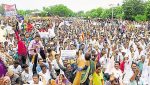


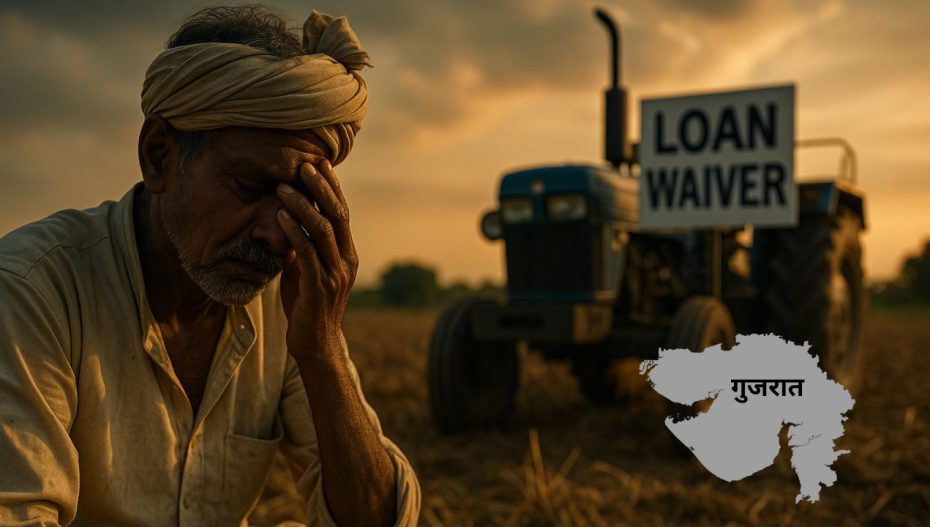
Three farmers have died by suicide in less than ten days in Gujarat. Of course, their deaths did not make any headlines. Obviously, there were no primetime debates, because in Gujarat, when the poor die, most national media choose to look the other way.
Karsan (Karsanbhai) Vavnotiya of Jampar village, Bhanvad taluka, Devbhumi Dwarka, died by suicide after he felt he could not repay his debts, and his only hope — his peanut crop — was destroyed by unseasonal rains. Gafarbhai Musa of Una taluka in Gir Somnath district had a wedding coming up in his family, had two unpaid loans, and jumped into a well and ended his life. The trigger was the unseasonal rains that destroyed his crops.
Amit Nakum of Jamnagar had a gold loan, and again, his crop failure prompted his decision to take his own life.
All these deaths occurred within the last ten days. Earlier, in April, Vinubhai Zundala of Vadali in Sabarkantha district took his life along with three others following debt and harassment by moneylenders.
Gujaratis are good at arithmetic. And so is their government. The Sarkari arithmetic is simple: billionaires get write-offs, farmers get suicide. This sounds bitter, but this is the pattern. Of course, the Gujarat government has now declared a compensation package for farmers affected by unseasonal rains, totaling an estimated Rs 10,000 crore, with affected farmers to receive Rs 22,000 per hectare up to a maximum of two hectares. It is a generous package but a tad too late.
The myth of Gujarat’s greatness is a masterclass in marketing — double-digit growth, a world-class business environment, billionaires multiplying faster than schools — and the average Gujarati is believed to be wealthy, healthy, and happy. But this is propaganda disguised as reality.
To be fair, Gujaratis are brilliant at business, but the reality is that they have been so for centuries — long before any political party stooped to claim credit. However, in the last three decades, the rich have become richer and the poor poorer. The rich get bailouts; the poor get funerals. Gujarat is vibrant only for the rich.
Over the decades, Gujarat has reduced itself to an elevator that lifts only the rich. The poor are stuck in the basement. Infrastructure is impressive. But while skyscrapers compete to touch the sky, thousands of children and pregnant women cannot reach out for or touch a cup of milk.
Though Gujaratis make up only 5% of India’s population, half of India’s billionaires are Gujarati. In the Forbes 100 list, 25 are from Gujarat. And yet, Gujarat ranks 25th in India in the Human Development Index. That says it all.
The Gujarat Model shines at the top but bleeds at the bottom. For every successful Gujarati like Mukesh Ambani, Gautam Adani, Uday Kotak, Azim Premji, or Dilip Shanghvi, there are millions of Gujaratis battling malnutrition and poverty. According to the NITI Aayog report “National Multidimensional Poverty Index: A Progress Review,” the percentage of people living in multidimensional poverty in Gujarat during 2019–21 was 11.66%.
The middle class is in a worse situation than the poor. They are squeezed from both sides: prices rising faster than incomes and services that should be public (education, health) being pushed into the private, expensive space.
Let us look at the education scenario — not for the rich who can afford international schools, but for the poor and marginalised. Gujarat’s secondary dropout rate is 17.9%, worse than Madhya Pradesh, Rajasthan, and Uttar Pradesh. Only 10 out of 100 Gujarati girls reach college. Only 43 of every 100 girls who finish school even make it to class 11.
The state has fewer colleges per lakh people than Tamil Nadu or Karnataka. Gujarat’s college enrolment for women is 22.7%, below the national average. When the government spends on summits, not schools, you get a generation of children with no classrooms, no teachers, and no opportunities.
The Gujarat Model builds seminar halls for investors and shuts government-aided schools for the poor. This is to give opportunities to the rich to set up family trusts and treat education as a business.
Worse, this tragedy is gendered. Let’s look at the health scenario. The sex ratio at birth is a chilling 95.4 girls per 100 boys — the third worst in India. Nearly five out of every 100 female foetuses are eliminated by their own families. The state where the “Beti Bachao” campaign was born has reduced it to an empty slogan.
With infant mortality and under-five mortality worse than most southern states, every single state in India provides better nutrition to its five-year-olds. Anaemia is rampant — 79% of children and 65% of women — higher than Bihar, UP, or Odisha. But instead of admitting failure, the government once claimed Gujarati women are “calorie-conscious.”
Then, Gujarat’s vegetarianism was used as a defence. Punjab and Rajasthan have more vegetarians than Gujarat, and still, they have less malnutrition compared to Gujarat. And yes, Gujarat is richer than both these states. The reality is that in Gujarat, statues stand tall — but its poor fall.
Gujarat boasts about industrial investment but hides the fact that its per capita bank deposits and credit are far below those of Tamil Nadu and Karnataka. Only 70% of women have their own bank accounts. The average spending in rural Gujarat is almost the same as in Bihar. The urban-rural consumption gap is worse than in Rajasthan, UP, and West Bengal. If Gujarat is truly rich, why do government figures tell a different story?
What about health? Ahmedabad, Vadodara, and Surat, along with some other district headquarters, have flashy hospitals to brag about, but the government stays silent on the fact that Gujarat has nearly 47% fewer registered doctors (per population) compared to Tamil Nadu and Karnataka. Hospitals mushroom in brochures, and medical tourism is the flavour of the season — again, only for the rich and their NRI relatives.
Every year, thousands of unemployed youth are pushed into despair, addiction, drug abuse, or illegal migration.
Since 2020, Gujarat has scrapped the crop insurance scheme. Farmers have nothing — no protection, no support. Prices of seeds and fertilisers soar, but compensation collapses. Meanwhile, industrialists receive subsidised land, tax waivers, power discounts, and bailout packages. In Gujarat, the government celebrates business while farmers bury their children. If this is development, then the price is being paid in funerals.
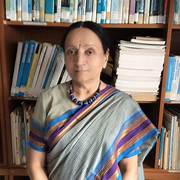
Eminent economist and Human Development Index expert Dr. Indira Hirway has warned repeatedly: Gujarat’s government invests in statues, optics, and mega-projects — not in people. The BJP regime is not committed to health, education, or livelihood. It is committed only to headlines.

Congress MP Shaktisinh Gohil says Gujarat is vibrant — but for whom? He agrees it is a paradise, but only for the rich, for the industrialists, for the billionaire friends of the government, and for a select BJP cadre, bureaucrats, and officers who blindly follow the government line. He says the BJP has reduced Gujarat to a graveyard of hope for farmers, labourers, tribals, and the poor.
According to him, the BJP’s Gujarat Model is simple — save the billionaires, sacrifice the farmers. His question is sharp: If Gujarat is booming so wonderfully, then why are farmers dying? Why is there so much unemployment? Why is the Human Development Index in Gujarat this bad?

Gujarat’s Aam Aadmi Party President, journalist-turned-politician Isudan Gadhvi, warns that Gujarat’s HDI rank will fall further. The trend is clear. The poor are disappearing from the economy. The middle class is crushed under private education. The farmer is being pushed to extinction.
The Gujarat Model has become a gated colony — the rich live inside, the poor wait outside the walls. And though they are right in front of our eyes, unfortunately, they are invisible and voiceless. Prosperity is now a password, not a right.
Of every 100 girls conceived, only 95 are born. Of those born, 39% are stunted. Of those stunted, most will never see a college. This is a state where the poor bury their children while the rich build towers.
Next time someone throws Vibrant Gujarat buzzwords — double-digit growth, foreign investors, ease of doing business — just ask a simple question: What is Gujarat’s HDI rank? Because development cannot exist in a silo. Development cannot be a circus for the rich and a graveyard for the poor. When corporates default, they get bailouts. When farmers default, they get funerals.
The Gujarat Model cannot shine just on billboards, newspapers, and television channels while keeping our poor, our farmers, and our marginalised starving.
A state’s vibrancy and development cannot be measured by the world’s tallest statue or strange world records like over 1.11 crore postcards written to a single person expressing gratitude (who else but PM Narendra Modi).
Gujarat is vibrant only for those who already own the future. For the rest, it is a waiting room outside the doors of opportunities. When corporates default, the government rushes to help. In contrast, farmers have to beg. A model that kills its farmers, stunts its children, silences its women, and abandons its poor cannot be deemed vibrant.
Also Read: Food, Faith and Fascism in New India https://thewire.in/politics/food-faith-and-fascism-in-new-india