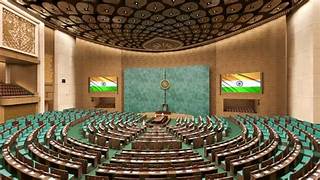
In a major move aimed at protecting the integrity of public examinations, the Lok Sabha on Wednesday passed the Public Examinations (Prevention of Unfair Means) Amendment Bill, 2026 by voice vote. The Bill seeks to strengthen the existing anti-paper leak law by introducing stricter punishments, faster investigations and trials, and advanced technology to prevent examination fraud.
The Bill was passed during the Monsoon Session of Parliament amid protests and sloganeering by Opposition members. Union Minister Dr. Jitendra Singh, who introduced the Bill in the Lok Sabha on July 27, said the amendments reflect the government’s commitment to making public examinations more transparent, secure and credible. Copies of the Bill had been circulated among Members of Parliament on July 25 before it was taken up for discussion.
The legislation comes against the backdrop of the NEET paper leak controversy, which triggered nationwide concern over the security and fairness of competitive examinations.
Why the Government Decided to Amend the Law
The amendments also come amid growing public anger over examination irregularities across the country. In recent months, youth-led protests organised by the Gen-Z movement and the Cockroach Janta Party (CJP) were held at Delhi’s Jantar Mantar and in several other cities following the NEET paper leak controversy. Protesters demanded the resignation of the Union Education Minister, a fair and transparent investigation into the NEET paper leak, strict action against those responsible, and comprehensive reforms to make India’s examination system more transparent, secure and accountable. The demonstrations brought national attention to examination integrity and added pressure on the government to introduce stronger legal measures against paper leaks and organised examination fraud.
The new Bill amends the Public Examinations (Prevention of Unfair Means) Act, 2024, which was enacted to curb paper leaks and organised examination fraud.
According to the government, the experience of implementing the 2024 law showed that further strengthening was necessary due to repeated incidents of question paper leaks and organised cheating networks in recent years.
The amendments are intended to improve accountability, create a stronger deterrent against organised examination fraud and safeguard the credibility of recruitment and entrance examinations across the country.
Replying to the debate in the Lok Sabha, Dr. Jitendra Singh said the Central Government had acted swiftly in the NEET paper leak case and had used its experience from implementing the 2024 law to prepare the latest amendments.
He also cited official figures stating that 52 FIRs have been registered under the anti-paper leak law since 2024. According to the minister, suicides linked to paper leak incidents have also declined in recent years, which he described as an encouraging indication of the law’s impact.
What Is Considered ‘Unfair Means’?
The legislation broadly defines unfair means as any activity that compromises the fairness of public examinations.
These include:
Using unauthorised assistance during examinations.
Possessing or using unauthorised written material.
Leaking question papers.
Organising cheating networks.
Misusing confidential examination-related information.
Any organised malpractice aimed at manipulating examination results.
The law also places responsibility on individuals involved in conducting examinations, prohibiting them from disclosing confidential information obtained through their official duties.
Much Harsher Punishments Under the New Law
One of the biggest changes introduced by the Amendment Bill is the significant increase in penalties for individuals and organisations involved in examination fraud.
For Individuals Involved in Paper Leaks
Under the existing law, offenders could face imprisonment ranging from three to five years along with a maximum fine of ₹10 lakh. The amended Bill increases the punishment to:
Minimum imprisonment of five years, extendable up to 10 years.
Maximum fine increased to ₹50 lakh.
For Organised Crime Syndicates
The government has introduced even stricter penalties for organised groups involved in paper leak rackets. Such syndicates can now face:
Seven to 10 years’ imprisonment.
Minimum fine of ₹10 crore.
The aim is to target organised examination mafias that profit from large-scale cheating operations.
Stricter Action Against Service Providers
The Bill also tightens action against service providers responsible for conducting public examinations if they are found involved in malpractice. The amendments propose:
Increasing the maximum fine from ₹1 crore to ₹5 crore.
Extending the period of debarment from conducting public examinations from four years to eight years.
Senior executives and managerial personnel found complicit in such offences will also face:
Five to 10 years’ imprisonment.
Maximum fine increased from ₹1 crore to ₹5 crore.
Faster Investigations and Special Fast-Track Courts
To ensure that paper leak cases do not remain pending for years, the Bill introduces strict timelines for investigation and trial. Under the proposed provisions:
Investigating agencies must complete investigations within 60 days (two months).
States and Union Territories will establish Special Fast-Track Courts for examination-related offences.
These courts will conduct day-to-day hearings.
Trials should be completed within three months of filing the chargesheet.
Special Public Prosecutors will be appointed for every Special Fast-Track Court.
The Bill also introduces a new provision allowing appeals against judgments of these courts to be filed before the High Court within 30 days, with an effort to dispose of such appeals within three months.
Illegal Assets Can Also Be Confiscated
Apart from imprisonment and financial penalties, the amended law empowers authorities to attach and confiscate assets acquired through examination fraud.
This provision is intended to ensure that those involved in organised paper leak rackets cannot benefit financially from illegal activities.
Technology to Strengthen Examination Security
The government has also proposed the use of advanced technology to improve examination security across the country. The Bill encourages:
AI-based proctoring.
Blockchain-backed question paper security.
Third-party security audits.
These measures are expected to make examinations more secure and reduce the chances of question paper leaks and other forms of organised cheating.
Examinations Covered Under the Law
The amended legislation applies to several major national recruitment and entrance examinations, including:
UPSC
NEET
JEE
CUET
SSC
These examinations involve millions of candidates every year, making stronger security measures particularly significant.
Political Exchanges During the Debate
The discussion on the Bill also witnessed political exchanges inside Parliament.
During his reply, Union Minister Jitendra Singh criticised Leader of Opposition Rahul Gandhi, alleging that he lacked an understanding of parliamentary procedures and the functioning of the government.
Soon after the Bill was passed by voice vote, the Lok Sabha was adjourned for the day.
How States Have Already Strengthened Anti-Paper Leak Laws
Several states have already introduced their own anti-cheating laws over the years, many of which impose severe penalties.
Uttar Pradesh
The state first enacted an anti-cheating law in 1998, which was replaced by the Uttar Pradesh Public Examination (Prevention of Unfair Means) Act, 2024. The new law provides:
Fines up to ₹1 crore.
Life imprisonment for repeat offenders.
Offences are non-bailable.
Cases are tried in Sessions Courts.
Rajasthan
Rajasthan enacted the Public Examination (Measures for Prevention of Unfair Means in Recruitment) Act, 2022, which was further strengthened in 2023.
The amended law provides:
Minimum 10 years’ imprisonment, extendable to life imprisonment.
Fine ranging from ₹10 lakh to ₹10 crore.
Convicted candidates are debarred from public examinations for two years.
Odisha
Odisha introduced the Orissa Conduct of Examinations Act, 1988, becoming one of the earliest states to legislate against examination malpractice.
Following several paper leak incidents, including concerns surrounding NEET-UG 2024, the state enacted the Odisha Public Examinations (Prevention of Unfair Means) Act, 2024, which received the Governor’s assent in February 2025. The law broadened the definition of offences and introduced stricter punishments.
Andhra Pradesh
The state enacted the Public Examinations (Prevention of Malpractices and Unfair Means) Act, 1997, which was amended in 2006 to include misleading and deceptive marketing practices by coaching centres and private tutorial institutes.
Other States
Similar legislation has also been enacted in:
Gujarat (2023)
Jharkhand (2023)
Uttarakhand (2023)
Chhattisgarh (2026)
These laws aim to curb paper leaks and organised cheating in public recruitment and competitive examinations.
A Stronger Legal Framework Against Examination Fraud
With the passage of the Public Examinations (Prevention of Unfair Means) Amendment Bill, 2026, the Central Government has significantly strengthened India’s legal framework against paper leaks and organised examination fraud.
The legislation introduces tougher punishments, faster investigations, time-bound trials, stricter action against organised cheating networks and service providers, along with modern technologies to improve examination security.
While the Bill has now been passed by the Lok Sabha, it represents another step in the government’s effort to restore confidence in public examinations and ensure that recruitment and entrance tests are conducted in a fair, transparent and secure manner.
Also Read: Gujarat Ayurved University Faces Suspected BAMS Paper Leak https://www.vibesofindia.com/gujarat-ayurved-university-suspected-paper-leak-bams-exam/