

Ahmedabad’s progress in reducing air pollution appears to be losing momentum, with the city recording a rise in annual PM10 levels after years of improvement. The latest assessment under the National Clean Air Programme (NCAP) shows that Ahmedabad’s average PM10 concentration increased from 98 micrograms per cubic metre (µg/m³) in 2023-24 to 101 µg/m³ in 2025-26.
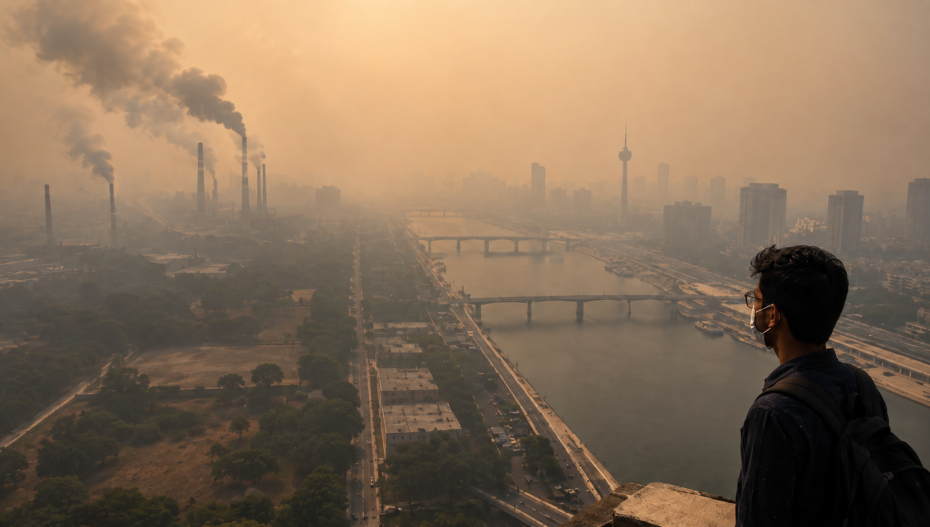
The increase is a concern because PM10 refers to tiny particles in the air that can enter the respiratory system and affect people’s health. While Ahmedabad has made significant progress compared with its pollution levels several years ago, the latest figures show that keeping pollution under control remains a major challenge.
The situation is not limited to Ahmedabad. Among Gujarat’s four cities covered under the NCAP, three recorded higher annual PM10 levels compared with two years earlier. Vadodara saw the sharpest increase, while Rajkot also recorded a rise. Surat, however, recorded an improvement.
Ahmedabad’s PM10 Levels Rise
According to data from the Union Ministry of Environment, Forest and Climate Change, Ahmedabad’s annual average PM10 level reached 101 µg/m³ in 2025-26, compared with 98 µg/m³ in 2023-24.
This comes after the city had achieved a 38.4% reduction in PM10 levels from its NCAP baseline of 164 µg/m³ in 2017-18.
That earlier reduction had placed Ahmedabad among the better-performing cities under the clean-air programme. However, the latest figures suggest that maintaining those gains is becoming increasingly difficult.
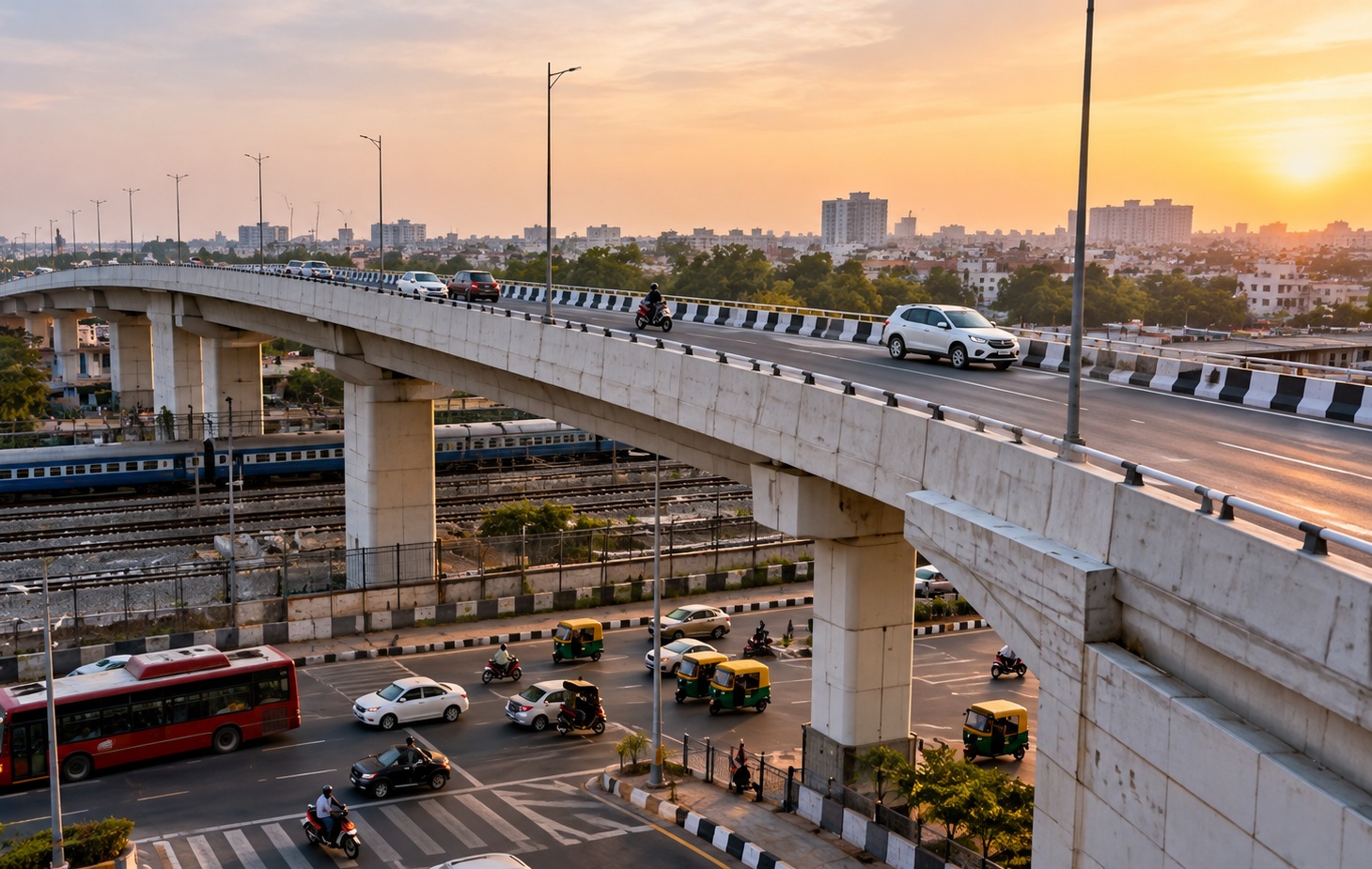
Experts believe the increase is linked to growing urban activity, including construction and traffic, which continue to generate large amounts of dust and particulate pollution.
Road Dust and Construction Remain Major Problems
A major source of PM10 pollution in Ahmedabad is road dust.
Large amounts of dust are generated by construction activity and can settle on roads and open surfaces. When vehicles pass over these roads, the dust can be lifted back into the air. This process, known as re-suspension, can keep particulate matter circulating in the atmosphere.
Public health expert Dr Dileep Mavalankar said the rise in pollution is consistent with increasing dust-generating activities across the city.
PM10 includes larger particles of particulate matter, particularly those produced by activities such as construction and road dust. With rapid development and construction taking place across Ahmedabad, experts warn that pollution levels could continue to rise unless stronger dust-control measures are properly enforced.
Pollution Rising Across Three Gujarat Cities
The latest figures show that Ahmedabad is not the only Gujarat city facing this problem.
Among the state’s four cities included under the NCAP, three recorded higher PM10 levels than two years ago.
Among Gujarat’s four cities covered under the National Clean Air Programme, three recorded a rise in annual PM10 levels between 2023-24 and 2025-26.
Ahmedabad’s PM10 concentration increased from 98 µg/m³ to 101 µg/m³, while Rajkot saw a rise from 92 µg/m³ to 98 µg/m³. The sharpest increase was recorded in Vadodara, where PM10 levels jumped from 95 µg/m³ to 119 µg/m³.
Surat was the only city to record an improvement, with its PM10 concentration falling significantly from 103 µg/m³ to 87 µg/m³.
Vadodara Now Has Gujarat’s Highest PM10 Level
The rise in Vadodara has pushed the city ahead of Ahmedabad in terms of annual PM10 concentration.
With an average of 119 µg/m³, Vadodara recorded the highest annual PM10 level among the four Gujarat cities covered under the programme.
It also recorded a PM2.5 concentration of 49 µg/m³, above the national annual standard of 40 µg/m³.
Ahmedabad’s annual PM2.5 concentration stood at 39.7 µg/m³, just below the national standard.
Among the four NCAP cities in Gujarat, Ahmedabad now ranks second for annual PM10 levels.
Why Dust Pollution Is Difficult to Control
Environmentalists point to road conditions and the city’s dependence on private vehicles as important factors behind the continuing pollution.
Environmental expert Mahesh Pandya said roads in Ahmedabad have virtually no industrial activity in some areas, yet PM10 levels remain high. This indicates that road dust is a major contributor.
Roads are repeatedly dug up and resurfaced, while loose dust can remain on the surface. Passing vehicles then lift the dust into the air again.
The problem becomes worse when construction sites do not properly control dust, roads are left with loose material and vehicles continue to move through dusty areas.
The city’s dependence on private vehicles also adds to the problem. With public transport still not adequate for everyone, more people rely on private vehicles, adding to traffic and the movement of road dust.
Loss of Tree Cover Adds to the Challenge
Another concern is the loss of tree cover.
Trees can act as a natural barrier by helping trap dust and particulate matter. Continued loss of trees, without adequate replacement, can therefore reduce one of the city’s natural defences against air pollution.
Experts say improving air quality will require more than simply controlling emissions. Road dust, construction activity, traffic management, public transport and green cover all need attention at the same time.
Pollution Still Above the National PM10 Standard
Despite the progress made since the NCAP baseline year, the latest numbers show that all four Gujarat cities covered under the programme remain above the annual PM10 standard of 60 µg/m³.
This places Ahmedabad, Vadodara, Rajkot and Surat among the cities that continue to face the challenge of meeting national air-quality standards.
The figures therefore present a mixed picture.
Ahmedabad has achieved a substantial reduction from its 2017-18 baseline, and Surat has managed to reduce its PM10 concentration over the past two years. But the recent rise in Ahmedabad and Rajkot, along with the sharp increase in Vadodara, shows that earlier improvements cannot be taken for granted.
The Health Cost of Rising Pollution
The increase in particulate pollution is not only an environmental concern but also a public health issue.
Long-term exposure to polluted air can contribute to respiratory problems. Experts say people may experience persistent coughing, irritation in the upper respiratory tract and respiratory infections.
Air pollution can also cause eye irritation, with children and elderly people particularly vulnerable. People who already have respiratory illnesses may face additional problems when pollution levels remain high.
This makes controlling dust and particulate matter important not only for improving the city’s environment but also for protecting public health.
Ahmedabad Needs to Protect Its Earlier Gains
Ahmedabad’s experience under the National Clean Air Programme shows that significant reductions in pollution are possible. The city had reduced its PM10 levels by 38.4% from the 2017-18 baseline, demonstrating that sustained action can produce results.
But the latest increase to 101 µg/m³ is a warning that those gains could slow or even reverse if pollution sources are not controlled effectively.
For Ahmedabad, the challenge now is not just to achieve further reductions but to ensure that the progress already made is maintained.
Stronger dust-control measures at construction sites, better road management, improved public transport, protection and expansion of green cover, and steps to reduce dependence on private vehicles could all play an important role.
The latest figures underline a simple message: Ahmedabad has made progress, but clean air will require continuous effort.
Also Read: 3,000 Acres, Two Claims: Gujarat Villagers Demand Right To Cultivate Forest Land https://www.vibesofindia.com/gujarat-tribal-land-dispute-sagbara-umarpada-forest-rights/