


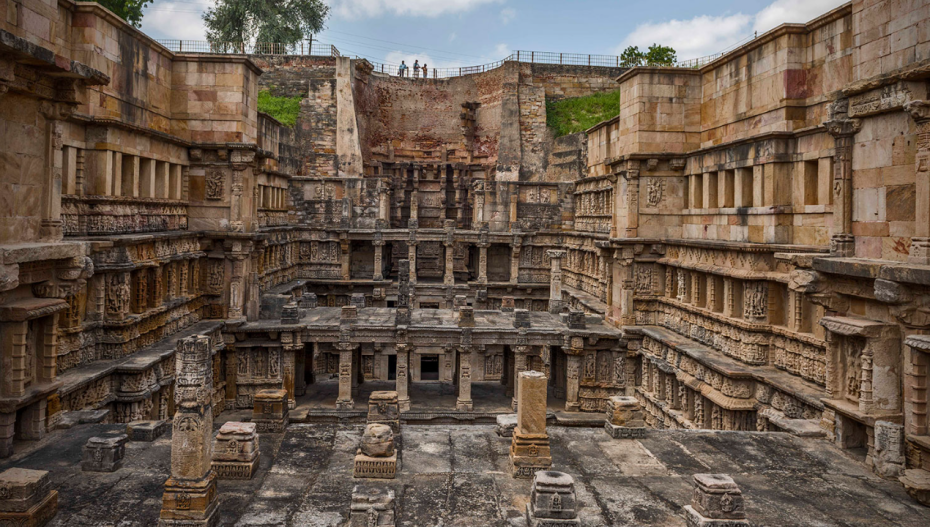
For nearly 1,000 years, Rani-ki-Vav in Gujarat’s Patan has stood as an example of India’s remarkable architectural and artistic heritage. Its walls, pillars and sculptures have survived centuries, attracting visitors with their detailed carvings of Hindu deities, celestial figures and mythological stories. However, new scientific research has drawn attention to a threat that visitors may not easily notice: microscopic organisms that could be slowly weakening the monument’s sandstone.
A new study has found that bacteria living on the stone surfaces may contribute to the deterioration of the monument through biological growth and chemical reactions. Unlike cracks, broken sculptures or visible erosion, this damage can develop gradually without showing clear signs on the surface.
The findings raise concerns about how historical monuments are monitored and protected. They also suggest that preserving an ancient structure requires more than protecting it from rain, sunlight and physical damage. Scientists may also need to study the microorganisms living on its surfaces.
The research focuses on how bacteria and other microorganisms interact with the sandstone used in Rani-ki-Vav.
Some bacteria produce sticky substances that allow them to attach themselves to stone surfaces. These substances help microorganisms form what are known as biofilms. In simple terms, biofilms are thin layers of microbial growth that stick to a surface.
These layers can hold moisture and trap chemical substances close to the stone. This creates conditions in which chemical reactions can gradually affect the minerals present in the sandstone.
Researchers also found acids and other chemical compounds linked to microbial activity. Some of these acids can dissolve calcite, a mineral found in stone, contributing to the weakening of the material.
The study further explains that certain byproducts produced by microorganisms, known as metabolites, can increase the porosity of sandstone. This means the stone can develop more tiny spaces through which water may enter.
Changes in water movement and moisture retention can further influence the deterioration process. The concern is that such damage may continue even when the stone appears relatively unchanged to the naked eye.
To understand what was happening on the monument, researchers collected samples from 12 locations where signs of erosion were associated with stone surfaces and sculptures.
The samples included microbial colonies, biofilms and moist sediments.
Instead of studying the stone only through physical observation, the research team combined microbiology with mineral and chemical analysis. They used X-ray-based techniques, chromatography and spectroscopy to examine the samples.
These methods helped identify the bacterial communities present on the sandstone and the chemical compounds that could be contributing to its deterioration. Researchers also detected metabolites associated with microbial activity.
The study identified several major bacterial groups. Firmicutes formed the largest share, accounting for 61.5% of the bacterial groups reported. Bacteroidetes accounted for 18.5%, while Proteobacteria made up 18%. Actinobacteria represented 1.4%. Other bacterial groups were also detected.
The findings helped researchers understand that microbial activity is not simply the presence of bacteria on an old structure. These organisms can also produce substances that influence the minerals and moisture conditions of the stone.
The research was conducted as part of Rachana Priyadarshi’s master’s dissertation at the Department of Archaeology, Krantiguru Shyamji Krishna Verma Kachchh University, Bhuj. Gautam Priyadarshi, Rajat Patel, Subhash Bhandari, Shubha Majumdar, Snehal Bagthariya and Ashish Patel were also part of the research team.
The paper, titled ‘Bacterial degradation of sandstone at the UNESCO World Heritage Site Rani-ki-Vav, India: A multi-analytical diagnostic study’, was published in Elsevier’s Journal of Cultural Heritage.
Researchers from several institutions contributed to the study, including the Department of Life Sciences at Hemchandracharya North Gujarat University, Patan; Gujarat Biotechnology Research Centre (GBRC), Gandhinagar; and the Archaeological Survey of India (ASI), Vadodara Circle.
Rani-ki-Vav is not just an ancient water structure. Built in the 11th century, it is known for its elaborate architecture and thousands of intricate sculptural details. The monument has been recognised as a UNESCO World Heritage Site since 2014.
Its sandstone surfaces have survived for centuries, but the new research suggests that the processes affecting them may be more complicated than previously understood.
Traditionally, stone deterioration is often associated with ageing, changing weather conditions, water exposure and physical damage. However, this study highlights the role of biological and chemical processes taking place together on the stone surfaces.
This is particularly important because microbial damage may not always be visible during routine inspections.
Researchers have recommended long-term monitoring of the monument across different seasons, with special attention to the periods before and after the monsoon. During these periods, changes in moisture conditions could influence microbial growth.
They have also stressed the need to monitor not just bacteria but other organisms, including fungi and algae.
Future conservation efforts should focus on reducing excessive moisture retention, mineral dissolution and the movement of salts associated with microbial activity.
Such monitoring could help conservation agencies identify early signs of deterioration and develop suitable preservation methods before the damage becomes more serious.
The findings at Rani-ki-Vav are part of a wider scientific effort to understand how microorganisms affect India’s historical monuments.
The study does not suggest that Rani-ki-Vav is facing immediate structural danger. Instead, it identifies microbial growth and related chemical reactions as potential contributors to the gradual deterioration of its sandstone.
The larger message is that an ancient monument can be affected by damage that is not immediately visible to visitors.
For a structure that has survived almost a millennium, understanding these hidden processes could become an important part of its future preservation.
Scientific monitoring, seasonal studies and conservation measures based on the behaviour of microorganisms may help protect Rani-ki-Vav’s intricate carvings and sandstone surfaces for generations to come.
Also Read: Those Who Feed Us Are In Debt: Gujarat’s Farm Loans Cross Rs 1.66 Lakh Crore