


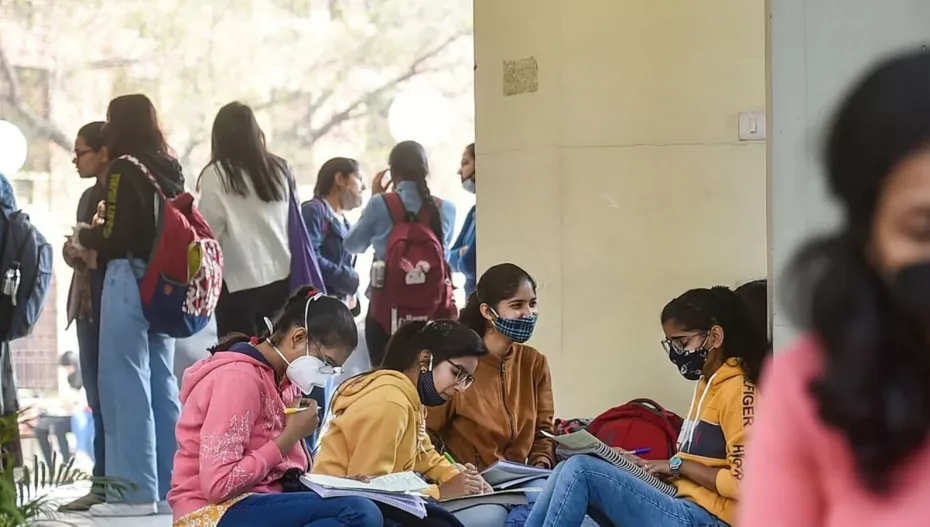
The Gujarat Common Admission Services (GCAS) portal was introduced by the Gujarat government two years ago with the promise of making college admissions easier through a single online platform. The idea was simple—students could complete the admission process through one portal instead of visiting different institutions. However, as admissions for the 2026-27 academic year progress, students, parents, and academicians are increasingly questioning whether the system has become a “single window” with multiple new hurdles instead.
Originally, GCAS was envisioned as a unified online admission platform for publicly funded universities. Over time, however, the process evolved into a multi-layered system that now involves registration, programme selection, university-level registration, entrance examinations, and multiple rounds of counselling to secure a seat.
The issue has become particularly significant at Maharaja Sayajirao University (MSU), Vadodara, which is Gujarat’s largest accounting university with nearly half of its student strength in undergraduate courses. This year, MSU introduced entrance examinations for first-year B.Com admissions for the first time. The university has around 6,793 seats, while more than 15,000 students from Vadodara city and district are expected to seek admission. Even after MSU increased the quota for Vadodara students from 85% to 95%, concerns remain over whether all local applicants will secure admission.
Eligibility Confusion
The introduction of entrance tests for mainstream commerce programmes has reignited the debate over the growing complexity of the GCAS system. In response to widespread confusion this month, MSU issued a detailed clarification explaining the process for programmes that require entrance examinations.
The university clarified that registering on GCAS alone does not make a candidate eligible. Students must first complete programme preference selection, separately register for the entrance examination, and pay the entrance test fee through the university portal.
Officials found that many applicants completed only part of the process. During BBA admissions, several students reportedly appeared for entrance examinations without completing the mandatory GCAS formalities. MSU later verified that candidates who registered on GCAS but failed to complete programme choices or did not pay the entrance examination fee would not be considered eligible.
Conversely, students who appeared for the entrance examination after paying the fees could lose eligibility if they skipped programme selection on GCAS. To reduce hardship, the university extended the portal deadline to allow students to complete pending formalities.
A Multi-Layered Reality
Academicians argue that instead of eliminating duplication, the system has added more layers. Students are often required to complete registration, document verification, programme selection, entrance test registration, and admission confirmation through different channels. Critics say that a truly integrated platform should automate the connection between these stages.
Education experts also questioned the absence of automatic seat allocation. Under the current system, students can receive admission offers from multiple universities but are required to accept only one while relinquishing the others. They believe a centralised portal should automatically allot seats based on preferences, reducing repeated admissions rounds and vacancies. Instead, multiple rounds continue for weeks, stretching the admission cycle well into the academic session.
Operational Difficulties
Faculty members have also reported practical challenges. Sources at MSU said hundreds of applications contained incorrect birth dates, registration details, and other discrepancies, forcing faculty members to manually verify records.
Nearly 100 teachers were reportedly engaged in contacting students and resolving issues during B.Com admissions. In the BCA programme alone, around 1,700 students applied for admission, but the faculty received only 1,200 applications for the entrance examination. Of these, nearly 100 students had not completed GCAS registration.
The debate extends beyond MSU. At Veer Narmad South Gujarat University (VNSGU), entrance examinations continue only for selected professional master’s programmes, while courses such as B.Com, BBA, BCA, M.Com, and M.Sc. remain merit-based.
Vacancies and Fresh Admission Rounds
Meanwhile, GCAS data showed that Gujarat has nearly 5.5 lakh undergraduate seats available across the state. Around 2.95 lakh students have registered so far, while only about 2.5 lakh have paid the required fees.
Educationists say a substantial number of seats remain vacant despite repeated admission rounds, with some students choosing private universities over an increasingly complicated process.
Authorities have therefore announced multiple additional admission rounds. The second round is scheduled from May 30 to June 6, followed by the third round from June 8 to June 13, and the fourth round from June 15 to June 20.
Also Read: Indians Singled Out Again! Pic Of Desi Students At Irish University Food Bank Sparks Debate https://www.vibesofindia.com/indians-singled-out-again-pic-of-desi-students-at-irish-university-food-bank-sparks-debate/