

Nearly three years after the death of Rajkot’s Joint Director General of Foreign Trade (DGFT) Jawri Mal Bishnoi during a CBI raid, the Gujarat High Court has directed that a criminal case be registered against unidentified persons and directed a fresh investigation into the circumstances surrounding his death.
Justice M K Thakker observed that the earlier inquiries into Bishnoi’s death were not enough to deal with the allegations raised by his family. The court has now placed the investigation under the supervision of the DIG, CID (Crime), and directed that a report be completed within three months.
Bishnoi died on March 25, 2023, after falling from a fourth-floor window while the CBI operation was underway. While the incident was initially treated as an accidental death, questions raised by his family have kept the circumstances of his death under scrutiny.
His widow alleged that he was subjected to harassment and torture for around 19 hours by members of the CBI team. The family also questioned the suicide theory and sought murder charges against members of the CBI raiding team.
The family told the High Court that Bishnoi had allegedly been illegally detained and that safeguards relating to his arrest were not followed. They also alleged that threats were made during the search of his residence and claimed that some injuries were not consistent with the account that he had jumped from the window.
An alleged audio recording from the time of the CBI search, reportedly found on the mobile phone of Bishnoi’s son, was also relied upon before the court.
Earlier inquiries had reached a different conclusion
The case had already gone through multiple inquiries before reaching the High Court.
Following Bishnoi’s death, Rajkot police investigated the matter as an “accident death”. The police reportedly concluded that the CBI team had not taken adequate care of Bishnoi, but did not find evidence of abetment to suicide.
Since Bishnoi had been in CBI custody, a judicial magistrate also conducted an inquiry under Section 176 of the CrPC. The inquiry did not hold the CBI team responsible.
The family, however, did not accept these findings. They approached the police as well as the judicial magistrate, seeking a fresh probe into what they described as harassment, torture and other circumstances surrounding Bishnoi’s death.
They later approached the Gujarat High Court, arguing that the earlier inquiries had failed to properly examine their allegations.
What happened during the CBI operation?
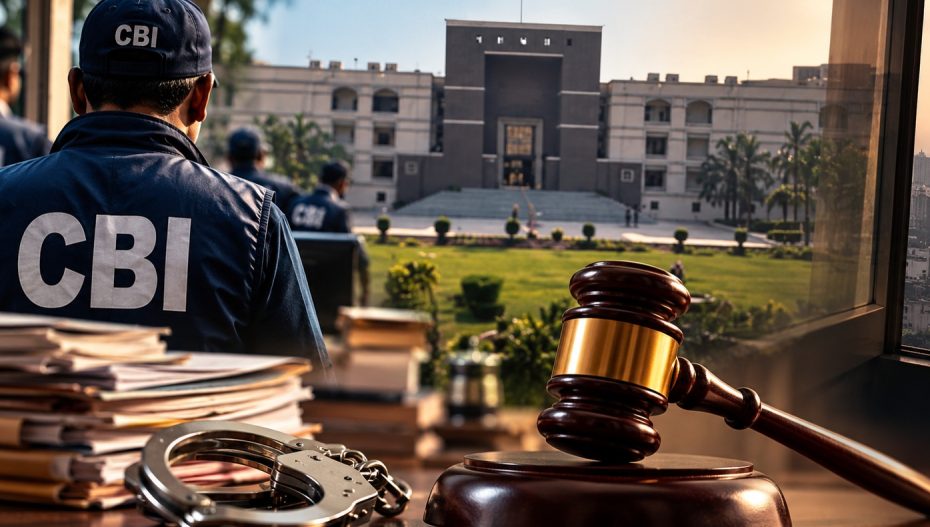
The events leading up to Bishnoi’s death began on March 24, 2023, when the CBI’s anti-corruption branch laid a trap at his office.
Bishnoi was allegedly caught accepting a bribe, following which the CBI registered a case under the Prevention of Corruption Act.
A separate CBI team then searched his residence. The post-trap procedure continued through the night. During this period, officials received information about Bishnoi’s death. He had allegedly fallen from the fourth floor of the building.
The circumstances surrounding the fall became the central point of dispute between the authorities and Bishnoi’s family.
High Court finds earlier inquiries insufficient
While hearing the family’s plea, the High Court noted that an accident-death inquiry and a judicial inquiry could not take the place of a full police investigation if the allegations pointed towards a cognisable offence. The court also identified gaps in the earlier inquiries.
Justice Thakker stressed that cases involving custodial deaths and alleged violations of constitutional rights require a different approach. The court observed that when such allegations arise against an officer or another person while an individual is in custody, police authorities may be required to register an FIR and investigate the matter.
The CBI and the Gujarat government had opposed the plea before the High Court.
Despite a previous inquiry conducted by an SIT under an ACP, the High Court directed that the allegations be investigated afresh.
Investigation now under CID supervision
The court has ordered the registration of an FIR against unknown persons and handed the investigation to the CID (Crime).
The DIG, CID Crime, has been directed to supervise the probe and ensure that it is conducted in accordance with the law and without undue delay.
The investigating agency has also been directed to complete an appropriate report within three months from the date of the order and forward it to the High Court registry for the court’s perusal.
For Bishnoi’s family, the fresh investigation brings the circumstances of his death back into focus after earlier inquiries had failed to resolve the questions they had raised.
The latest order does not establish how Bishnoi died or fix responsibility on any individual. Those questions will now be examined as part of the fresh investigation.