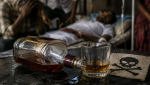



In a state where alcohol has been prohibited for decades, a deadly liquor tragedy has once again exposed the dangers of the illegal alcohol trade. Gujarat’s Bhavnagar district has reported nine deaths and around 60 people affected after consuming methanol-laced liquor, according to government reports. But behind the tragedy is a larger question: what exactly is methanol, and why can even a small amount turn a drink into a deadly poison?
Methanol is a highly toxic industrial chemical that the human body converts into harmful substances, potentially causing severe acidosis, blurred vision, organ failure, blindness and death. The Bhavnagar incident offers a stark look at how illegally manufactured liquor can put lives at risk—even in a state where prohibition is strictly in place.
What Happened in Bhavnagar?
The suspected toxic liquor was not simply sold as ordinary country liquor. According to the investigation, methanol-laced liquid was reportedly filled into bottles made to look like a popular Indian Made Foreign Liquor (IMFL) brand.
Police believe 25 cartons containing around 300 bottles of the suspected toxic drink were supplied to retail bootleggers.
With each bottle containing approximately 750 ml, this means around 225 litres of the suspected poisonous liquor could have entered circulation.
Forensic testing reportedly found 38.59% methanol in the seized liquor. This is significantly lower than the concentration reported in Gujarat’s 2022 hooch tragedy, when the toxic liquid was found to contain around 98% methanol.
Despite the lower concentration, the latest incident has resulted in multiple deaths and serious illness.
What Is a ‘Lattha Kaand’?
In Gujarat, the term ‘lattha kaand’ is commonly used for deaths or hospitalisations caused by illegally manufactured or contaminated liquor.
Legally produced alcoholic beverages use ethanol, or ethyl alcohol. Illegal liquor producers may use cheaper industrial substances, including methanol, to make or increase the volume of the drink.
Methanol is extremely dangerous for the human body. Even relatively small amounts can cause serious poisoning, blindness, organ damage and death.
Symptoms Can Appear Within Hours
Doctors treating the affected patients said methanol poisoning can initially look like an ordinary stomach or breathing problem. Common early symptoms include:
Nausea and vomiting
Blurred vision
Breathing difficulty
Poor coordination and other neurological symptoms
Symptoms generally begin within two to four hours, although the timing can vary depending on how much contaminated liquor a person consumed.
More serious problems, including breathing difficulties and severe acidosis, can develop after around 10 to 12 hours.
One major concern in the Bhavnagar case was the delay in seeking medical treatment. Several victims reportedly reached hospitals nearly 48 hours after consuming the suspected toxic liquor, reducing the chances of timely intervention.
How Doctors Identified the First Cases
Doctors initially did not know that a larger poisoning incident was taking place.
A patient named Kartik Ashwin Makwana, 40, was admitted to Sir Takhtasinhji General Hospital on August 17 with symptoms similar to those later seen in other suspected methanol-poisoning patients.
He initially did not reportedly tell doctors that he had consumed the toxic liquor.
After doctors began investigating the growing number of similar cases, they spoke to his relatives again and learned that he had also consumed the suspected liquor. He was subsequently added to the list of affected people and later died.
This helped doctors understand that the patients arriving with similar symptoms could be linked to a common source.
How Methanol Damages the Body
The danger from methanol comes from the way the body breaks it down.
After methanol is consumed, the body converts it into formaldehyde and then formic acid. Formic acid is highly toxic and can cause severe acidosis, affecting vital organs.
In serious cases, the poisoning can lead to multi-organ failure and death.
The outcome depends on several factors, including the amount consumed, the person’s metabolism and, most importantly, how quickly treatment begins.
One affected person, Sanjay Lakshman Dodiya, travelled from Bhavnagar to Surat after consuming the suspected liquor. He was declared brain dead before later dying from cardiac arrest on August 23.
Methanol Levels Found in Victims
Toxicology findings have also highlighted the severity of the poisoning.
According to the FIR, Makwana’s blood contained 0.0847% W/V methanol, equivalent to about 84 mg of methanol per 100 ml of blood.
In the case of 25-year-old Upendrasinh Chandrasinh Gohil, the first reported casualty, the methanol concentration was 0.0773% W/V, or approximately 77 mg per 100 ml of blood.
Doctors have explained that the substance involved in this tragedy was not pure methanol. The suspected liquor also contained ethanol, which can act as an antidote by slowing the body’s conversion of methanol into its more toxic compounds.
Treatment Is a Race Against Time
Methanol poisoning requires urgent medical attention.
Two important treatments are ethanol and fomepizole. Fomepizole is an intravenous medicine used to prevent methanol from being converted into formaldehyde and formic acid.
If treatment begins early, doctors can use these medicines to slow the dangerous metabolic process.
However, once methanol has already been converted into formic acid, treatment becomes more complicated. Doctors may then use folinic acid and folic acid to help the body break down formic acid into less harmful substances.
In Bhavnagar, hospitals received supplies of fomepizole from Ahmedabad, while the state government also procured additional supplies and distributed them to private hospitals.
Several affected patients have been undergoing dialysis, which is used to help remove toxic substances and manage severe acidosis.
How Doctors Decide When a Patient Can Go Home
Doctors have been closely monitoring patients through repeated Arterial Blood Gas (ABG) tests.
These tests help doctors check the blood’s pH level and the amount of bicarbonate. Low bicarbonate can indicate serious acidosis and the need for dialysis.
According to the medical team, patients may be considered for discharge when they have three consecutive normal ABG tests over 18 hours, no clinical symptoms and stable vital signs.
Some patients have already recovered sufficiently to be discharged.
Why Was There a Delay in Confirming the Deaths?
Another issue that emerged during the tragedy was the delay in officially linking some deaths to methanol poisoning.
For example, 42-year-old teacher Hitesh Dileep Parmar was found dead at his home on the night of August 19. His body was found near his bed, with a glass containing the suspected poisonous liquor reportedly spilled nearby.
However, authorities were cautious about immediately confirming methanol poisoning as the cause of death.
Forensic experts explained that poisoning cannot always be confirmed simply by examining a body. Samples such as blood, stomach contents, liver and kidney tissue have to be sent for toxicology testing.
The final conclusion depends on the Forensic Science Laboratory (FSL) report.
Experts also pointed out that the concentration of poison found during a post-mortem can vary. If a person receives medical treatment before death, the amount of poison remaining in the body may be lower and only traces may be detected.
Gujarat’s History of Hooch Tragedies
The Bhavnagar incident is not the first major liquor-poisoning tragedy in Gujarat.
The state has had a prohibition policy since the 1960s, but illegal liquor production and distribution have continued to pose a challenge.
In 2022, 42 people died across three Gujarat districts in another major methanol-related tragedy.
Earlier incidents were even deadlier. Gujarat recorded 148 deaths in Ahmedabad in 2009, 132 deaths in Vadodara in 1989 and 101 deaths in Ahmedabad in 1977 in major hooch tragedies.
The latest incident has therefore renewed questions about how toxic liquor reaches consumers despite the state’s prohibition laws.
Investigation Into the Toxic Liquor Supply
The authorities are investigating the entire chain behind the suspected adulterated liquor — from the preparation and bottling of the methanol-laced liquid to its distribution among retail bootleggers.
The use of forged stickers and caps of a popular liquor brand has also raised concerns about how the product was made to appear genuine.
With nine deaths officially reported in government data and around 60 people affected, the Bhavnagar tragedy has once again highlighted the deadly consequences of illegally manufactured liquor.
The case also underlines a critical medical lesson: methanol poisoning can become fatal quickly, and early recognition and treatment can make a major difference to survival.
Also Read: Bhavnagar Liquor Tragedy: 13 More Arrested, Probe Widens To Methanol Supply Chain https://www.vibesofindia.com/bhavnagar-spurious-liquor-case-27-arrested/