


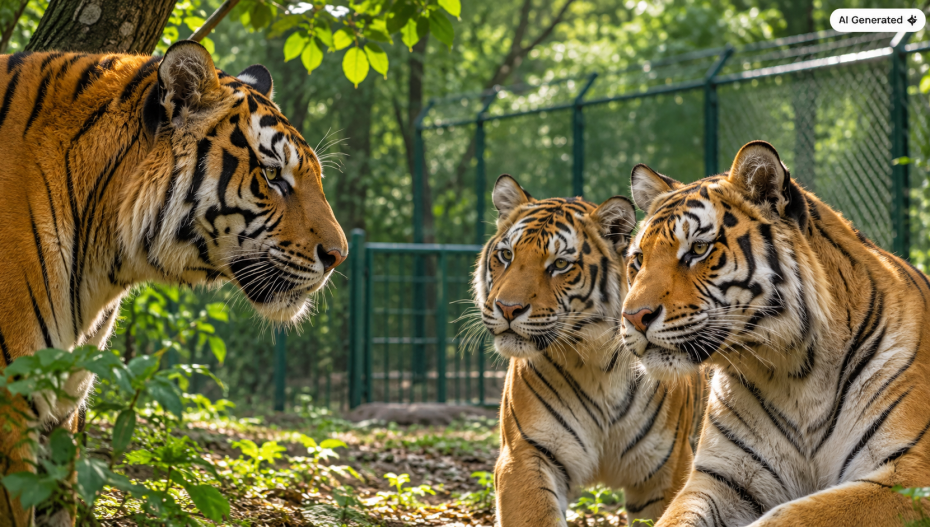
Imagine a forest where a lone tiger has been living without another tiger of its kind for company. Now, the Forest Department wants to change that. Gujarat, which is largely known for its Asiatic lions, is preparing to bring two tigresses (female tigers) to the Ratanmahal forests in the hope of creating a breeding population of tigers in the region.
But this will not be a simple exercise of bringing three tigers together. The department wants to take things slowly, understand how the animals respond to each other and make sure they can adjust to their new surroundings before they are allowed to roam freely in the forest.
Gujarat currently has only one male tiger, which lives in the Ratanmahal forests. The plan is to bring two tigresses as potential mates for him. If the initiative succeeds, it could help establish a tiger population in the state.
Before the tigresses are introduced into the open forest, the Forest Department plans to keep them in specially designed temporary enclosures. These enclosures will give the animals time to get familiar with the new environment instead of being released directly into the male tiger’s territory.
The department has issued tenders for constructing two such enclosures, one in Dang district and another in Narmada district. Both are expected to be ready within 45 days.
Officials are considering enclosure sizes between two and five hectares, although they are giving preference to the larger five-hectare model. Two to three proposals related to the arrangements have already been submitted to the National Tiger Conservation Authority (NTCA), which will take the final decision.
The enclosures will play an important role in preparing the animals for their eventual release. During this period, officials will observe their movements, behaviour and aggression levels to understand whether they are adjusting well to the unfamiliar surroundings.
Interestingly, the plan is not just about helping the two tigresses adjust. The Forest Department also wants to understand how the existing male tiger reacts to their presence.
The animals will not be brought face-to-face immediately. Instead, the male tiger will gradually become aware of the tigresses through their scent and sounds. Officials want to observe whether he shows any interest or changes in behaviour when he senses or hears them nearby.
The department is also looking at an example from Sakkarbaug Zoo to understand this process. Forest officials have observed that the male lion there often approaches the lioness’s enclosure when he hears her calling.
Officials want to study whether the male tiger in Ratanmahal displays a similar response when he hears the calls of the tigresses. This gradual process will help them understand the animal’s behaviour before making any decision about releasing the females into the open forest.
For Gujarat’s Forest Department, this initiative will also be a new kind of field experience. The state’s forest teams have largely been involved in managing Asiatic lions, but handling tigers requires a different approach.
The difference is important. Lions generally live in groups, while tigers prefer to live alone. Tigers are also highly territorial and can become aggressive when another tiger enters their territory.
This means that introducing two tigresses to an existing male tiger requires careful planning. A sudden meeting could create problems if the animals do not accept each other’s presence.
Principal Chief Conservator of Forests Jaipal Singh confirmed that the department is considering five-hectare enclosures for the tigresses. He also said that once the animals are released into the forest, the enclosures could later be used for breeding herbivorous wildlife.
Bringing more tigers to a forest is only one part of the plan. The region must also have enough food for them to survive.
A senior Forest Department official in Gandhinagar said that increasing the population of hoofed herbivorous animals is extremely important for the long-term success of the initiative.
These animals form an important part of a tiger’s natural food supply. Without enough prey in the forest, maintaining a healthy tiger population over the years would become difficult.
This is why the department is also looking at strengthening the prey base in the region. The temporary enclosures could eventually be used for breeding herbivorous animals, helping improve food availability in the forest.
Before the two females are allowed into the open forest, the Forest Department plans to closely monitor their activities inside the temporary enclosures.
Camera traps will be installed to record their movements and behaviour. These cameras will help officials understand how the tigresses are adjusting to the new surroundings, whether they are showing signs of aggression and whether they are ready for release.
Their movement patterns and overall behaviour will be assessed throughout the acclimatisation period. The department wants to make decisions based on how the animals respond rather than rushing the process.
For now, the proposal is awaiting the NTCA’s final decision.
The larger aim is to give Gujarat a chance to develop its own tiger breeding population. But the success of this plan will depend on much more than bringing two tigresses to meet a lone male. The animals must adjust to each other, the forest must provide enough food, and the department must ensure that the entire process is handled carefully.
For a state widely recognised for its lions, the possible return of a breeding tiger population could mark an important development in its wildlife conservation efforts.
Also Read: From Coastal Smuggling To Secret Factories: Gujarat’s Drug Menace Puts Youth At Risk