


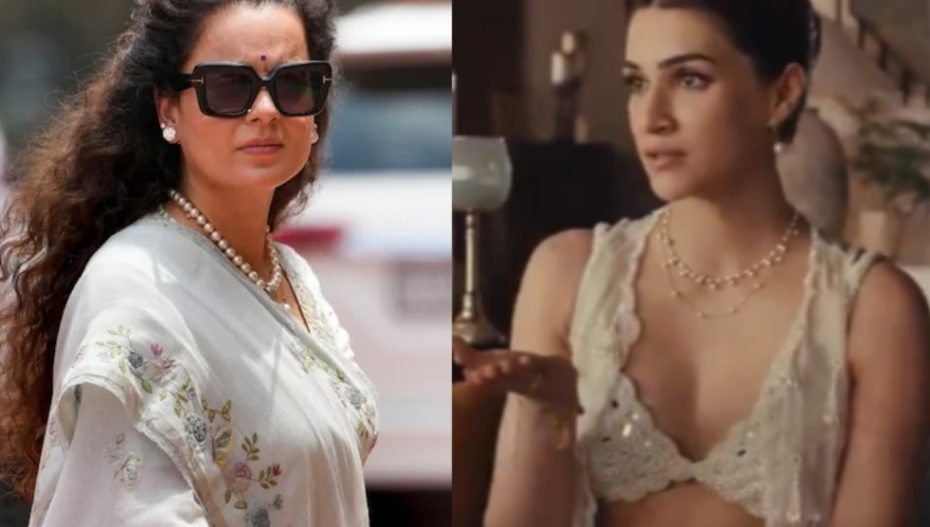
A Raksha Bandhan advertisement featuring actress Kriti Sanon has sparked a wider conversation about fashion, cultural traditions and a woman’s right to choose what she wears. The campaign, created for jewellery brand GIVA, drew criticism over Kriti’s outfit, with actor-turned-politician Kangana Ranaut questioning whether the look was appropriate for a festival associated with family and tradition.
What began as a discussion around an advertisement soon became a broader debate about whether a person’s clothing should be used to judge their respect for culture. Kriti later responded to the criticism, arguing that traditions are defined by the values and emotions people carry rather than by what a woman wears.
What sparked the controversy?
The Raksha Bandhan campaign featured Kriti wearing an ivory bralette-style blouse with a skirt and cape while celebrating the festival. The advertisement also showed her tying a rakhi to a pet dog, reflecting the idea that pets can be an important part of a family.
While the campaign aimed to present Raksha Bandhan as a celebration of love and family bonds, Kriti’s outfit became a major point of discussion after the advertisement was released.
Some social media users questioned whether the outfit was suitable for a festival traditionally associated with family, customs and cultural values.
However, the conversation soon moved beyond the advertisement itself and became a debate about whether a woman’s clothing should determine how seriously she takes cultural traditions.
Kangana Ranaut questions the campaign
Kangana Ranaut also criticised the campaign and questioned Kriti’s choice of outfit.
In her comments, Kangana described the presentation as “intentionally creepy” and objected to the way the actor was dressed while appearing in a Raksha Bandhan campaign.
Kangana shared on social media stating, “It’s a wonderful time to be a woman. Our closets are full of a variety of clothes, today’s woman is a global woman. From cocktail dresses to lehenga cholis, jeans to saris, bikinis to salwar kameez, from all the options that are available to us today, why would you tie your brother a rakhi in your bikini/undergarments? Where are all your styling options? Ha ha, the advert looks intentionally creepy!”
Her remarks added another layer to the online debate, bringing the issue of fashion, cultural expectations and personal choice into sharper focus.
Kriti Sanon responds
Kriti later addressed the criticism through her Instagram Stories. Although she did not directly name Kangana, her response appeared to address the wider discussion surrounding the advertisement.
“The essence of festivals is not in the clothes you wear, it is in the emotions and meaning you hold for the traditions,” she wrote.
“Rakshabandhan is a bond of protection. My sister and I tie rakhi to each other. We know we can protect each other no less than a brother would have. We pray for each other’s health, happiness & long life. And for us, this prayer and promise extends to our dogs too! After all, they are family,” she wrote.
“Also, when will we stop telling women what to wear?? Ethnic fashion has evolved over the years, but still a woman’s respect for her culture is measured by just her clothes!! Culture & traditions are in her heart, not in her neckline!”
Kriti questioned why women continue to be told what they should wear and argued that culture and traditions are matters of personal values rather than clothing.
Her response focused on the emotional meaning of Raksha Bandhan rather than the outfit featured in the campaign.
‘Culture and traditions are in her heart’
Kriti explained that, for her, Raksha Bandhan represents a promise of protection, care and affection between siblings.
She said that she and her sister tie rakhis to each other and believe they can protect and support one another just as brothers and sisters traditionally do.
She also said that the essence of a festival should not be judged by the clothes someone chooses to wear.
Her broader point was that respect for culture comes from a person’s feelings, beliefs and actions, rather than from the neckline or style of an outfit.
Kriti also included her pets in that sentiment, saying that the love and prayers associated with the festival extend to her dogs because she considers them part of her family.
Rahul Gandhi backs Kriti
The debate gained further attention when Congress leader and Leader of Opposition in the Lok Sabha Rahul Gandhi expressed support for Kriti.
He shared Kriti’s statement on his Instagram Stories and argued that women should have the freedom to decide what they wear, what they do and where they go.
His intervention shifted the discussion further into the larger question of women’s freedom and personal choice.
A debate bigger than one advertisement
The controversy has now moved beyond whether Kriti’s outfit was appropriate for a particular festival.
At its centre is a familiar question: Can clothing determine how respectful a person is towards their culture?
For some, traditional festivals call for clothing that reflects established cultural expectations. For others, traditions can evolve while their emotional and cultural meaning remains unchanged.
Kriti’s response represents the latter view — that festivals are ultimately about the relationships, emotions and values they represent.
The debate also highlights how celebrity advertising can quickly become a larger cultural conversation, particularly when fashion, religion, family traditions and personal freedom intersect.
Kriti remains in the spotlight
Away from the controversy, Kriti continues to remain active professionally. She was recently seen in Cocktail 2, alongside Shahid Kapoor and Rashmika Mandanna. The film has received mixed reactions and is currently streaming on Netflix.
She was previously seen opposite Dhanush in Tere Ishk Mein.
For now, the Raksha Bandhan campaign has become more than a fashion discussion. It has opened a wider conversation about how traditions evolve, how women are judged through their clothing and whether cultural values should be measured by appearance or by what people carry in their hearts.
Also Read: ‘Eight Suicides Since 2023’: 300 IIT Delhi Students Protest, Demand Accountability https://www.vibesofindia.com/iit-delhi-students-protest-after-msc-student-death/