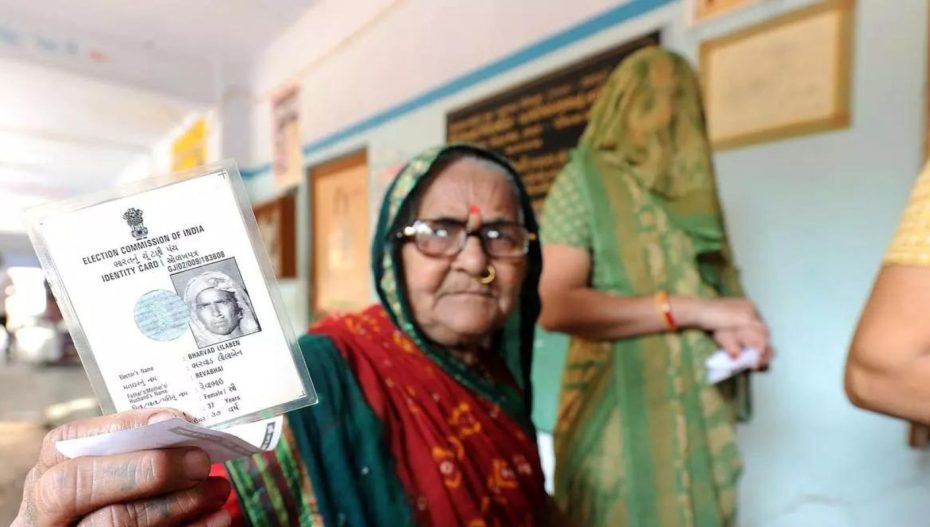
There are more than 11,533 centenarian voters in Gujarat, according to the latest Election Commission data. And out of these, women far outnumber men. Against 8,076 women centenarian voters, there are 3,457 men voters of that age ready for the 2024 general elections.
It reflects overall life expectancy of women in the state, which has surpassed that of men.
Analysis of the census data reveals, between 2010 and 2020, life expectancy among women increased by 2.2 years and men by 1.5 years.
Ahmedabad leads with 1,540 centenarian voters, followed by Vadodara with 843 and Dahod with 658. However, Banaskantha, Junagadh, Kutch and Amreli are among districts where women account for between 73%-79% of centenarian voters.
According to Census India, life expectancy among urban men in Gujarat was 69.9 years in 2010-14 which improved to 70.9 years in 2016-2020 while in rural areas it progressed from 64.6 years to 65.9 years in the same period.
Similarly, among urban women it improved from 72.9 years to 73.6 years and among rural women, from 70 to 73.6 years.
Maniba Patel, 105, a resident of Ahmedabad, said, “By the grace of God, I never contracted Covid infection. My husband passed away when my children were young, but I worked hard to ensure they got the best education. Even today, I can do the household chores and go for walks.”
Health Minister Rushikesh Patel said, “I do not have data off-hand, but my understanding is that women are risk averse in the sense that they do not consume tobacco or have other addictions detrimental to their health. Besides, they have stronger willpower than men.”
“Women are more resilient than men and less at risk of lifestyle-related diseases,” said a district collector from Central Gujarat.
According to research conducted by Harvard Medical, although men and women have 22 (out of 23) chromosomes in common, the 23rd pair is different. While females have both X chromosomes in the 23rd pair, males have one X and one Y chromosome. The Y chromosome has fewer genes than chromosome X and is linked to some chronic diseases, making men having a higher mortality rate.
P Bharathi, chief electoral officer, said, “As far as the younger age group is concerned, women mostly get registered in the electoral rolls after marriage because their parents want it that way. That is why we are trying hard to encourage registration of girls as soon as they turn 18 so that they can start participating in the democratic process early.”
Also Read: Passport applicants won’t need to visit the police station for verification