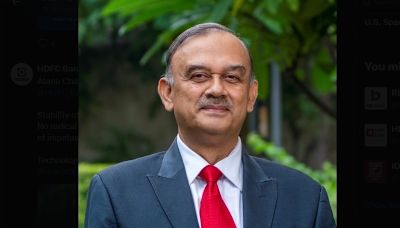
In a development that may rattle investor sentiment, HDFC Bank chairman Atanu Chakraborty has resigned with immediate effect, citing governance practices that conflicted with his personal values—triggering a sharp reaction in overseas markets.
In his resignation letter dated March 17, Chakraborty wrote that “certain happenings and practices” within the bank over the past two years were “not in congruence” with his ethical framework. He emphasized that there were no other material reasons behind his decision.
The Reserve Bank of India has approved the appointment of Keki Mistry—former vice-chairman of HDFC Ltd—as interim part-time chairman for a period of three months starting March 19.
Market reaction: 7% fall signals investor unease
The immediate market response was negative. HDFC Bank’s US-listed ADRs fell over 7% overnight, reflecting investor concern over the abrupt leadership exit and the nature of the issues flagged. Although ADRs recovered marginally in extended trading, the signal for domestic markets is one of caution.
The stock, already under pressure, had closed at ₹842—near its 52-week low of ₹812—and is down about 8% over the past month. Brokerage firm JPMorgan has maintained a “neutral” rating, warning that the stock could remain weak in the near term, with the resignation compounding broader macro and geopolitical uncertainties. However, today morning there was a marginal change only.
Governance shadow over a systemically important bank
Chakraborty’s exit is particularly significant given his explicit reference to governance and ethical concerns—without elaborating on specifics. While the bank has maintained that there are no additional reasons beyond those cited, reports indicate that differences over functioning at the board level may have been simmering for some time.
Despite the abrupt exit, Chakraborty struck a conciliatory note, thanking the board, independent directors, and senior management for their cooperation and support during his tenure.
Gujarat cadre IAS: Policy, finance, and reform
Before transitioning to banking, Chakraborty had a distinguished career as a 1985-batch IAS officer of the Gujarat cadre. In the state government, he held key leadership roles including Secretary (Finance), where he oversaw fiscal management and worked on private sector investment frameworks during Gujarat’s high-growth years.
At the Union level, he served in the Ministry of Finance across critical portfolios. As Secretary, Department of Economic Affairs (2019–20), he coordinated macroeconomic policy across ministries and played a central role in Union Budget formulation and parliamentary processes. Earlier, as Joint Secretary in the Department of Expenditure, he handled infrastructure project appraisals, subsidy frameworks, and contributed to modernising government financial and procurement rules.
Oversaw landmark HDFC merger
Chakraborty joined the HDFC Bank board in May 2021 and presided over one of the most consequential developments in Indian banking—the merger with HDFC Ltd. The deal created a financial conglomerate and positioned the bank as the second-largest in India by market capitalisation.
In his letter, he described the merger as a “momentous event” but acknowledged that the full benefits of the integration are yet to fully fructify, a key concern for investors tracking post-merger synergies.
What next
With leadership transition now underway, the focus shifts to two variables: clarity on the governance issues flagged and execution of post-merger integration. Given HDFC Bank’s weight in benchmark indices and its systemic importance, even marginal shifts in investor confidence could have broader market implications in the near term.
Also Read: Higher Capital Requirement For SBI, HDFC From FY25, Says RBI https://www.vibesofindia.com/higher-capital-requirement-for-sbi-hdfc-from-fy25-says-rbi/