

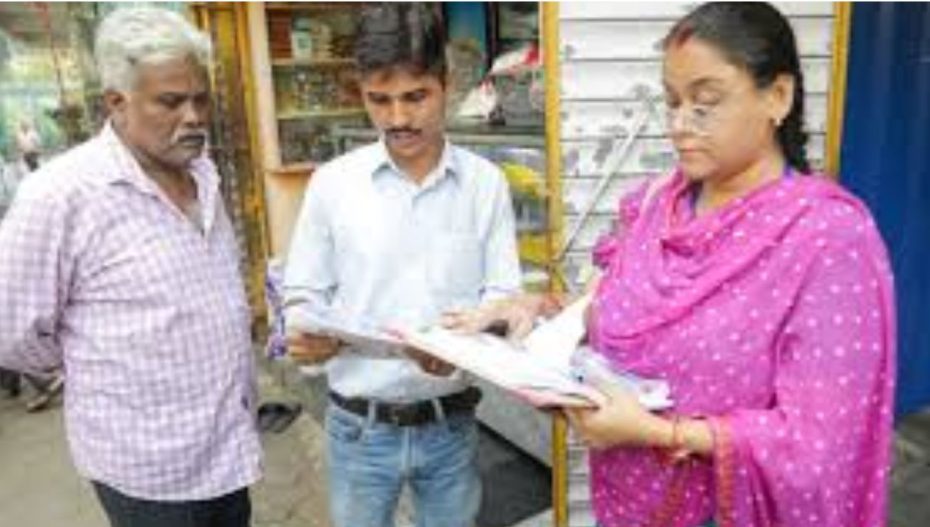
“They are turning humans into machines.” A teacher in Gujarat reportedly told his family before taking his own life, protesting the ongoing Special Intensive Revision (SIR) in the state. His suicide note left a chilling account of mental stress. Today, Usha Indrasinh Solanki fainted after complaining of dizziness at work at the Pratap School. She was an assistant Booth Level Officer (BLO) and was stressed. She was declared dead at Sayaji Hospital in Vadodara. In less than two weeks, at least five people involved in SIR work in Gujarat have died, either by suicide or due to stress. Family members are squarely blaming SIR.
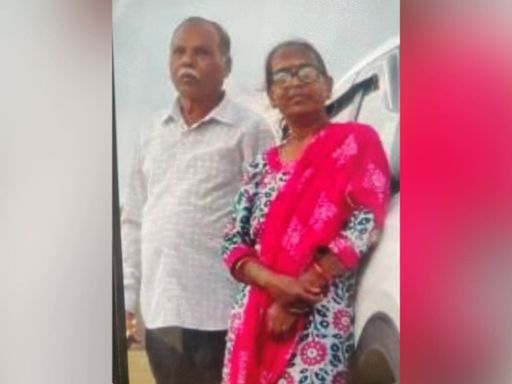
Assistant BLO Ushaben Solanki with her husband. Picture by Special Arrangement
Vibes of India has been reporting how scores of Booth Level Officers (BLOs) and teachers across Gujarat and other states have collapsed, suffered heart attacks, or taken their own lives, all citing extreme fatigue, relentless deadlines, and the crushing pressure of SIR duties.
A day before Ushaben died of stress, Arvindbhai Muljibhai Vadher, a government teacher in Kodinar, working as a Booth Level Officer (BLO), died by suicide.
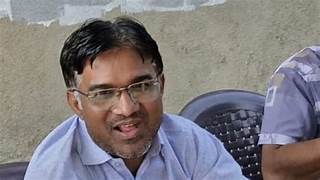
BLO Arvindbhai Vadher who died of suicide in Gujarat.
He left a detailed note addressed to his wife Sangita. He claimed he felt he was being reduced to a machine. He felt vulnerable. He revealed he could no longer endure the SIR work. “I can’t do this SIR work anymore… I have been feeling constantly tired and mentally stressed for the last few days. Take care of yourself and our son. I love you both very much… but now I have no choice but to take this final step,” he wrote in the suicide note. He worked till late and left clear instructions to hand over his work documents to the school. He was well-regarded in Kodinar. His death shocked the entire teaching community.

Vinod Barad, President of the District Primary School Teachers’ Association, said the entire teaching community was shaken. “Because of the maximum workload of SIR work, Arvindbhai has committed suicide. He was known as one of the best teachers in Kodinar. The pressure was unbearable.”
The outrage intensified as the All India Rashtriya Shaikshik Mahasangh publicly demanded accountability and financial support for the bereaved family.
Its state president, Mitesh Bhatt, issued a strong statement, “Reading the suicide note of this Gir Somnath teacher clearly shows the extreme pressure put on teachers. Our union strongly opposes this system. We demand strict action against the responsible officer and one crore rupees for the teacher’s family.”
Bhatt also revealed that the union had already submitted a petition to the Chief Minister regarding the unsustainable burden of SIR work.
The tragedy of Vadher was not isolated. Rameshbhai Parmar (50), principal of Navapura Primary School in Kheda district, also suffered the same fate. His death, in his sleep, is believed to have been caused by stress from SIR work. Parmar had been working late into the night entering data online. His daughter Shilpa said he never woke up after that night.
Gujarat Not Alone
Gujarat is not the only state witnessing these tragedies. Across India, the SIR has spread like a virus meant to destroy lives. BLOs are dying under stress, exhaustion, and relentless workload.
In Madhya Pradesh’s Jhabua district, Bhuvan Singh Chauhan, a BLO and assistant teacher in Soliya village, collapsed and died a day after he was suspended for alleged negligence. His daughter Sangeeta Chauhan said he was under immense pressure to survey at least 100 voters daily.
On the day he was suspended, he could not bear the pressure. His wife Mishri Chauhan described the final hours. He felt dizzy, collapsed from the stairs, and was rushed to the Community Health Centre in Bori, where doctors declared him dead.
The suspension order accused Chauhan of failing to perform door-to-door surveys and digitise data. It claimed his work was only 3% complete.
Officials labelled his negligence as “serious misconduct” under Section 31 of the Representation of the People Act, 1950.
The deaths in Madhya Pradesh mirror Gujarat’s. Teachers and BLOs are forced into long hours, with impossible targets. They are under psychological strain, facing humiliation, threats, and constant monitoring.
In Kerala, BLO Aneesh George, 44, died by suicide. His family blamed the stress of SIR duties. In Rajasthan, 34-year-old BLO Hariom Bairwa died of a heart attack after a stressful call from his superior.
West Bengal is equally affected. In Memari, East Burdwan, BLO Namita Hansda suffered a cerebral attack. Her family said the stress of meeting SIR targets was a major factor.
Mamata Banerjee, West Bengal Chief Minister, warned that 28 SIR workers had died since the exercise began. Across India, reports confirm at least nine BLO deaths, with four explicitly linked to suicide caused by SIR-related pressure.
The cumulative toll is staggering. In the 2024 Lok Sabha elections, 33 polling staff reportedly died of heatstroke in Uttar Pradesh. Eighteen others died in UP and Bihar due to long hours, extreme heat, and inadequate support.
These deaths are not accidents. They are a predictable result of a system that compresses complex tasks into a brutal schedule without safeguards.
Scale Of Workload Just Inhuman
The deeper we delve, the darker the truths that emerge.
A WhatsApp message purportedly from the taluka mamlatdar’s office went viral on social media. It urged teachers involved in SIR to work till late at night. One teacher replied he had been awake till 4 a.m.
The work pressure is overwhelming. Within three weeks, they have to reach out to 1000 to 1200 voters, collect forms and upload them.
A one-week printing delay had made timelines even tighter. BLOs face agitated voters, glitches in the SIR app, and long travel distances.
Helplines in Gujarat are receiving more than 22 calls daily of BL)s and allied staff complaining of too much work and accompanying stress.
The BLOs are reportedly imparted little training, sometimes just a single day. They are ill-equipped to handle queries about voters’ eligibility, forms, or the last SIR.
In Gujarat, nearly 50,963 BLOs are deployed for SIR. Ninety per cent of them are schoolteachers, according to media reports. Most are under tremendous pressure, juggling regular teaching duties with the SIR responsibilities.
Parmar’s daughter said her father had commuted 30 km daily, worked late without breaks, and skipped meals to meet deadlines.
Even routine assignments have become lethal. The workload compresses months of voter verification into weeks. BLOs must visit hundreds of households, collect forms, digitize data, and submit under strict deadlines. Failure invites suspension, humiliation, or official reprimand.
The SIR app frequently malfunctions, erasing data. Workers must redo miles of fieldwork under harsh conditions. Every system failure is blamed on the BLO, never the administration.
Women BLOs face additional dangers. They are sent alone into unsafe areas at night to meet targets.
Interviews and family statements reveal repeated patterns. BLOs report severe mental stress.
They work late nights, skip meals, and cover long distances daily.
They face threats and disciplinary warnings. Many fear suspension if targets are not met.
Family testimonies echo a common refrain: “I failed the numbers.”
In Gujarat, BLOs often handle 1,000–1,200 voters each. They must return forms and upload data in a few weeks. Delays in printing or technical glitches amplify stress.
Teachers like Vadher, Parmar, and Solanki’s colleagues were already handling classrooms, yet SIR demands added an impossible load.
In short, those tasked with BLO assignments are reduced to grinding machines.
Too Much With Too Little Training
SIR compresses months or years of voter roll revision into mere weeks. Targets are extreme.
BLOs are responsible for household surveys, verification, form collection, and digitisation. Many receive just one day of training. They are often not even trained to handle voter queries.
They face irate voters, malfunctioning technology, and unpredictable supervision. Glitches in the SIR app erase entire days of work. BLOs must redo surveys in heat and rain. Any mistakes are blamed on the worker.
Supervisors often call late at night. Messages arrive at 11 pm, 1 am, or 3 am, demanding updates.
Women BLOs are sent alone into unsafe areas at night.
Work Deadline Had No Logic
The deaths have sparked outrage across teacher unions.
The All India Rashtriya Shaikshik Mahasangh raised the alarm. Its state president, Mitesh Bhatt, said teachers were under stress of unmanageable proportions. The union strongly opposed the system. They demanded strict action against the responsible officer and financial support of Rs 1 crore for Vadher’s family. Aniruddhsinh, president of the Primary Education Federation, demanded compensation and clear guidelines for BLOs.
Congress MP Shaktisinh Gohil has stressed the need for stress management and counseling. He demanded an immediate reduction in workloads for BLOs. “The state government must announce compensation for those who have died. It should also support those who have suffered heart attacks while on duty,” he said.
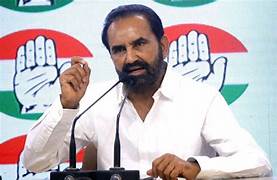
Congress Rajya Sabha MP Shaktisinh Gohil
Meanwhile, Gujarat Congress president Amit Chavda blamed the deaths on pressure from the ruling BJP. Isudan Gadhvi, AAP Gujarat president, alleged the exercise was conducted to favour the BJP in upcoming local elections. He argued that SIR should be completed over months instead of weeks.
The BJP has maintained a studied silence on the issue. Once, BJP spokesperson was on a local television channel claiming that the deaths are due to personal reasons and SIR cannot be blamed.
Rameshbhai Parmar’s death also raised questions. The Kheda taluka education office began an internal inquiry. A senior police officer said the death appeared natural, and no legal inquiry was initiated since there was no complaint.
Kheda DPEO Pravesh Vaghela said the department only learned of the incidents from media reports. He said the Taluka Primary Education Officer had been asked to conduct an inquiry.
Teacher organisations have protested the additional responsibilities.
The Akhil Bharatiya Rashtriya Shaikshik Mahasangh criticised arrest warrants for teachers who failed to report for BLO duty, calling it a “slavery practice.”
Manish Doshi, Gujarat Congress spokesperson, believes using 90% of teachers for BLO duties undermines education. Students lose attention. Education standards drop. Gujarat Congress Chief Spokesperson Dr Manish Doshi said the system was collapsing at the cost of human lives. “99 per cent of primary teachers have been deployed as BLOs for SIR. Workers from 14 other cadres, Anganwadi, Talati, GEB, Gram Sevaks, are supposed to be used, but only teachers are burdened. Schools with three or four teachers have all of them pulled out as BLOs. Threatening orders come from Mamlatdar offices, and the SIR site barely functions. Children’s education is suffering, and teachers are breaking down,” he said.
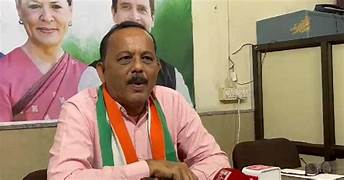
That Uneasy Silence
The system knows this. It does not care. The Election Commission has remained largely silent. There has been no public acknowledgment of the deaths, no emergency protocols, no investigation committees. Families are left without support.
Strangely, the Election Commission has remained largely silent. No nationwide statement. No emergency protocols. No systematic investigation. Not even public acknowledgment of the deaths.
Families wait for recognition, justice, and support. The silence is deliberate. Accepting the human toll would mean accepting responsibility.
These tragedies follow a grim history. During the 2024 Lok Sabha elections, 33 polling staff died of heatstroke in Uttar Pradesh. In UP and Bihar, 18 more died due to long hours and extreme conditions. Similar conditions, now applied in SIR, predictably result in exhaustion, stress, and death.
India’s democracy depends on these frontline workers. Yet the system treats them as disposable. The human toll is ignored. Compensation is delayed. Responsibility is denied.
Political observers believe democracy cannot function if it costs the lives of those who maintain it.
And the Election Commission owes the country an explanation. An urgent one at that.
How many more BLOs must die before the system admits the truth? How many families must grieve before protections are implemented? The answer is not in statistics. It is in the lifeless bodies of those who kept the machinery running.
Also Read: Two BLO Deaths Spark Outrage Over Gujarat’s Gruelling SIR Workload https://www.vibesofindia.com/two-blo-deaths-spark-outrage-over-gujarats-gruelling-sir-workload/