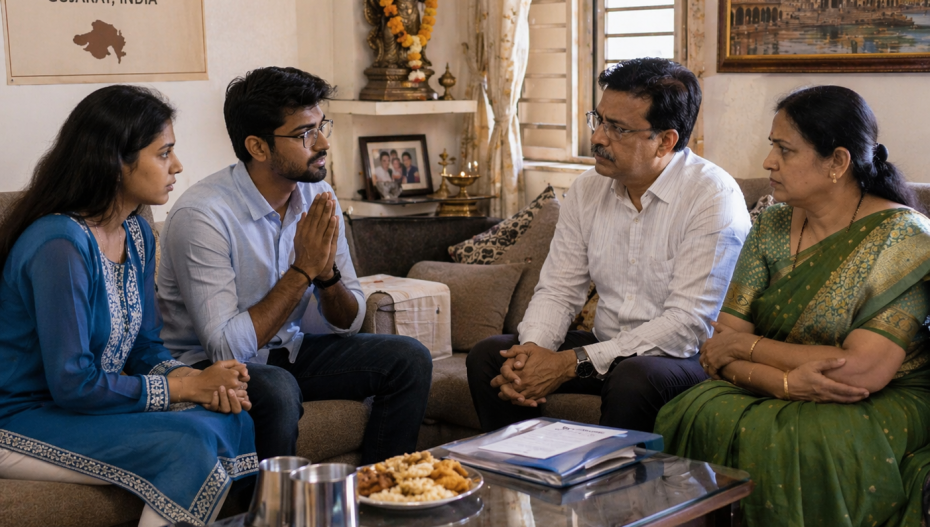
The Gujarat government’s recommended changes to the Registration of Marriages Rules have mobilised and divided public opinion. The contentious issue has reportedly drawn as many as 127 suggestions and objections from citizens and organisations.
For background, the Gujarat Assembly passed the Uniform Civil Code Bill last month. The UCC mandates registration of all marriages and live-in relationships. Additionally, it introduces uniform divorce rules and guarantees equal inheritance rights for sons and daughters. It also prescribes penalties for non-compliance.
“The present Bill seeks to give effect to these recommendations by providing a uniform legal framework governing civil matters for all citizens of the State, irrespective of religion, caste, creed, or gender. It aims to uphold the principles of secularism, gender justice, and thereby strengthening the unity and integrity of society,” the Bill document said.
As Vibes of India reported, a major component of the Bill relates to marriage and divorce. It lays down uniform conditions for a valid marriage. This includes prohibition of bigamy. It also sets the minimum age at 21 years for men and 18 years for women.
The draft rules say that ten days after the assistant registrar clears the documents, both sets of parents would be informed — either physically or electronically — by the government.
At the time of the announcement, Minister of State for Home Harsh Sanghavi said the move was aimed at strengthening safeguards in the registration process. He described “love jihad” as a cultural invasion and said the government was determined to act against those who bring disrepute to love.
Meanwhile, according to reports, some respondents backed the amendments and pushed for even stricter measures. A few suggested that children who marry against their parents’ wishes should lose inheritance rights over parental property, both movable and immovable.
Others proposed that both sets of parents must be physically present and sign at the time of registration. Some respondents said marriages should be registered in the revenue jurisdiction of the bride’s residence.
Certain submissions called for additional disclosures. These included declarations of financial assets and liabilities, as well as any infectious, congenital or genetic diseases.
Supporters argued such steps could help reduce early divorces.
Some also demanded harsher punishment in cases described as “love jihad.” They said religion-related documents should replace caste certificates in the registration process.
Others raised constitutional concerns
Several objections pushed back on the proposal. Many submissions argued that mandatory parental intimation violates the right to personal liberty and privacy guaranteed under Article 21 of the Constitution.
Some respondents said uploading marriage details on a public portal would amount to a breach of privacy. Others argued that requiring Aadhaar or parent identity details would go against Supreme Court rulings.
A number of objections flagged safety risks. Respondents warned that informing parents and imposing a 30-day moratorium before registration could trigger false kidnapping complaints. They also said it could lead to parental interference, coercion and honour-based violence against couples.
No decision yet
Government officials told media outlets that no decision on the feedback has been taken so far. They cited the model code of conduct for local body elections as the reason for the pause.
VOI understands that the Uniform Civil Code Bill has not yet received Presidential assent. Officials added that once the UCC comes into force, provisions not covered under it will continue to be governed by the Gujarat Registration of Marriages Act.
SUGGESTIONS
- Children who marry without parental approval should forfeit inheritance rights over family property
- Both sets of parents must be present in person and sign off at the time of registration
- Marriages should be registered in the jurisdiction where the bride resides
- Couples should declare financial assets, liabilities and any communicable or genetic diseases at registration to reduce the risk of early divorce
OBJECTIONS
- Forcing couples to inform parents before registering their marriage violates the right to privacy and personal liberty under Article 21
- A mandatory 30-day waiting period opens the door to parental pressure, coercion and interference
- Putting marriage details on a public portal exposes couples to unwanted scrutiny and breaches their privacy