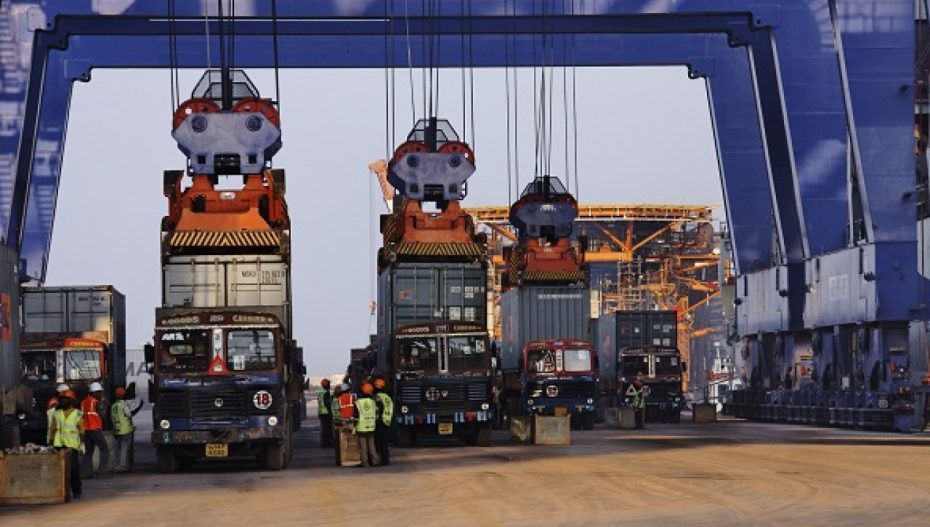
The Pipavav port case and the Supreme Court’s remarks reveal how Gujarat and India handle dissent regarding development projects.
Chief Justice Surya Kant recently declared in open court that if enviornmentalists ever welcomed a project indicating that they always have objections. This dismissive comment was disheartening and reportedly undermined environmental public interest cases before arguments even began. Forty-nine organisations and 553 individuals, including environmentalists and academics, sent a letter to Chief Justice Surya Kant on 22 May. The letter demanded withdrawal of the remarks, arguing that such statements could undermine the legitimacy of bona fide environmental public interest litigation and the constitutional role of citizens in enforcing environmental law.( https://thewire.in/environment/greens-see-red-over-cjis-remarks-on-environmental-petitions-stalling-development).
A Supreme Court bench, consisting of CJI Surya Kant and Justice Joymalya Bagchi, declined to admit an appeal challenging a National Green Tribunal order that approved the expansion of Pipavav port in Gujarat. The petitioner, environmentalist Chetan Navintray Vyas, raised concerns about the potential impact on Olive Ridley turtles, marine mammals, avian species, mangroves, and the livelihoods of fisherfolk dependent on a stretch of the Saurashtra coast that accounts for approximately 90 per cent of Gujarat’s fish landings. The bench remained unconvinced, stating to the petitioner’s counsel, “You want to stall everything in the name of the environment. How can the country develop without infrastructure?”
Environmental lawyers, activists, retired bureaucrats, and ex-forest officials across India responded strongly.
The Pipavav port expansion was granted Environmental Clearance in 2012, yet little progress was made. The approval expired in 2019 and was subsequently extended to June 2024, during which only basic facilities were constructed. Ministry records from May 2025 documented minimal advancement, while a July 2025 clearance letter attributed the delays to broader business factors.
On October 29, 2025, the Gujarat Maritime Board and Gujarat Pipavav Port Limited signed a memorandum of understanding worth Rs 17,000 crore. This came months after the July clearance, showing that approval came before investment was secured. It is interesting that the environmental impact assessment came in before the investment, or the exact nature of the company’s work was absolutely clear.
When local residents contested the new clearance before the National Green Tribunal’s western zone bench, they received a 44-page order, of which more than 40 pages comprised excerpts from the EIA report. The tribunal made no explicit comment on the standard of its review, identifying no deficiencies warranting further examination, declined to admit the appeal, and instructed petitioners to approach the same bench again. The Supreme Court subsequently adopted a similar approach, without clarifying the criteria petitioners could expect for review.
Senior advocate Anitha Shenoy, representing the petitioner, contended that the EIA failed to adequately address the impacts on marine ecology, turtles, and avian biodiversity. The bench cited the Expert Appraisal Committee’s findings, asserting that these claims had been examined and found unsubstantiated. However, the bench did not explain its review process or engage with the petitioner’s argument that the NGT order simply reproduced the EIA without independent scrutiny, leaving the standards for judicial review unclear.
The Environmental Impact Assessment for the Pipavav expansion identifies the area’s rich plant and animal life, including birds and protected species. But, as in many Indian EIAs, it states these will not be harmed. The question is: why are environmental clearances in Gujarat increasingly becoming mere formalities rather than safeguards for the environment?
The port expansion requires 18,243 hectares of land, including 600 acres acquired from nearby villages. The area encompasses water bodies, mangroves, and salt pans. The EIA characterises the port area, in a phrase the NGT quoted approvingly, as “a haven for avian diversity.” Environmental lawyer Norma Alvares was quoted in Frontline as saying that this characterisation is unusual for an industrial zone being expanded to accommodate larger vessels and increased cargo throughput. (https://frontline.thehindu.com/the-nation/supreme-court-environmentalists-pipavav-port/article70987095.ece) She accurately identified a central issue: courts frequently regard EIAs as definitive, despite the fact that these assessments are commissioned by project proponents and seldom subjected to independent verification. Undergo independent verification.
Petitioners seek to highlight the discrepancy between regulatory documentation and actual ecological conditions in court. However, courts are increasingly declining to clarify the standards of review for these discrepancies, leaving petitioners uncertain about the expectations for judicial scrutiny.
The Pipavav case is not isolated. It is a representative example of environmental governance in Gujarat and, increasingly, across India as national practices have followed the Gujarat model in recent years.
Gujarat’s environmental clearance process is deeply flawed. Major projects like coastal corridors, investment regions, and port expansions proceed on the basis of weak EIAs. Hearings remain inaccessible, and local objections are routinely dismissed. Media buyouts by interested parties suppress public debate. These systemic issues—insufficient EIAs, inaccessible hearings, ignored objections, and diminished public discourse—accelerated with industrialisation, making environmental reviews mere formalities. Editorial scrutiny has increased, as seen in letters from the Constitutional Conduct Group and the National Alliance for Justice, Accountability and Rights, referencing earlier Supreme Court jurisprudence from the 90s.
The lawyers’ letter emphasised that the framework for environmental public-interest litigation was established by the Supreme Court. The principle that Article 21’s right to life encompasses a right to a clean environment is judge-made law, developed over decades of jurisprudence. The National Green Tribunal was established by Parliament in 2010, partly in response to Supreme Court directives. When the court now characterises appeals to the NGT as routine impediments to development, it undermines the very system it helped to create. Nearly 80 per cent of NGT appeals are dismissed in favour of wealthy and well-connected violators. Article 51A(g) of the Indian Constitution establishes a fundamental duty for every citizen to protect and improve the natural environment. Citizens who pursue litigation to safeguard forests and coastlines are fulfilling a constitutional responsibility, rather than acting in opposition to the state. However, as the Chief Justice observed, such citizens are frequently perceived as opposing development and the state when raising environmental concerns.
No serious participant opposes the construction of infrastructure in India. The country demands investment in ports, roads, power, and cities. The real issue is the lack of transparency, thoroughness, and genuine care for affected communities in development.
The climate context makes these issues urgent. India is among the world’s most climate-vulnerable countries. Its coastal zones, groundwater-dependent agriculture, mangrove-protected shorelines, and biodiversity-rich interiors face escalating threats from warming and extreme weather events. Judicial decisions about environmental litigation go beyond individual effects; they shape whether citizens feel empowered to raise concerns and whether institutions stay responsive.
The ecological impact of the Pipavav port expansion remains uncertain and necessitates rigorous, independent EIA review and appellate scrutiny. In this instance, courts did not clarify what standard of review applied. More broadly, the case underscores a regulatory system in which the expectations and standards for review are rarely outlined, clearances are treated as formalities, tribunals replicate rather than critically examine documents, and the highest court regards challenges as acts of bad faith, without providing review criteria.
This pattern is fixed in Gujarat, which has India’s biggest coastline and has changed rapidly due to industry, under a regulatory system more like a gateway than a guard. The Saurashtra fisherfolk, responsible for most of Gujarat’s fish landings, rely on the waters affected by the Pipavav area. The courts have twice refused to seriously consider whether their interests were protected.
When the Chief Justice asks whether environmentalists have ever welcomed a project, the honest answer is that they sometimes do. When the Chief Justice inquires whether environmentalists have ever welcomed a project, the accurate response is that they sometimes do, provided the process is thorough, the EIA is genuinely independent, public hearings are substantive, and concerns are addressed. This perspective is seldom presented in court because cases reaching the NGT and the Supreme Court generally involve circumstances in which these standards were not met. Consequently, the court seems to be drawing broad conclusions from a selective sample, resulting in the use of a word that courts often use, a significant analytical error.
The Pipavav case is no longer just about a port — it is about whether environmental scrutiny still matters in India. What next? All those talking of environmental scrutiny and true environmental democracy will be labelled anti-national?
Also Read: Your Honour, Some Cockroaches Have Degrees https://www.vibesofindia.com/your-honour-some-cockroaches-have-degrees/