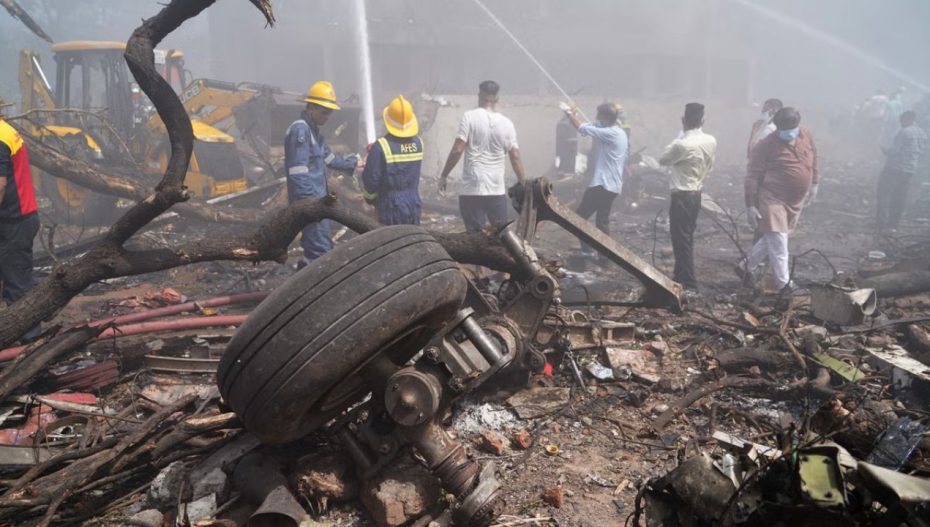
Some wounds are too deep to heal, and for a few families, even touching the belongings of their loved ones is unbearable. Nearly a year after the tragic Air India AI-171 Ahmedabad-Gatwick crash on June 12, 2025, 15 families have decided not to take back the personal belongings of those they lost.
The crash claimed the lives of 241 of the 242 people on board, leaving 39-year-old Vishwas Kumar Ramesh as the only survivor. The tragedy also killed 19 people on the ground, making it one of India’s worst aviation disasters.
To help grieving families, Air India set up a Family Returns Centre (FRC) in Ahmedabad. Around 8,000 personal belongings that could be identified, including clothes, passports, wallets, photographs, and other valuables, were carefully catalogued and returned with what airline officials described as “due dignity.”
Families were given 45 days to access an online portal where they could browse photographs of recovered items, identify those belonging to their relatives, and submit claims. The airline then arranged for the belongings to be handed over personally. However, not every family could bring themselves to do it.
According to Air India, 15 families declined to accept any personal belongings of their deceased relatives. In many cases, the emotional pain of seeing those items again was simply too much.
One such family was that of 24-year-old Dirth Patel, an aspiring cricketer. His brother, Krutik Patel, had earlier explained that they chose not to collect his belongings because they did not want their mother to relive the trauma.
Another grieving family, that of Ahmedabad entrepreneur Trupti Soni, who lost her brother and two sisters-in-law in the crash, described the process of recovering belongings as emotionally exhausting and painful.
The recovered items tell heartbreaking stories of lives interrupted. Among them were a baby’s white sweater decorated with trees and trucks, a blue badge reading “Dad to-be,” colourful rakhis, toys, prayer books, kitchen utensils, clothes, eyeglasses, passports, and even burnt wristwatch remains. Several pieces of gold and silver jewellery were also recovered.
Air India said that out of 22,000 recovered personal items, around 8,000 could be confidently identified, while the remaining 14,000 could not be linked to any individual and were placed in an “unassociated belongings” category.
The airline also recovered 25 digital devices, including phones, laptops, and tablets. So far, 16 have been returned to families, while the remaining cases are pending due to incomplete documentation or because some families chose not to accept them.
Overall, belongings associated with 187 deceased passengers have been processed, with items returned for 139 individuals in India and the UK. For another 77 cases involving unassociated belongings, families of 60 deceased persons have received recovered items.
On the compensation front, Air India said it has already paid an interim compensation of ₹25 lakh each to 96% of the victims’ families. Among the 19 people injured on the ground, 94% have received either interim or full and final compensation, while a few cases remain pending because of documentation issues or family disputes.
For many families, these belongings are the last physical reminders of someone they loved. But for others, opening that chapter again is simply too painful. Their decision not to claim these items reflects the deeply personal and lifelong grief left behind by the tragedy.
Also Read: AI 171 Crash Mystery Deepens: New Probe Report May Reveal What Happened Seconds After Take-Off https://www.vibesofindia.com/ai-171-crash-mystery-deepens-new-probe-report-may-reveal-what-happened-seconds-after-take-off/