


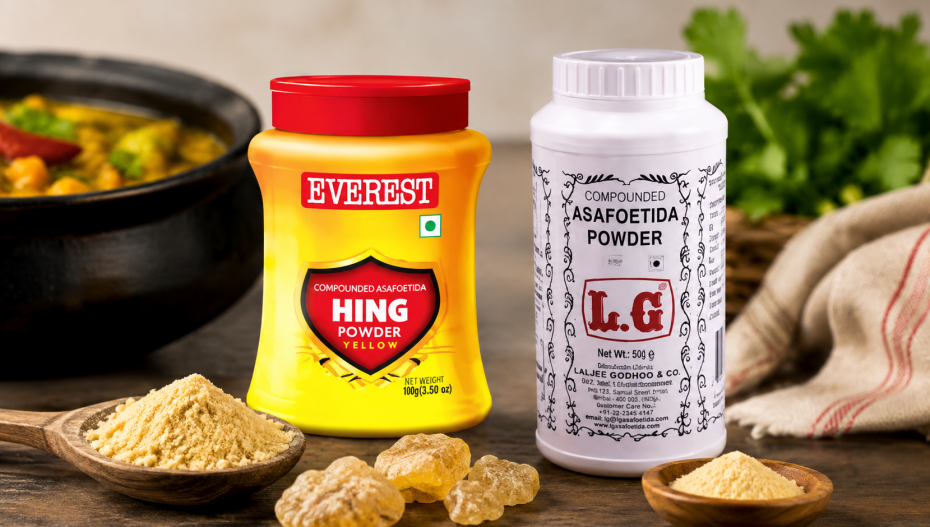
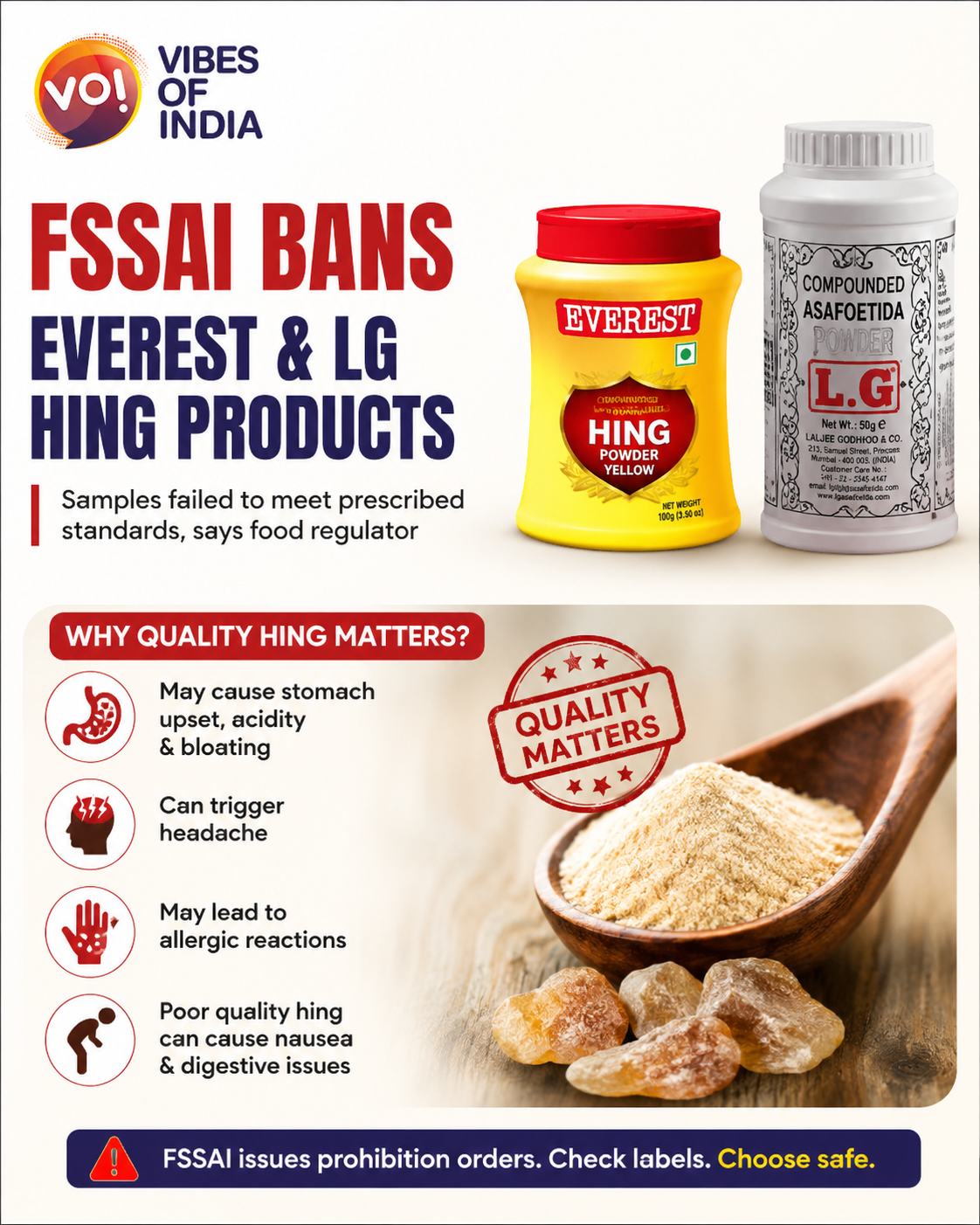
Hing, or asafoetida, is one of the smallest ingredients used in Indian cooking but has a strong role in everyday food. From dals and curries to vegetables and masalas, a small pinch can change the flavour of an entire dish. But two well-known hing brands have now come under scrutiny after the Food Safety and Standards Authority of India (FSSAI) issued prohibition orders over non-compliance with prescribed standards.
The action concerns Everest Food Products Private Limited and Laljee Godhoo and Company, popularly known as LG. Both companies are Mumbai-based and are owned by Gujaratis.
The regulator said samples of certain compounded hing and asafoetida products did not meet the required standards under the Food Safety and Standards Act, 2006.
What Did FSSAI Find?
In the case of Everest, samples of compounded asafoetida, yellow hing powder and black hing powder were found to be non-compliant with the prescribed requirements for alcohol-soluble extract.
For compounded hing, the required minimum was 5%. However, one sample recorded 0%.
The yellow hing powder sample recorded 3.29%, while the black hing powder sample recorded 4.4%.
In simple terms, the samples tested by the regulator did not meet the required level specified for the relevant products.
Following the findings, FSSAI issued prohibition orders against the concerned products with immediate effect.
The regulator also referred to earlier compliance reviews involving Everest products, where violations had been found in chicken masala, garam masala and egg curry powder, including issues related to label declarations.
LG Has Been Making Hing for 134 Years
The action also involves Laljee Godhoo and Company, a long-established name in the hing market.
LG has been selling hing for 134 years, making it one of the oldest names associated with the ingredient.
For more than 80 years, households traditionally had to deal with hard lumps of hing and manually crush them before using them in cooking.
That changed in 1978, when LG partnered with the Central Food Technological Research Institute (CFTRI) to introduce what is described as India’s first ready-to-use powdered hing.
The innovation changed how hing was used in Indian kitchens by making the ingredient easier and quicker to use.
Everest’s Journey in the Masala Market
Everest Masala was founded in 1992 and has grown into a major name in the Indian spice market.
The company is currently headed by Sanjeev Vadilal Shah.
Its hing products are among those affected by the latest regulatory action after the samples tested by FSSAI were found not to comply with the prescribed alcohol-soluble extract requirements.
Does Non-Compliant Hing Mean It Will Cause Health Problems?
The FSSAI findings are about failure to meet the prescribed food standards for the tested products. The information available here does not establish that these particular samples caused illness or specific health problems.
Therefore, it would be misleading to claim that consuming the products automatically causes a particular disease or health condition.
What the findings do show is that the tested samples did not meet the specified regulatory requirements. Food standards are important because they provide a benchmark for what products placed on the market are expected to contain and how they should comply with established requirements.
Consumers should therefore pay attention to the specific products covered by the prohibition order rather than assuming that every hing product from either company has been declared unsafe.
Why Hing Standards Matter
Hing is used in very small quantities, but it is still a packaged food product that has to comply with food-safety and quality requirements.
The latest findings highlight why testing and compliance checks matter, particularly for powdered products where consumers cannot easily judge their composition simply by looking at them.
The difference between the required 5% minimum and the levels recorded in the tested samples — including one sample at 0% — was enough for the regulator to take action against the concerned products.
A Reminder for Consumers
The action against Everest and LG does not mean that hing as an ingredient is unsafe. Instead, it highlights the importance of product standards, testing and regulatory compliance.
Both companies have long histories in the Indian food market, with LG having sold hing for more than a century and Everest having operated since 1992. But established brands, like all food businesses, remain subject to regulatory standards and testing.
For consumers, the key takeaway is simple: food products must meet the standards prescribed by the regulator, regardless of how familiar or established the brand may be.
Also Read: Diabetes Gender Gap: Men Face Heart & Kidney Risks, Women Mental Health Risks