

Gujaratis have built lives and businesses across the world, with many moving abroad in search of better opportunities. But from time to time, cases involving individuals of Gujarati origin also make headlines for the wrong reasons.
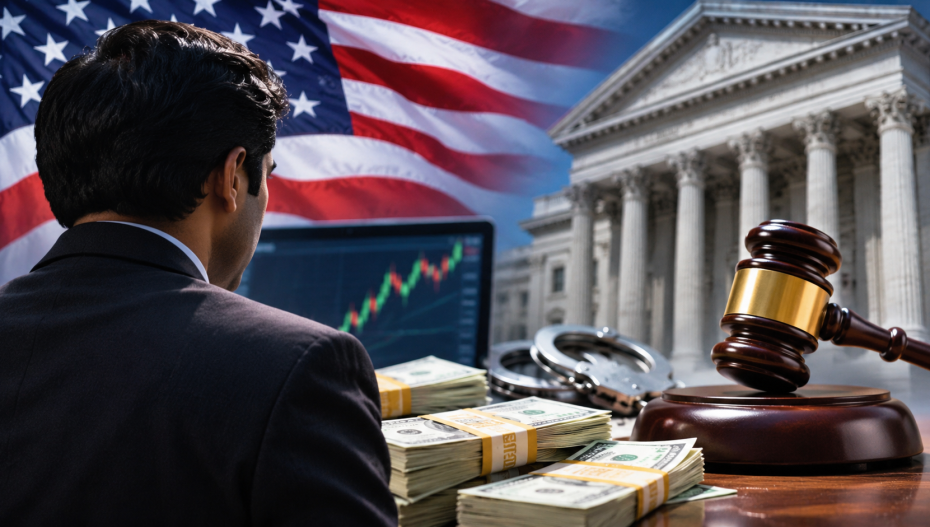
One such case has emerged in the United States, where Kevin Patel, a Gujarati-origin businessman, has been indicted by a federal grand jury over an alleged investment fraud involving nearly $2 million.
Patel is accused of collecting money from people across the US by promising them attractive returns through stock market investments.
However, prosecutors allege that most of the money was never invested in the stock market. Instead, it was allegedly used for personal expenses, payments to family members and to pay earlier investors using money received from new ones.
The federal indictment was filed in the US District Court for New Hampshire on November 4. Patel faces three counts of wire fraud. The allegations are yet to be proved in court.
According to the indictment, Patel started Royal Investments LLC in 2018 and promoted it under the name ‘The Company of Wealth & Trust’.
He approached people in different parts of the United States, asking them to invest their money through his company. The pitch was attractive: investors were told that their funds would be put into the stock market and would generate annual returns between 12% and 16%.
The company also reportedly assured investors that they would receive interest every three months. At the end of the agreed investment period, they would get their original amount back in full.
In other words, investors were given the impression that they could earn a steady income without having to worry about losing their money.
But federal prosecutors now allege that the business was operating very differently from what investors had been told.
Prosecutors believe Royal Investments was being run like a Ponzi scheme.
In such schemes, money collected from new investors is used to pay people who had invested earlier. This can make the business appear successful for some time, even when the money is not actually being invested as promised.
In Patel’s case, prosecutors allege that almost none of the money received from investors went into the stock market.
Instead, the funds were allegedly spent on personal expenses and payments to family members. Some of the money was also reportedly used to meet payment commitments made to earlier investors.
The alleged operation continued from at least February 2020 until April 2026. According to the prosecution, Patel began running short of money towards the end of 2024. He then stopped making payments towards both the promised returns and the original investments.
As a result, several investors were left facing losses worth hundreds of thousands of dollars.
The federal indictment is not the first legal action involving Patel and Royal Investments.
In December 2025, securities regulators in New Hampshire had already taken action against Patel and his company.
The state authorities alleged that the company had been offering investment services without the necessary licences. They also accused Patel and Royal Investments of misleading four investors, involving an amount of nearly $386,000.
The regulators sought the return of investors’ money, financial penalties and a permanent restriction on Patel’s involvement in securities-related activities.
The earlier state proceedings and the latest federal case are separate legal developments. While the state action focused on alleged unlicensed activities and losses involving four investors, the federal indictment now charges Patel with three counts of wire fraud.
The November 4 indictment brings the case before a federal court in New Hampshire. Patel has been formally charged, but an indictment is not the same as a conviction.
The prosecution will have to establish its allegations in court. Until then, Patel is presumed innocent unless proven guilty.
For investors who trusted the company with their savings, the case raises serious questions about what happened to their money and whether they will be able to recover it.
Also Read: Somnath Non-Veg Food Ban To Continue As SC Refuses Relief To Restaurant Owners