


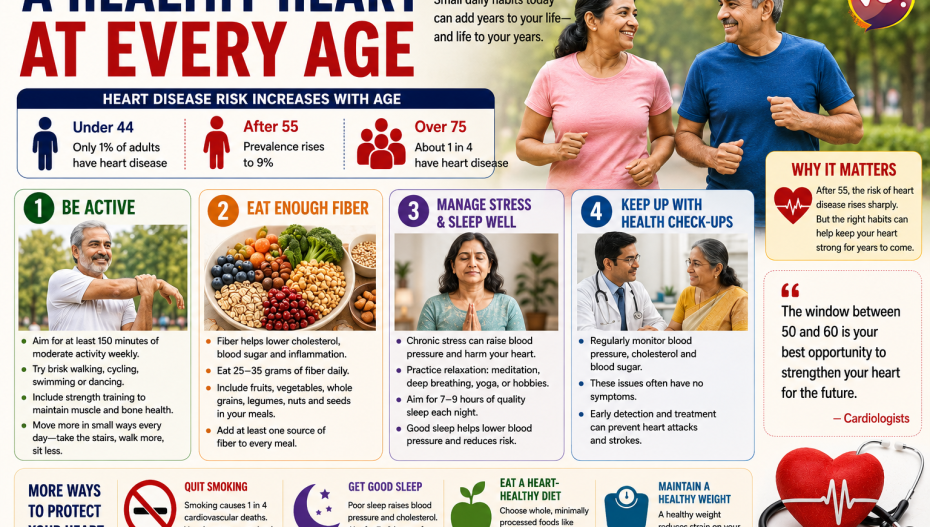
Growing older may bring wisdom and experience, but it also sharply increases the risk of heart disease — one of the world’s leading causes of death.
Medical experts say the danger rises dramatically after the age of 50, making lifestyle changes during this phase crucial for long-term cardiovascular health.
According to cardiologists, only around 1 per cent of adults below 44 suffer from heart disease. But after 55, the prevalence jumps significantly, and by the age of 75, nearly one in four people is affected by some form of cardiovascular illness.
Doctors say there is often a “golden window” between the ages of 50 and 60 when people can still meaningfully improve blood pressure, cholesterol, muscle strength, bone density and body weight before these problems become chronic and harder to reverse.
Movement Becomes Medicine After 50
One of the strongest recommendations from cardiologists is simple: keep moving.
Regular physical activity improves blood circulation, lowers blood pressure, boosts “good” HDL cholesterol and helps maintain healthy body weight.
Experts recommend at least 150 minutes of moderate exercise every week — including brisk walking, swimming, cycling or even fast-paced household activity.
Strength training is increasingly being emphasised for older adults because muscle loss and weakening bones accelerate with age.
Doctors warn that reduced muscle mass not only affects mobility and balance but is also linked to poorer heart health and higher risk of frailty, falls and chronic illness.
Even small changes can make a measurable difference.
Cardiologists advise integrating movement into daily routines instead of depending entirely on structured gym sessions — taking stairs, parking farther away, walking during phone calls or doing multiple short walks through the day.
Research increasingly shows that even short bursts of activity improve metabolic and cardiovascular health.
The Fibre Gap Hurting Millions
If there is one dietary change heart specialists consistently recommend, it is increasing fibre intake.
Most adults consume far less fibre than medically recommended, despite its powerful benefits for cholesterol, blood sugar, blood pressure and inflammation.
Fibre-rich foods help reduce plaque build-up in arteries and support healthier blood vessels, lowering long-term heart risk.
Experts generally advise consuming between 25 and 35 grams of fibre daily.
Foods considered especially beneficial include fruits, vegetables, legumes, whole grains, nuts and seeds.
Doctors suggest adding at least one fibre source to every meal rather than attempting major overnight dietary changes.
Stress Is Damaging the Heart Too
Cardiologists say stress should no longer be viewed as merely an emotional issue because its effects directly impact the cardiovascular system.
Chronic stress raises blood pressure, disrupts sleep, increases inflammation and elevates stress hormones that strain the heart over time.
Poor sleep and mental exhaustion also create secondary health problems by affecting eating habits, exercise patterns and overall energy levels.
Doctors increasingly describe stress management as equally important as diet and exercise in preventing heart disease.
Meditation, social connection, therapy, hobbies, breathing exercises and regular sleep schedules are all being recommended as part of preventive cardiac care.
Silent Risks Often Go Undetected
Another major concern among specialists is that key cardiovascular risk factors often develop silently.
High blood pressure, elevated cholesterol and abnormal blood sugar frequently show no obvious symptoms until serious complications emerge.
Because of this, cardiologists strongly advise routine health screenings after the age of 50.
Regular monitoring can detect early warning signs before they progress into heart attacks, strokes or irreversible vascular damage.
Doctors say preventive care and early intervention remain among the most effective tools in reducing cardiovascular mortality.
Smoking and Poor Sleep Accelerate Damage
Experts also warn that smoking and vaping continue to be among the most dangerous contributors to heart disease.
One in four cardiovascular deaths is linked to smoking, according to public health estimates.
The encouraging news, doctors say, is that the heart begins recovering surprisingly quickly after quitting. Within one to two years of stopping smoking, heart attack risk falls significantly.
Sleep has emerged as another major focus in cardiovascular medicine.
Poor-quality sleep or chronic sleep deprivation is associated with higher blood pressure, elevated cholesterol, inflammation and increased risk of major cardiac events.
Most cardiologists recommend seven to nine hours of quality sleep for adults.
The Bigger Message: Prevention Works
Perhaps the most important takeaway from cardiologists is that ageing itself is not the sole problem — neglect is.
Heart disease risk may rise naturally with age, but experts stress that lifestyle interventions can dramatically delay or reduce cardiovascular damage.
The years after 50, they say, are not simply about avoiding illness but about preserving mobility, independence and quality of life.
In many cases, relatively modest daily habits — walking more, eating more fibre, sleeping properly, reducing stress and getting regular check-ups — can collectively have a profound impact on how the heart ages over the coming decades.
Also Read: Climbing Stairs Linked To Longevity And Heart Health: New Study https://www.vibesofindia.com/climbing-stairs-linked-to-longevity-and-heart-health-new-study/