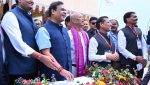


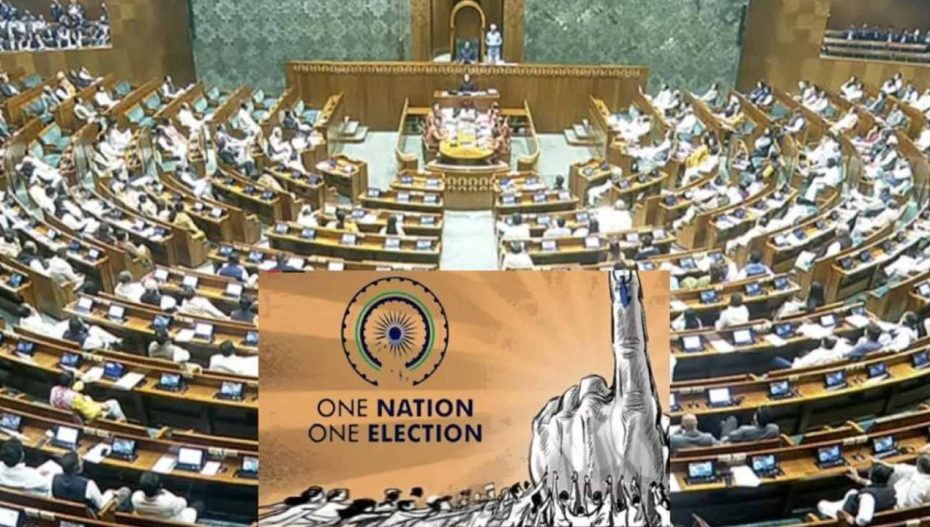
The Joint Parliamentary Committee reviewing the Narendra Modi government’s “One Nation, One Election” proposal is currently in Gujarat, a state that strongly supports the concept. Gujarat is significant not only as a consultation venue, but also because the proposal aligns closely with Narendra Modi’s vision of governance: centralised efficiency, uninterrupted administration, consistent execution and reduced friction.
Now, within GIFT City, another flagship project of Prime Minister Modi, the committee will debate whether India should fundamentally redesign its electoral process. The symbolism of this setting is considerable. This is not simply a discussion about electoral reform; it is a debate about the structure of Indian federalism.
A Republic in a State of Perpetual Campaigning
India currently operates in a near-constant election cycle. At any given time, a state is voting and campaigns are ongoing. Political parties often govern while preparing for upcoming elections elsewhere. The Model Code of Conduct frequently interrupts administrative decisions, security forces are regularly redeployed, and bureaucracies shift into election management mode.
The Narendra Modi government’s position is explicit:
India cannot become a major economic power while remaining in a state of perpetual political mobilisation.
The proposed solution is similarly unambiguous: Synchronise Lok Sabha and Assembly elections so that India votes only once every five years. The argument is compelling: elections are costly, campaigns can distort governance priorities, and ongoing election cycles encourage political populism. Administrative continuity suffers, and public funds are expended at a large scale. For the BJP, simultaneous elections allow the proposal to be presented as a matter of efficiency rather than ideology. Efficiency continues to serve as a politically attractive principle. But constitutional democracies are not designed primarily for efficiency. They are designed for accountability.
This marks the point at which deeper concerns regarding “One Nation, One Election” emerge.
The decision to hold these consultations at GIFT City is also politically revealing.
GIFT City is not simply a conference location. It is one of Narendra Modi’s signature projects from his years as Gujarat Chief Minister — a carefully constructed symbol of technocratic ambition, financial modernity and centralised administrative vision.
Locating the ONOE consultations in GIFT City elevates the process beyond routine committee procedure. It embeds the constitutional proposal within the political geography from which it originated. Prior to the national prominence of One Nation, One Election, Narendra Modi, as Chief Minister, argued that frequent elections undermined governance and diverted attention from development. As Prime Minister, he transformed this administrative concern into a constitutional initiative. Supporters present simultaneous elections as an administrative reform.
Opponents, however, see broader implications: The gradual centralisation of Indian democracy. Elections in India do more than select governments; they distribute political attention. Separate state elections create space for regional issues, leaders, and identities. They require national parties to address local concerns that may not align with national narratives.
A farmer in Gujarat may vote differently in Assembly and Lok Sabha elections. A voter in Bihar dissatisfied with unemployment may support the Prime Minister nationally but oppose the state government locally. India’s staggered electoral cycle maintains these distinctions.
The “One Nation, One Election” proposal risks eliminating these distinctions. Critics argue that simultaneous elections would nationalise political discourse, drawing state elections into the sphere of national leadership, security narratives, religious polarisation, and presidential-style campaigning.
In this system, the advantage shifts to the largest national party, the most extensive campaign machinery, and the most prominent national leader. Currently, this advantage belongs primarily to the BJP. For this reason, opposition parties do not regard ONOE as a neutral reform. Instead, they interpret it as a form of structural political engineering.
The Constitutional Risks Are Not Theoretical
The proposal would require at least 18 constitutional amendments. This requirement alone demonstrates the magnitude of the transformation being considered. The Kovind Committee recommended synchronising Assembly terms with the Lok Sabha by 2029. It also suggested that if a government collapses mid-cycle, fresh elections should only serve the remainder of the existing term rather than generating a new five-year mandate. This recommendation fundamentally changes the political logic of parliamentary democracy.
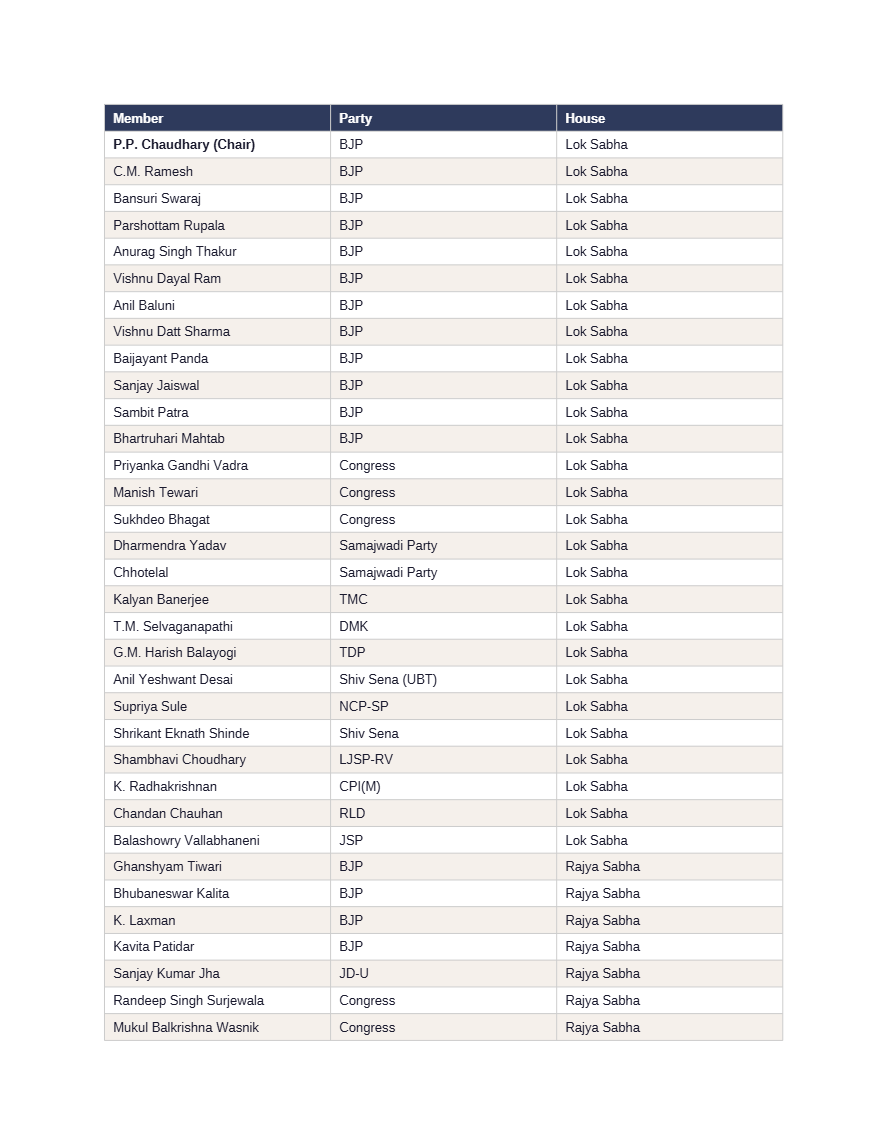
Above: Members of the One Nation, One Election Joint Parliamentary Committee.
Currently, governments gain legitimacy from a fresh mandate after political collapse. Under the proposed system, electoral continuity would take precedence over political flexibility. The need for synchronisation would compete with the voter’s right to periodically reset power structures.At this juncture, the proposal acquires philosophical significance. The Indian Constitution was intentionally designed to distribute power, stagger mandates, and ensure layered accountability. It assumed that some instability was preferable to excessive centralisation. ONOE implicitly advances in the opposite direction.
Toward consolidation. Toward uniformity. Toward administrative coherence. While these may appear to be desirable objectives, democracies often become vulnerable when administrative priorities supersede constitutional safeguards. However, the language surrounding ONOE is increasingly managerial:
resource optimisation, deployment efficiency, cost reduction, logistical streamlining.
These are valid concerns. However, democracies are not corporate entities focused exclusively on operational efficiency. Elections are deliberately disruptive, functioning as mechanisms for public accountability. They interrupt established power, destabilise predictability, and require governments to seek renewed mandates from voters at regular intervals. This inconvenience is intentional.
The Symbolic Role of Gujarat in the ONOE Debate
Gujarat holds a unique position in the ONOE debate, representing both the promise and the concerns associated with the proposal.
For supporters, Gujarat symbolises administrative decisiveness, governance continuity and political stability—qualities that simultaneous elections are intended to promote nationally. For critics, Gujarat also represents the concentration of political power, weakened institutional dissent, and the gradual blurring of lines between governance efficiency and democratic centralisation. This tension has become central to the ongoing constitutional debate on ONOE.
Beneath discussions about EVMs, electoral rolls, and polling schedules lies a broader question. Should Indian democracy move toward greater administrative uniformity and centralised stability? Or should it preserve the complex, fragmented, and sometimes inefficient federal rhythm that has defined the republic for decades? Ofcourse, this question will not be resolved through a single committee meeting in Gujarat, which is one of the last meetings of this JPC.
However, the debate unfolding there may influence the future structure of Indian democracy. The JPC is led by BJP MP P P Chaudhry, with 39 members including Priyanka Gandhi (Congress), Bansuri Swaraj (BJP), Sanjay Singh (AAP), Mukul Wasnik (Congress) and others.
Also Read: Your Honour, Some Cockroaches Have Degrees https://www.vibesofindia.com/your-honour-some-cockroaches-have-degrees/