

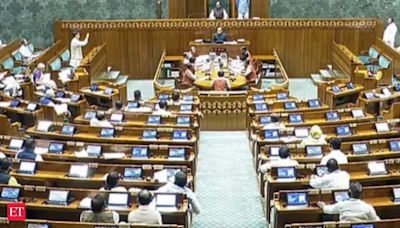
The Union government’s bill to redraw the boundaries of electoral constituencies by amending the 2023 Women’s Reservation Act was defeated in the Lok Sabha. Had it passed, a Delimitation Commission would have been formed to redraw all parliamentary constituencies, and few doubted whose interests it would have served.
As analysts might say, the ruling party tried to package this draconian bill in a good-looking pink saree. It clubbed the Delimitation Bill with the Women’s Reservation Bill, whose amendment already stands cleared unanimously by all parties in Parliament.
The idea was simple — who would dare vote against women’s reservation?
Here is what was at stake.
The Modi government had proposed expanding the Lok Sabha from 543 to 850 seats, with one-third reserved for women. Noble enough, on the face of it. But tucked inside this proposal was the third element, and the most dangerous one.
A Delimitation Commission would be formed to carve out the new parliamentary seats. And that is where the trouble begins.
Rahul Gandhi, the Leader of the Opposition, alleged this was a blueprint to gerrymander all Lok Sabha seats in the BJP’s favour ahead of the 2029 elections. Gerrymandering is redrawing constituency boundaries to benefit a particular party, not the voter.
Rahul Gandhi pointed to two recent delimitation exercises in Jammu and Kashmir in 2020 and in Assam in 2023. He reportedly said both were meant to benefit the BJP. Both exercises were bitterly contested. Critics believe they slashed Muslim representation and rewarded communities more likely to vote BJP. Geography, in many cases, was simply ignored.
What They Did to Assam
The 2023 delimitation in Assam was carried out by the Election Commission. Analysts, political observers and Muslim lawmakers were unsparing in their criticism. They called it a “communal” exercise with one clear purpose — to shrink Muslim political power in the state.
What made it more brazen was that the BJP government in Assam did not even bother denying it.
Muslims comprise around 35% of Assam’s population, per the 2011 Census. Before the delimitation, roughly 30 Muslim legislators were typically returned from Muslim-dominant constituencies. After the redraw, that number fell to 23, an analysis revealed.
The method was blunt. Several Muslim-majority seats, many represented by legislators from the state’s Bengali-origin Muslim community, were simply abolished. They were either merged into, or swallowed by, newly created constituencies that had significant Hindu populations.
The overall number of assembly seats stayed at 126. But within that number, a quiet redistribution took place. Seats in tribal and Assamese ethnic regions went up. Seats in Muslim-majority districts went down. Under the Karbi Anglong Autonomous Council, seats rose from four to five. In the Bodoland Territorial Region, they went from 12 to 15. In Bengali-dominated Barak Valley, they fell from 15 to 13 — one seat each shaved off from the Muslim-majority districts of Karimganj and Hailakandi.
Three constituencies where Muslims had long exercised decisive influence. Barpeta, Goalpara West and Nowboicha were reserved for Scheduled Caste and Tribe candidates. In one stroke, Muslim leaders were barred from contesting. The Muslim voters of Nowboicha were then split up across four neighbouring seats.
The result was predictable. Muslim voters were packed into fewer constituencies. Each Muslim vote was worth less than before.
Nowhere is this clearer than in Barpeta. The Lok Sabha seat had returned Muslim candidates in almost every election since 1967. After the delimitation, its Muslim electorate was cut from 60% to 35%, the analysis mentioned.
In the 2024 Lok Sabha elections, not a single major party thought it worthwhile to field a Muslim candidate there.
How was this done? Panchayats with large Muslim populations were quietly lifted out of Barpeta and added to the Dhubri parliamentary seat. Panchayat areas with significant Hindu populations were moved into Barpeta. Critics called it exactly what it was, a demarcation along religious lines.
Residents of Barpeta told a media outlet that they live 20 km from Barpeta town but found themselves assigned to Dhubri, which is 250 km from their village. In Mangaldoi, researcher Srinivas Kodali found that areas with no geographical connection to each other were bundled into the same assembly seat.
Ten leaders from nine opposition parties took the matter to the Supreme Court. They called the exercise “vague”, “arbitrary” and “discriminatory” and alleged the Election Commission had not followed constitutional procedure. The case is still pending.
What They Did to Kashmir
The Jammu and Kashmir delimitation came eight months after the region was stripped of statehood and its special status under Articles 370 and 35A was revoked. It had last been delimited in 1995, when the assembly had 111 seats: 46 in Kashmir, 37 in Jammu, four in Ladakh, and 24 kept vacant for Pakistan-occupied Kashmir.
Nobody in the Valley was under any illusion about what the new exercise was about. Politicians and ordinary people alike saw it as gerrymandering directed from New Delhi. Muslims, who form the majority in Jammu and Kashmir, feared it would further erode their political weight.
Many believed the BJP’s real goal was to bring Hindu-dominated Jammu’s seat count on a par with (or at least close to) the Muslim-majority Kashmir Valley. They were not wrong.
The delimitation commission, set up by the Centre, handed six new seats to Jammu and just one to the Kashmir Valley, taking Kashmir’s total to 47. Before the exercise, Kashmir had nine more seats than Jammu. After it, the gap was down to four.
Consider what the population data says. Muslims account for 68.31% of the erstwhile state’s population. Hindus make up 28.44%. Of the 20 districts in the union territory, 16 are Muslim-majority.
Yet under the new electoral map, Jammu which accounts for 44% of the population — could send legislators from 48% of the assembly seats. Kashmir, home to 56% of the population, got 52% of the seats.
Put simply, a vote cast in Jammu counted for more than one cast in Kashmir. That is not a democracy working as it should.
The commission also played fast and loose with geography. It carved out the Anantnag parliamentary seat by combining Anantnag in the Kashmir Valley with Rajouri and Poonch from the Jammu region, districts that had previously been part of the Jammu Lok Sabha seat.
Six of the nine assembly segments reserved for Scheduled Tribes fell within this redrawn Anantnag-Rajouri seat. Rajouri and Poonch have the highest Scheduled Tribe populations in the union territory. In Kashmir, many read this as a deliberate move to dilute the voice of ethnic Kashmiri speakers.
Kashmir’s mainstream politicians pushed back.
The results spoke for themselves. Five of the six new Jammu seats were Hindu-dominated. In the 2024 assembly elections (the first held in Jammu and Kashmir since 2019) the BJP won five of those six seats.
Also Read: First Crack in 12 Years: Modi Govt’s Constitutional Push on Delimitation Packed in Women’s Bill Falls Short https://www.vibesofindia.com/first-crack-in-12-years-modi-govts-constitutional-push-on-delimitation-packed-in-womens-bill-falls-short/