


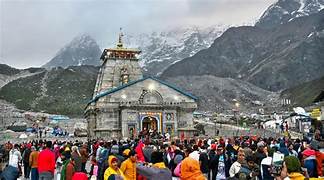
The Char Dham Yatra — one of Hinduism’s holiest and most physically demanding pilgrimages — has recorded 53 deaths within the first month of this year’s pilgrimage season, raising serious concerns about crowd management, medical preparedness and the growing health risks associated with high-altitude religious tourism in Uttarakhand.
According to official data released by the State Emergency Operation Centre (SEOC), more than 15.63 lakh devotees have visited the four Himalayan shrines since the Yatra began on April 19. During the same period, 53 pilgrims lost their lives across the Char Dham circuit.
The highest number of deaths has been reported from Kedarnath, where 28 pilgrims died, followed by Badrinath with 10 deaths, Yamunotri with eight and Gangotri with seven fatalities.
Not Accidents, But Medical Emergencies
Health officials say the majority of deaths were not caused by stampedes or road accidents but by underlying medical conditions aggravated by the difficult terrain and extreme altitude.
Most pilgrims reportedly succumbed to heart attacks, hypertension, altitude sickness, breathing complications and sudden deterioration triggered by low oxygen levels and harsh weather conditions in the Himalayas.
The Char Dham route cuts through steep mountain terrain located at altitudes exceeding 10,000 feet in several stretches. Kedarnath in particular involves a strenuous uphill trek that places enormous stress on the heart and lungs — especially among elderly pilgrims and those with pre-existing medical conditions.
Officials say many devotees ignore early warning signs such as breathlessness, dizziness, chest pain or fatigue because of their determination to complete the pilgrimage. Doctors warn that this delay in seeking medical attention often turns manageable symptoms into fatal emergencies.
A Pilgrimage Growing Bigger — And More Dangerous
The Char Dham Yatra comprises four major Himalayan shrines — Kedarnath, Badrinath, Gangotri and Yamunotri — and attracts millions of devotees every year from across India.
In recent years, however, the pilgrimage has transformed into a massive religious tourism exercise, with dramatically rising footfall placing pressure on fragile mountain infrastructure, healthcare systems and disaster-response mechanisms.
The fatality numbers underline the scale of the challenge.
In 2024, a staggering 246 pilgrims reportedly died during the Yatra season. In 2025, the death toll stood at 83. Even though this year’s figures are currently lower than 2024, authorities fear the numbers may rise sharply as peak pilgrimage season approaches and temperatures fluctuate in the higher Himalayas.
Experts say the combination of overcrowding, inadequate acclimatisation, long travel hours, poor physical preparedness and unpredictable mountain weather is creating a dangerous environment for vulnerable pilgrims.
Government Ramps Up Medical Infrastructure
Facing criticism over repeated deaths during the pilgrimage, the Uttarakhand government says it has significantly expanded medical support along the Yatra routes this year.
State Health Minister Subodh Uniyal said authorities have established 47 hospitals along the pilgrimage corridor and deployed nearly 2,820 health personnel, including around 400 doctors, at transit and emergency points.
Special medical teams have reportedly been trained to handle altitude sickness, hypertension, diabetes-related emergencies and cardiac complications commonly seen during the Yatra.
The government has also announced plans to strengthen emergency trauma care infrastructure, including upgrades to trauma centres at Doon Medical College and Srinagar Medical College. New emergency response centres are also being planned at key locations such as Kaudiyala to improve treatment during the “golden hour” after medical emergencies.
Additional healthcare facilities are expected to come up near Kedarnath and Badrinath as the pilgrimage season intensifies.
The Bigger Debate: Faith vs Preparedness
The rising death toll has once again triggered debate over whether India’s pilgrimage infrastructure is equipped to handle the massive crowds now visiting high-risk religious destinations.
Over the last decade, improved roads, helicopter services, social media promotion and aggressive tourism campaigns have dramatically increased the number of pilgrims visiting the Char Dham shrines. But critics argue that healthcare preparedness, environmental carrying capacity and crowd regulation have not kept pace.
Doctors and disaster experts have repeatedly urged authorities to introduce stricter pre-screening mechanisms for elderly pilgrims and those with cardiac conditions. There are also calls for mandatory health certification before undertaking difficult stretches such as the Kedarnath trek.
Authorities have advised pilgrims suffering from heart disease, asthma, hypertension or respiratory illnesses to undergo thorough medical examinations before beginning the journey.
Yet every year, thousands undertake the pilgrimage despite serious health vulnerabilities — driven by faith, family pressure or the once-in-a-lifetime significance associated with the Char Dham Yatra.
As the pilgrimage season enters its busiest phase, officials fear the challenge now is not merely managing crowds — but preventing faith from turning fatal in the Himalayas.
Also Read: This Is How The NEET-2026 Paper Leak Came To Light, Teacher Who First Filed Complaint Said… https://www.vibesofindia.com/how-the-neet-2026-paper-leak-came-to-light-after-teacher-filed-complaint/