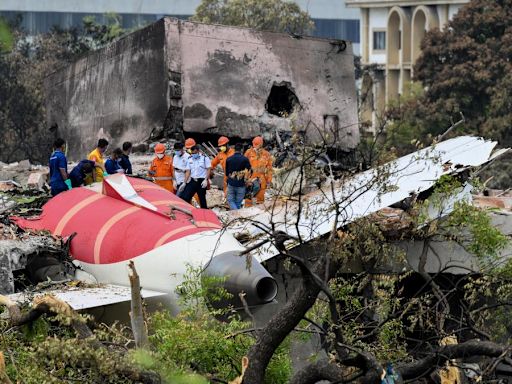
The Air India AI 171 crash in Ahmedabad on June 12 has once again raised questions about compensation for people who are injured or killed on the ground during an aircraft accident.
The aircraft crashed into the B.J. Medical College hostel in Ahmedabad, killing 241 of the 242 people on board. In addition, 19 people on the ground lost their lives, including four medical students who were having lunch in their hostel mess. Around 260 people were affected by the accident.
Although the passengers and people on the ground were victims of the same tragedy, aviation safety experts say Indian laws do not provide them with the same level of compensation.
According to the Safety Matters Foundation (SMF), an aviation safety non-profit organisation, passengers and their families are protected by a structured system of liability, insurance and compensation under the Carriage by Air Act and the Montreal Convention. However, there is no similar legal framework for people on the ground who become victims of an aircraft accident.
In a letter to the aviation ministry, the organisation said that compensation for ground victims currently depends largely on court cases, insurance claims, settlements and ex gratia payments. Because there is no dedicated law, there is uncertainty over who is responsible, how much compensation should be paid, how quickly relief should be provided and how victims can access justice.
The foundation has asked the government to create a statutory “Ground Victims Compensation Framework”. It has suggested introducing strict liability provisions so that victims only need to prove that their injury, death or property damage was caused by an aircraft accident. It has also proposed mandatory interim compensation within a fixed time period and minimum compensation standards.
India’s Aircraft Investigation of Accidents and Incidents Rules define an accident as including people on the ground who are injured through contact with an aircraft or anything attached to it. However, unlike passengers, ground victims are not automatically entitled to compensation under any legal document.
After the AI 171 crash, the Gujarat government announced compensation for the families of those killed or seriously injured on the ground. Later, Air India released an interim payment of ₹25 lakh to the families of ground victims along with the passengers.
However, the amount given to ground victims’ families was treated more as an ex gratia payment rather than a legal entitlement.
The issue is not new. The 1952 Rome Convention created a system for compensating people on the ground who suffer damage from foreign aircraft, but it was not widely adopted. India signed the convention but never ratified it.
After the 9/11 attacks, the International Civil Aviation Organization developed two updated third-party liability conventions in Montreal in 2009. However, neither of these treaties received enough ratifications to come into force.
Some countries have introduced their own legal systems to address the issue. Switzerland’s Aviation Act imposes unlimited strict liability on aircraft operators, while Belgium incorporated the Rome Convention into its national law.
Experts say the AI 171 crash has exposed a major gap in the compensation system, as people affected on the ground do not have the same legal protection available to passengers and their families.
Also Read: NEET ‘Seat-For-Cash’ Racket? Agents Offer Medical Admissions For Up To ₹1 Crore https://www.vibesofindia.com/neet-seat-for-cash-racket-managed-medical-admissions/