

Curacao is a small island located in the Caribbean.
Curaçao, a Dutch Caribbean island, is known for its beaches tucked into coves and its expansive coral reefs rich with marine life. The capital, Willemstad, has pastel-coloured colonial architecture, the floating Queen Emma Bridge, and the sand-floored 17th-century Mikvé Israel-Emanuel Synagogue. It’s also a gateway to western beaches like Blue Bay, a popular diving site.
Curacao’s population is approximately 156,000. For perspective, it would take 218 Curacaos to match Delhi’s population, 135 to match Mumbai’s, or 56 to match Ahmedabad’s. And it would take 9700 Curacaos to make one India.
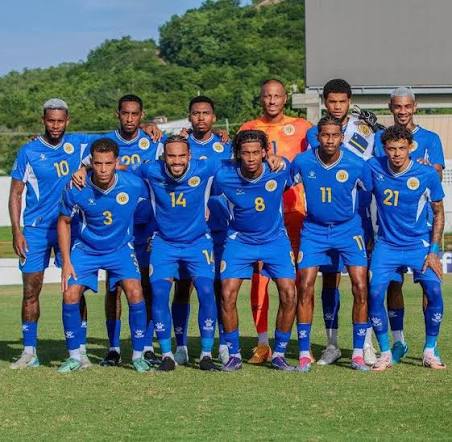
Despite its small size, Curacao has qualified for the 2026 World Cup. In contrast, India, with a population of 1.4 billion, has never qualified.
Curacao remained unbeaten in the World Cup qualifying round, with seven wins and three draws. India was eliminated in the AFC qualifiers, finishing behind Qatar and Kuwait. A defeat to Qatar in June 2024 ended India’s World Cup aspirations. India could not move ahead of Asia only when it came to getting qualified.
This does not mean that India lacks talented players or the motivation to compete.
A brief analysis shows that most people, including players, cite two main reasons.
The first is bureaucracy and broader administrative and governance challenges.
And secondly, the reason we all know. It is the unnecessary and overwhelming dominance in sponsorship, media attention and importance to cricket.
Curacao’s qualification for the 2026 World Cup demonstrates that population size alone does not determine sporting success. Croatia, with fewer than 4 million people, has reached the World Cup final and semifinals. Uruguay, with under 3.5 million, has won the World Cup twice. Iceland, with a population under 400,000, has also qualified for major tournaments.
And nCuracao is now the smallest nation participating in the World Cup. Statistically, it would take 9,700 Curacaos to equal India’s population, highlighting India’s vast size. However, aside from cricket, India has not excelled in other sports, including hockey. While India may aspire to Olympic medals with cricket’s expected return in 2028, the key issue remains the need to support and develop other sports.e, it is important to clarify that because Curacao is a Dutch nation, a self-governing country of the Netherlands, they get good help from the Dutch when it comes to promoting football. Located in the Southern Caribbean Sea, it is just about 65 kilometres, about an hour away from Venezuela.
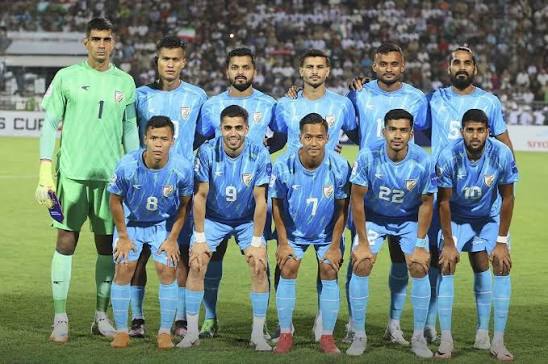
Above: Indian Football Team
India, the world’s most populous country, has previously played football against Curacao. In 2019, at the King’s Cup in Thailand, Curacao defeated India 3-1. Curacao has taught India that India’s biggest football problem sits outside the pitch.
This does not mean India lacks enthusiasm for football. The sport enjoys immense popularity in Kerala, Kolkata, and Goa, and football clubs are thriving in smaller towns from Lucknow to Ahmedabad. As Baichung Bhutia, former Indian football team captain, has stated: there is no dearth of talent in India, but India lacks the right ecosystem. “We don’t have a serious grassroots programme with a long-term vision. Football is the world’s most popular team sport, but sadly India finds no place in it.”
This is not the case across all of Asia. While China, like India, has never qualified for a World Cup, countries such as Iran, Japan, Jordan, South Korea, Uzbekistan, Qatar, Saudi Arabia, and Iraq have participated. Uzbekistan and Jordan have qualified for the 2026 World Cup, making their debut appearances. Uzbekistan is ranked 50th and Jordan 63rd in the world, while India has dropped to 138th out of 211 registered football entities. Pakistan is ranked 198th.
Unlike Curacao, India faces significant bureaucracy and government interference, making it difficult for foreign passport holders of Indian origin to join the national team. While cricket enjoys widespread recognition, few can name three Indian football players. In 2014, the All India Football Federation (AIFF) launched the Indian Super League (ISL), but its future remains uncertain. The government has not supported football to the same extent as cricket, and the AIFF continues to struggle for sponsorships. As former captain Sunil Chhetri notes, India should set realistic goals, focusing first on serious training and competing in Asian cups. To progress, the AIFF should allow Overseas Citizens of India (OCI) cardholders to play for the national team. This policy has contributed to Curacao’s World Cup qualification, as many of its players live in the Netherlands and have been trained by renowned Dutch coaches.
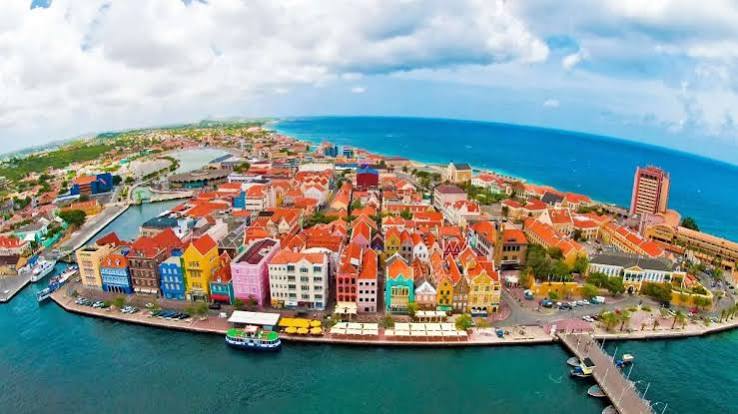
Above: Curacao
Even in this FIFA World Cup,In the current FIFA World Cup, four players of Indian origin are representing other countries: Tahsh Mohammed for Qatar, Nishan Velupillay for Australia, Sarpreet Singh for New Zealand, and Samuel Moutoussamy for Congo.Ahmedabad have been selected to host the Commonwealth Games, and Gujarat is also aspiring to host the Olympics in 2032. Billions are being spent on infrastructure. But how will this benefit our players? Why are we not spending enough on grassroots coaching, competitive leagues and genuine player development? Worse, till 2026, no sports teacher recruitment had been conducted in Gujarat. Now, it has been announced that the government will hire sports teachers, and this announcement has also come after 15 years. We hire khel sahayaks who are paid meagre wages and are on an 11-month contract. They are treated worse than daily wagers with no facilities and an embarrassing fixed pay. India could have done better by investing more deeply in our teachers, coaches, and young talent, rather than spending billions on creating infrastructure for international games where India stands no chance.
India has the population and talent to become a sports superpower, but the key challenge is developing and supporting the necessary ecosystem.
Curacao is unlikely to win matches and has already lost to Germany, but that is not the main issue. The real question is: if a small nation like Curacao can qualify, why can’t India?
Also Read: Amit Shah Says Ahmedabad To Become “Sports Capital” Of India https://www.vibesofindia.com/amit-shah-says-ahmedabad-to-become-sports-capital-of-india/