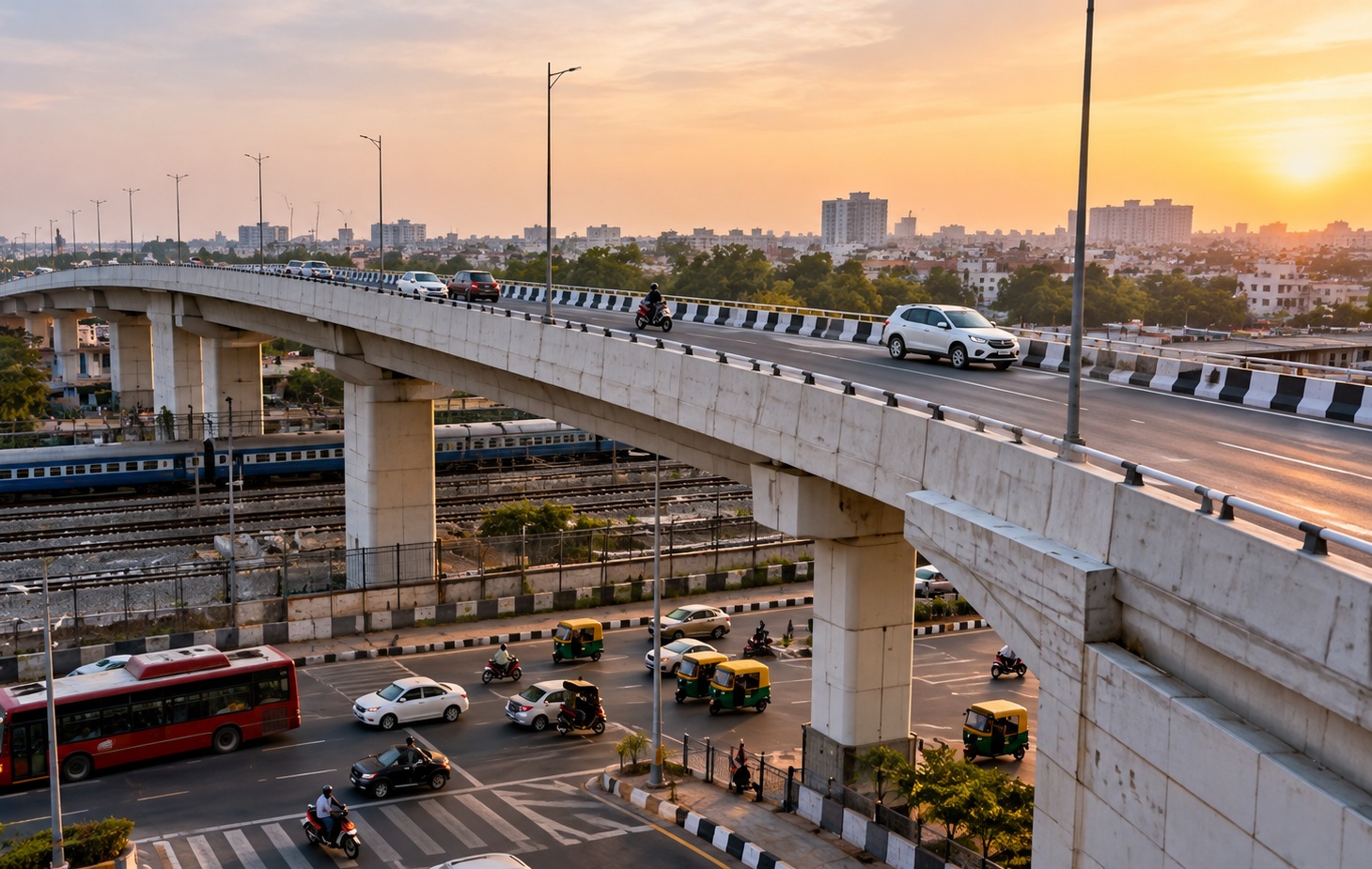
For commuters using the Makrba Railway Overbridge in Ahmedabad, the problems with the bridge are no longer just a matter of daily inconvenience. They have now become a question for the Ahmedabad Municipal Corporation (AMC) as well.
The civic body is set to study the defects and problems reported on the overbridge. But the move has already raised eyebrows because the same consultant agency that was involved in preparing the bridge has reportedly been asked to study the problems with it.
This has led to an obvious question: Can the agency that designed the bridge also be the one to examine what went wrong?
For many people, it feels like asking the student to check their own answer sheet.
A ₹96 crore bridge that took six years
The Makrba Railway Overbridge was built at a cost of more than ₹96 crore. What was originally expected to be completed in about four years reportedly took nearly six years.
Even after its completion, the bridge has remained surrounded by questions.
One of the main concerns is its design and the way the bridge connects with the road network. Instead of providing a smoother solution around the overbridge, the structure reportedly ends directly at a four-road junction. For a regular commuter, the problem is easy to understand.
A bridge is supposed to make traffic movement easier. But if vehicles coming off the bridge reach a busy junction without enough room for smooth movement, the chances of congestion and accidents can increase.
The concern is not only about what is happening today. It is also about what may happen as traffic increases in the coming years.
Why was this not noticed earlier?
This is where the bigger question comes in. The concerns being raised now are not about a small repair or a minor maintenance issue. They relate to the planning and design of a major public infrastructure project that cost crores of rupees.
The criticism is that these issues should have been identified while the bridge was being planned and designed, rather than after the project was completed and people started facing problems.
The bridge has already taken significantly longer than initially expected. Now, after spending more than ₹96 crore, the civic administration is once again looking into its design and shortcomings.
For citizens, this naturally raises concerns about how such projects are planned, checked and approved.
Consultant asked only for an explanation
Instead of immediately taking strict action, the municipal administration has reportedly sought an explanation from the consultant agency, DELF.
The agency has been asked to clarify the reasons behind the issues. Based on its response, the municipal authorities are expected to decide how the problems should be addressed. This approach has become another point of criticism.
The question being asked is simple: if there are serious concerns about the design or planning of the bridge, should the same consultant involved in the project be given the responsibility of examining the shortcomings? Critics see this as a conflict of responsibility.
‘Let the matter continue until people forget’
There is also growing frustration among local residents over the way the issue is being handled. The feeling among critics is that the civic administration is taking too long to address a problem that should have been dealt with earlier. With every passing day, there is a fear that the issue could simply remain under discussion until public attention moves elsewhere.
In simple terms, people want to know who is responsible, what went wrong and who will fix it.
The bigger issue is accountability
The Makrba overbridge is ultimately not just about one bridge. It raises a wider question about how public infrastructure projects are planned and monitored. When a project costs over ₹96 crore and takes nearly six years to complete, citizens expect the final structure to solve traffic problems, not create new ones.
If problems in the design are identified after completion, there should be a clear and independent assessment of what went wrong.
The immediate task for the AMC is therefore not just to find a technical solution. It also needs to address the issue of accountability.
Also Read: Bomb Threat Or Smuggling Tactic? Report Finds Sharp Rise In Airport Threats