

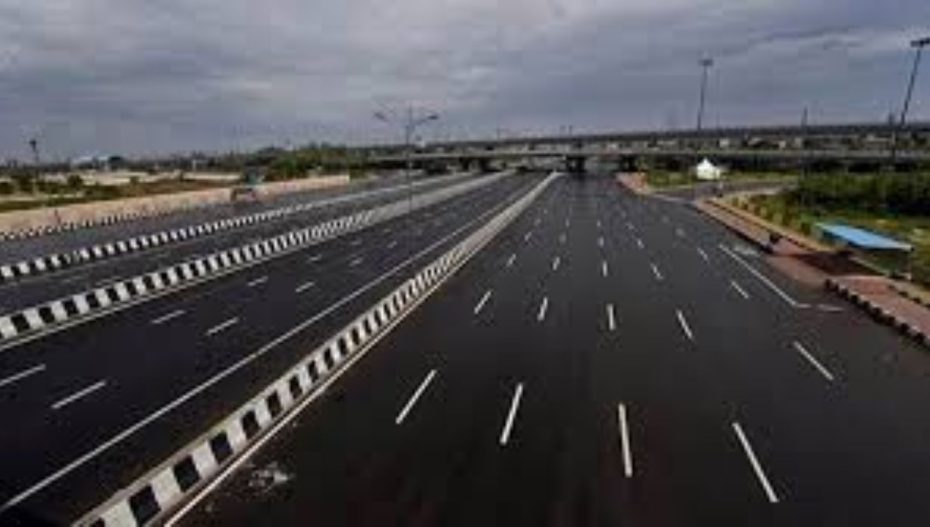
This expressway was meant to reduce travel time and boost commerce. It has undergone degeneration primarily on account of stalled construction. What is more worrying is that it has become a reliable passage to sneak liquor in Gujarat.
A national daily, attributing police data, shows that since parts of the expressway opened till Gujarat in August, the corridor has become a preferred route for bootleggers.
In three months, the Dahod district police seized liquor worth Rs 10 crore from vehicles using the expressway.
Smugglers view the expressway as an easier path to bring liquor into the state. Recently, there was a coordinated interstate effort to crack down on the cartel before the stash arrived in Gujarat.
For a background, the three troubled packages — numbers 8 (Jujuwa-Gandeva), 9 (Karvad-Jujuwa) and 10 (Talsari-Karvad) — were awarded to RSIIL in May, July and March of 2021 respectively. Work has barely moved on these stretches, even as other sections in Gujarat are close to completion.
The National Highways Authority of India (NHAI) reportedly scrapped two of these contracts in March 2023 on account of delays.
Fresh tenders were floated. RSIIL bid again and emerged as the lowest bidder. The contracts were re-awarded in November 2023.
A Ministry of Road Transport and Highways (MoRTH) official lamented to the media outlet that RSIIL should not have got the contract again.
A senior NHAI official, however, told the media house they could not stop the company from participating in the tender, that RSIIL quoted the lowest amount and was declared L1, and that the rule was that L1 should be declared the winner.
NHAI officials now say notices may be issued to RSIIL. This could even lead to termination of the contract. Officials cited non-performance, contractual disputes and litigation as reasons for the delay.
RSIIL has blamed NHAI. Navjeet Gadhoke, Director, RSIIL, was quoted as saying that the delay was due to non-provision of land by NHAI. He also said the termination of the two packages was illegal. He said that after rebidding the same works again, NHAI had no option but to give these to RSIIL as there was no default by the contractor.
NHAI officials said in cases of repeated delays, the authority can issue a cure period notice. This allows a contractor time to fix breaches before stricter action such as termination, debarment or blacklisting.
While construction lags on key Gujarat stretches, law enforcement agencies are grappling with another fallout of the partially operational expressway.
The eight-lane corridor aims to reduce travel time between Delhi and Mumbai to 12.5 hours. But police say it is also allowing liquor smugglers to move unchecked into Gujarat, the only prohibition state along the route.
More data shared by Dahod district police shows that between September 1 and November 30, the Local Crime Branch (LCB) intercepted 16 vehicles smuggling liquor into Gujarat using the expressway. Over 7,000 cartons of Indian Made Foreign Liquor (about 1.8 lakh units) were seized.
Sanjay Gameti, Police Inspector, Dahod LCB, told the national newspaper that the liquor was mostly routed through Haryana and Punjab, using the now operational and unmanned Delhi-Madhya Pradesh stretch.
He said that since the Bharatmala stretch from Delhi to Thandla in Jhabua district of Madhya Pradesh became operational this year, liquor smugglers had been using the route to enter Gujarat, that vehicles travelled undetected up to Thandla by the Bharatmala, then went through Meghnagar in MP towards Gujarat, and entered the state at Khangela in Dahod under the jurisdiction of the Katwara police station.
The latest seizure was on December 1. Bootlegged IMFL in cartons marked ‘Royal Challenge’ was recovered. Two people from Rajasthan were arrested.
Police said liquor was concealed in oil tankers, liquid cement tankers, sealed container vans and even under cattle feed. Gameti said many different types of modus operandi were observed and that since bootleggers were aware Gujarat has a strict prohibition law, the stash was concealed.
The scale of seizures on the expressway stands out. Since January this year, Dahod district recorded around 5,000 prohibition cases with total seizures worth Rs 50 lakh. In contrast, liquor seized from expressway-linked cases alone was worth Rs 10 crore.
Gameti said these 5,000 cases included those booked by local police stations in their respective jurisdictions, including cases involving individuals found breaking the law, and that for the district police, seizures from the expressway corridor were significant, especially since all 16 interceptions were of vehicles headed for destinations in Gujarat and not passing through the state.
The Dahod police also recently seized poppy straw (posh doda) worth Rs 14 lakh that was being smuggled into Gujarat.
An NHAI official said enforcement was outside the authority’s scope and explained that as per expressway policy, interstate check-posts are not part of the project. The official said local police, the excise department and the Regional Transport Office can set up check-posts and enforce law outside the Right of Way of the expressway and can also deploy squads for checking vehicles.
Gameti pointed out that while Madhya Pradesh and Rajasthan do not ban alcohol, state highways have interstate excise check-posts. He said there were no interstate check-posts so far on the Bharatmala corridor, that it was a faster route as it is an expressway, and that although the stretch from Thandla to Gujarat is yet to be completed, the operational patch had become an escape route for bootleggers.
Another cop revealed that while there are no check-posts on the expressway, police and excise departments repeatedly deploy flying squads in Rajasthan and Madhya Pradesh to intercept smugglers heading towards Gujarat.
What is this Expressway?
Part of the Bharatmala Pariyojana, the 1,386-km Delhi-Mumbai Expressway passes through Delhi, Haryana, Rajasthan, Madhya Pradesh, Gujarat and Maharashtra.
It is divided into 53 packages. Gujarat has 16 packages across two sections: MP to Vadodara and Vadodara to Virar.
A stretch of about 426 km of the expressway passes through Gujarat. The MP-Vadodara section is 147.5 km long. The Vadodara-Virar section spans 275 km. Parts of both are operational.
The three stretches, together measuring just 87 km, are on the Vadodara-Virar section in Gujarat. They were awarded to Pune-based Roadway Solutions India Infra Ltd (RSIIL) in 2021. Less than 20 per cent of the work has been completed in nearly four years, derailing the larger Rs 1.04 lakh crore project, officials said.
Once completed, the Delhi-Mumbai Expressway is expected to cut the distance between Delhi and Jawaharlal Nehru Port in Mumbai by 180 km and reduce travel time by up to 50 per cent. Of the total project cost of Rs 1,03,636 crore, Rs 71,718 crore has already been spent. Sections such as Delhi-Lalsot and parts of Gujarat and Rajasthan are operational.
Also Read: Gujarat Linked To Delhi-Mumbai Expressway Delay https://www.vibesofindia.com/gujarat-linked-to-delhi-mumbai-expressway-delay/