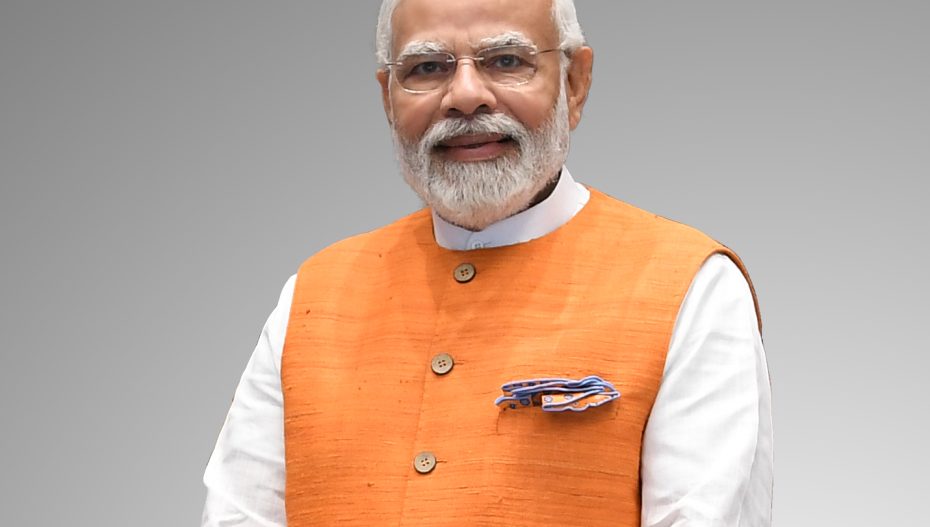
Prime Minister Narendra Modi has become the longest-serving head of government in the country, completing 8,931 days in office and surpassing the previous record held by Pawan Kumar Chamling of Sikkim.
It is a record measured by the narrowest of margins—one day. But behind that single day lies nearly a quarter century of uninterrupted executive authority, spanning Modi’s tenure as Chief Minister of Gujarat and his years as Prime Minister. Few political careers in India—or in any democracy—have sustained that kind of continuity.
The Benchmark: Pawan Kumar Chamling
Before Modi, the benchmark belonged to Pawan Kumar Chamling, who governed Sikkim from December 1994 to May 2019. Over five consecutive terms, he accumulated 8,930 days in office—the longest tenure of any Chief Minister in India’s history.
Chamling’s legacy was defined not by national prominence but by consistency and policy focus. Under his leadership, Sikkim became India’s first fully organic state and developed a reputation for stability and environmental governance. His record, built over 25 uninterrupted years, appeared unlikely to be surpassed—particularly in a political system marked by electoral volatility.
And yet, it has been—by a leader whose trajectory unfolded on a vastly different scale.
Origins: From Vadnagar to the Party Ranks
Narendra Modi was born in 1950 in Vadnagar, Gujarat, into a modest family. His early life—often recounted through the image of a boy assisting at his father’s tea stall—has since become central to his political narrative especially after he became the Prime Ministerial candidate of the BJP.
He entered public life through the Rashtriya Swayamsevak Sangh (RSS), joining as a young volunteer and later becoming a full-time organiser. By the mid-1980s, he had transitioned into the Bharatiya Janata Party (BJP), where he built his reputation not as a mass leader initially, but as a strategist and organisational operator.
These formative years were largely invisible to the public—but they shaped the political discipline and network that would later define his ascent.
2001: An Unexpected Elevation
Modi’s rise to executive office was neither gradual nor inevitable. He had become a vital part of RSS in Gujarat in the late 80’s. The first BJP government in Gujarat was formed in 1995 but it had to quit following the now infamous Khajuraho rebellion of Shankersinh Vaghela who eventually floated his own party and became the Chief Minister. However, after Vaghel’a revolt as a compromise formula, Narendra Modi was banished from Gujarat. This was a difficult period for him but it shaped him immensely as he stayed in Delhi.
In October 2001, amid political and administrative challenges in Gujarat, the BJP leadership replaced the incumbent chief minister with Modi, who had never before held elected office.
Gujarat was recovering from the devastating Bhuj earthquake earlier that year.
2002: Controversy and Consolidation
In February 2002, the burning of Sabarmati Express coach in Godhra triggered widespread communal violence across Gujarat. The riots that followed resulted in over a thousand deaths and large-scale displacement, with Muslims comprising the majority of victims. Modi’s handling of the crisis drew intense and sustained criticism from political opponents, civil society groups, and international observers. Allegations ranged from administrative failure to complicity—charges he consistently denied.
Multiple investigations were conducted over the years. A court-monitored Special Investigation Team did not find sufficient evidence to prosecute him, a conclusion that his supporters view as exoneration and his critics continue to contest.
Politically, however, the aftermath did not weaken him. In elections held later that year, Modi secured a decisive victory, reinforcing his position in Gujarat’s politics. Polarisation became the central theme of Gujarat politics.
Gujarat Years: Growth and Debate
From 2001 to 2014, Modi remained Chief Minister of Gujarat, shaping a governance model that would later define his national appeal.
The state recorded strong economic growth, driven by industrial expansion, infrastructure development, and policies aimed at attracting investment. Gujarat emerged as one of India’s most business-friendly states during this period.
At the same time, critics highlighted gaps in social indicators such as nutrition, health, and education. The contrast between economic performance and human development became a recurring theme in assessments of his governance.
These dual narratives—of growth and inequality—accompanied Modi onto the national stage.
2014 and After: National Dominance
In 2013, Modi was named the BJP’s prime ministerial candidate, signalling a decisive shift within the party. In the 2014 general election, he led the BJP to a majority—the first single-party mandate in three decades.
He was re-elected in 2019 with an even stronger mandate. In 2024, despite the BJP falling short of a full majority, Modi returned as Prime Minister for a third consecutive term with coalition support—matching a record previously achieved only by Jawaharlal Nehru.
Across these years, his leadership has been marked by centralisation of authority, a strong executive style, and a sustained electoral connect.
The Meaning of 8,931 Days
The number itself is stark: 8,931 days—over 24 years of continuous governance. It represents endurance in a political system defined by frequent change and electoral uncertainty.
But duration alone does not define a legacy. Chamling’s years in office produced a model of environmental governance in a small state. Sikkim became India’s first fully organic State. Modi’s tenure, by contrast, has unfolded on a national and global stage—reshaping India’s politics, economy, and institutional debates in ways that remain actively contested. For supporters, the record reflects stability, decisiveness, and political dominance. For critics, it raises questions about centralisation of power and the health of democratic institutions.
An Unmatched Continuity
What remains indisputable is the continuity. A generation of Indians has grown up with Narendra Modi in executive office—first in Gujarat, then in New Delhi.
Today on March 22, 2026, that continuity crossed a threshold no other leader in independent India has reached.
Today it is 8,931 days—and counting.
Also Read: Prime Minister Narendra Modi Says Country Has Broken Decades-Old Shackles https://www.vibesofindia.com/prime-minister-narendra-modi-says-country-has-broken-decades-old-shackles/