

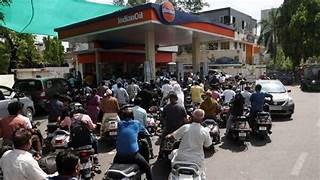
Amid fears of a fuel price surge triggered by the ongoing US–Israel conflict with Iran and tensions around the Strait of Hormuz, the government on Friday reduced excise duty on petrol and diesel by ₹10 per litre each. This brings central taxes down to ₹3 per litre on petrol and effectively zero on diesel.
However, consumers may not see an immediate drop in pump prices. Industry sources indicate that the benefit is likely to be absorbed by oil marketing companies (OMCs) to offset mounting losses, as global crude prices remain elevated.
OMCs are reportedly incurring losses of nearly ₹48.8 per litre on fuel sales, driven largely by a sharp spike in Brent crude prices. The global benchmark has surged past $100 per barrel, following geopolitical disruptions in West Asia and partial restrictions in the Hormuz passage.
Petroleum Minister Hardeep Singh Puri said international crude prices have jumped from around $70 to nearly $122 per barrel in a month. He noted that fuel prices have risen globally—by 30–50% in Southeast Asia, around 30% in North America, 20% in Europe, and up to 50% in parts of Africa.
“The government had two choices—either pass on the full burden to citizens like many countries have done or absorb the shock to protect Indian consumers,” Puri said, adding that India has continued to cushion domestic prices despite global volatility since the Russia-Ukraine conflict.
The duty cut also follows recent price hikes by private fuel retailers, reflecting the stress in the sector.
The geopolitical crisis has severely disrupted oil and gas flows from West Asia. The Hormuz Strait remains a critical artery, through which roughly 20–25 million barrels of crude oil and significant volumes of gas move daily under normal conditions.
India remains heavily dependent on this route, with nearly 40–50% of its crude imports—around 2.2 to 2.8 million barrels per day—passing through Hormuz. Additionally, 16–17% of LNG imports come from Qatar and the UAE, alongside substantial LPG supplies used by over 33 crore households.
Despite concerns, the government has maintained that there is no immediate supply risk. Officials say India currently has about 60 days of crude oil reserves and around 30 days of LPG supply. Reports of shortages have been dismissed as misinformation aimed at triggering panic buying.
Efforts are also underway to diversify import sources and strengthen supply resilience. According to Minister Suresh Gopi, India’s strategic petroleum reserves currently hold about 3.37 million tonnes—roughly two-thirds of capacity—while total fuel reserves stand at approximately 74 days, including stocks held by OMCs.
The government has also moved to boost domestic LPG production by 25%, reiterating that there is no need for public concern over fuel availability.
Also Read: How Late-Night Phone Call Between Trump And Netanyahu Triggered Strike On Iran https://www.vibesofindia.com/376620-2/