


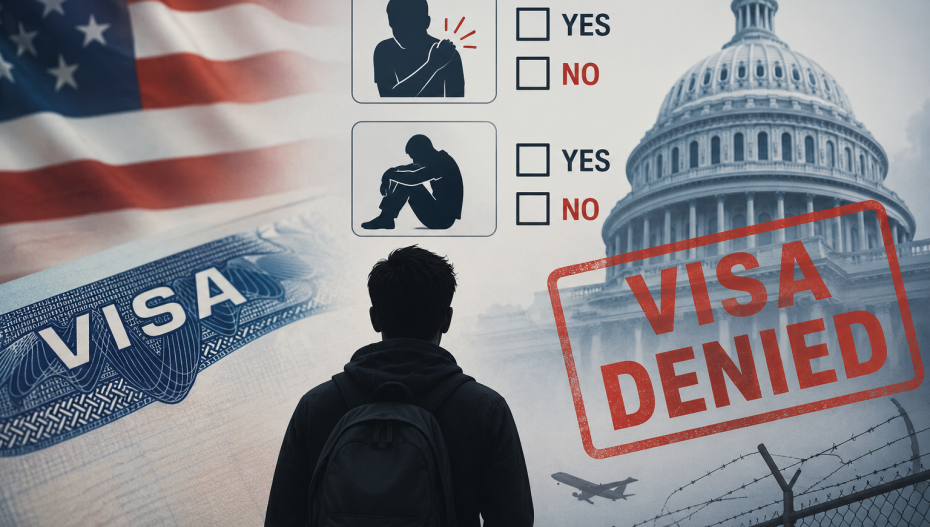
The United States has quietly introduced two new questions for non-immigrant visa applicants that immigration experts say could have major implications for future asylum seekers, including thousands of Indians heading to America on tourist, student and work visas.
Applicants are now being asked during the visa process:
- Have you experienced harm or mistreatment in your country of nationality or last habitual residence?
- Do you fear harm or mistreatment if you return to your country of nationality or permanent residence?
According to immigration lawyers, answering “yes” to either question could immediately raise red flags during visa interviews and potentially result in denial of non-immigrant visas.
However, the bigger concern lies in the opposite scenario: applicants who answer “no” to secure visas may later face credibility challenges if they apply for asylum after entering the United States.
The development is especially significant for Indians because asylum claims from Indian nationals in the US have surged sharply over the last few years.
Sharp Rise in Indian Asylum Cases
According to recent US immigration data, more than 41,000 Indians applied for asylum in the United States in 2023, making India one of the fastest-growing sources of asylum seekers.
A large number of these applicants reportedly came from Punjab and Gujarat, regions that have witnessed a significant rise in irregular migration networks, human smuggling routes and illegal border crossings into the United States through Latin America and Mexico.
US authorities have repeatedly flagged increasing numbers of Indian migrants attempting to enter through the southern border, often after long and dangerous journeys through countries such as Panama, Nicaragua and Mexico.
Immigration experts believe the new visa questions are specifically designed to identify individuals who may intend to seek asylum after entering the US legally.
How the New Questions Could Affect Visa Applicants
Ellen Freeman, a Pittsburgh-based immigration lawyer, said American consular officers are likely to apply stricter scrutiny under Section 214(b) of the US Immigration and Nationality Act.
This provision assumes that every non-immigrant visa applicant — including tourists and students — is potentially intending to immigrate permanently unless they can convincingly prove strong ties to their home country.
“US consular officers will be instructed to rigorously apply Section 214(b),” Freeman said.
Under the law, applicants must demonstrate that they intend to return home after temporary travel to the United States. If consular officers suspect a person may remain in the country permanently or seek asylum later, visas can be denied.
For skilled workers applying under H-1B or L-1 categories, refusals could also arise under Section 221(g), which allows temporary refusal or additional administrative processing.
The Asylum Trap Concern
Immigration lawyers say the new system creates a potentially serious dilemma for visa applicants.
If applicants acknowledge fear or mistreatment in their home country during visa interviews, they risk immediate rejection because officers may conclude they intend to immigrate permanently.
But if they deny any such fear to obtain the visa and later apply for asylum in the US, authorities may challenge the credibility of their asylum claim using their earlier statements during the visa process.
“An applicant who receives a visa based on a negative response to the questions and later applies for asylum in the US could be challenged on the veracity of their claim,” Freeman warned.
Legal experts say such inconsistencies can severely weaken asylum applications because credibility is one of the central pillars of asylum law in the United States.
Why Gujarat and Punjab Are Under Focus
US immigration authorities have increasingly focused on migration patterns emerging from Punjab and Gujarat because both states have seen large-scale outbound migration to North America over the last decade.
In Gujarat, particularly in districts such as Mehsana, Gandhinagar and parts of Saurashtra, migration to the US has become deeply tied to social mobility and economic aspiration. Entire local networks often assist individuals travelling abroad through legal, semi-legal or illegal channels.
Punjab has similarly witnessed widespread migration trends, with some families reportedly spending massive sums to send relatives abroad through “donkey routes” involving multiple countries and illegal border crossings.
American authorities have grown concerned that many individuals entering on temporary visas may later transition into asylum claims, especially amid backlogs in immigration courts that allow applicants to remain in the country for years while cases are processed.
Larger Immigration Crackdown
The additional visa screening questions are being viewed as part of a broader tightening of US immigration controls amid rising political pressure over illegal immigration and asylum abuse.
In recent years, US authorities have introduced stricter vetting procedures, expanded social media scrutiny, increased visa interview checks and intensified monitoring of fraudulent documentation.
Immigration analysts say the latest questions also reflect growing concern within Washington that asylum protections are increasingly being used as alternative migration pathways rather than strictly for persecution-related claims.
For Indian applicants — especially students, tourists and temporary workers — the changes could lead to tougher visa interviews and more detailed questioning about family ties, employment, financial stability and long-term immigration intentions.
The new measures may also intensify anxiety among legitimate applicants worried that even routine responses during visa interviews could later affect future immigration options in the United States.
Also Read: Want US Visa? Change Your Social Media Profiles To Public Setting. https://www.vibesofindia.com/want-us-visa-change-your-social-media-profiles-to-public-setting/