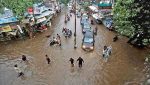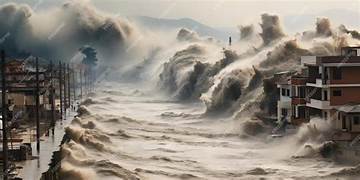
Gujarat’s coastline has been hit by at least two massive tsunamis, one about 1,000 years ago and another nearly 6,000 years ago. This is not folklore. It’s science, and the evidence has been sitting in beach sand all along.
Researchers from MG Science Institute in Ahmedabad made this finding using a technique called Optically Stimulated Luminescence, or OSL. According to reports, the study has been published in Marine Geology, a journal by Elsevier. It is authored by Drashti Gandhi and Paras Solanki.
Under normal conditions, sand grains along a coastline are regularly exposed to sunlight and reset. A tsunami disrupts that cycle violently, burying sediment too fast for light to complete the reset. That suspended moment, preserved in the grain, is what OSL reads.
That is how the two tsunami events were dated.
The study had three specific research aims. First, to test whether OSL can reliably identify tsunami deposits. Second, to accurately determine their age. And third, to assess which statistical methods produce the most dependable results.
Gujarat has India’s longest coastline at 1,600 km. Yet its history of extreme coastal events has seen far less scientific investigation than the eastern coast. The 2004 Indian Ocean Tsunami changed research priorities on that side. The western coast has largely waited.
This study is a step towards filling that gap, and the sand, it turns out, has had the answers for centuries.
Also Read: Strong Quake Jolts Taiwan, Tsunami Alert In Japan, Philippines https://www.vibesofindia.com/strong-quake-jolts-taiwan-tsunami-alert-in-japan/