On the first anniversary of the tragic Air India Flight AI-171 crash, the Federation of Indian Pilots (FIP) raised serious concerns about the investigation into the accident. The pilots’ body questioned whether the investigation team has enough experts with experience on the Boeing 787 Dreamliner, the aircraft involved in the crash.
The organisation also urged the Ministry of Civil Aviation not to release another interim report, saying it would only create more confusion and speculation. Instead, it demanded that the authorities publish the final report backed by complete evidence.
Why are pilots raising concerns?
Speaking in Ahmedabad, Captain C.S. Randhawa, President of the Federation of Indian Pilots, said that such a major accident should be investigated by people who have direct experience working on Boeing 787 aircraft.
According to him, the investigation team has not clearly disclosed who all the subject matter experts are or what expertise they bring to the probe. Captain Randhawa was in Ahmedabad to meet the families of those who lost their lives in the crash on June 12 last year.
The crash that shocked the nation
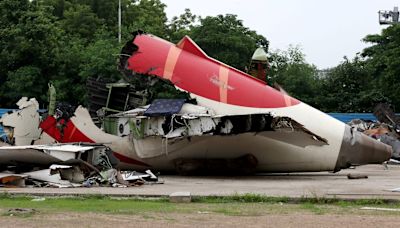
On June 12, 2025, Air India Flight AI-171, travelling from Ahmedabad to London Gatwick, crashed just 32 seconds after takeoff from Sardar Vallabhbhai Patel International Airport.
The aircraft crashed into the hostel complex of B.J. Medical College, turning what should have been a routine international flight into one of India’s worst aviation disasters.
Government says investigation is in final stages
Earlier this year, on May 8, Union Civil Aviation Minister Ram Mohan Naidu had said that the investigation was in its final stages and could be completed within a month.
He stressed that the Aircraft Accident Investigation Bureau (AAIB) is conducting an independent investigation and that the government is providing all necessary support without interfering in the process.
The Minister also said that because the flight carried international passengers, the report must be completed with full transparency and proper procedure.
“No more interim reports”
Captain Randhawa believes releasing another interim report would do more harm than good. According to him, if investigators do not provide clear conclusions or complete evidence, people will begin making their own assumptions about what happened. He argued that another interim report could strengthen theories that blame the pilots without presenting the full picture.
“What will they say in another interim report?” he asked. “If they are not releasing the complete cockpit voice recorder transcript or the full flight recorder data, then it will only lead to more speculation.”
Human error or technical failure?
One of the biggest debates surrounding the crash is whether it was caused by pilot error or a technical malfunction. Captain Randhawa said that the final report must clearly establish, through evidence, whether the incident resulted from human action or an electrical or system failure.
He revealed that the Federation has written several letters to the Ministry highlighting technical aspects that should be thoroughly investigated before any conclusion is reached.
“Turning off both fuel switches in one second is humanly impossible”
One of the strongest points raised by the pilots’ body relates to the preliminary findings suggesting that both engine fuel control switches moved to the cutoff position within one second. Captain Randhawa questioned this conclusion.
He said he has been a pilot examiner for over 30 years and that pilots are trained to follow a strict “challenge and response” procedure before shutting down an engine.
According to him, one pilot must announce the action while the other confirms it before the switch is operated. The same process is repeated for the second engine. He argued that this procedure makes it extremely difficult for both switches to be turned off within one second.
He also pointed out that the average human reaction time itself is around two seconds, making the sequence described in the preliminary findings difficult to understand.
“If the pilots actually performed these actions, then where is the recorded conversation?” he questioned.
Concerns over the investigation team
Captain Randhawa also questioned whether the current investigation panel has enough experienced aviation specialists. He referred to ICAO Annex 13, which recommends that accident investigations be conducted by independent and highly qualified experts.
According to him, some members of the current team have experience only with smaller aircraft and may not possess sufficient expertise on a Boeing 787 investigation. He noted that although the investigation system may be improved for future cases, those changes would not affect the ongoing AI-171 probe.
Will the pilots accept the final report?
The Federation says it is willing to accept the final report—but only if it is supported by solid evidence. Captain Randhawa stated that if the findings satisfy both the Federation and its legal experts, they will accept the conclusions.
However, if they believe important aspects especially the aircraft’s electrical systems, have not been properly examined, they are prepared to challenge the report before the Delhi High Court.
The bottom line
Nearly one year after the AI-171 tragedy, the investigation remains under intense scrutiny. While authorities say the probe is nearing completion, pilot representatives insist that only a transparent, evidence-based final report can answer the many questions that still surround one of India’s most devastating aviation disasters.
Also Read: 15 Families Chose Not To Take Back Their Loved Ones’ Belongings After Air India AI-171 Crash https://www.vibesofindia.com/air-india-ai171-crash-15-families-decline-loved-ones-belongings/