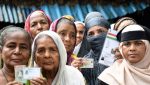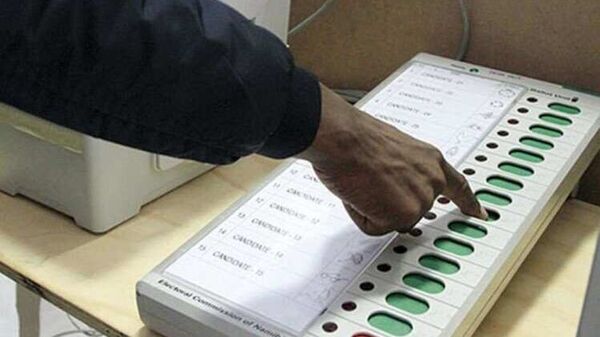
As Gujarat heads into its largest local body election, obscure parties that together collected Rs 4,300 crore are once again included on the candidate lists, yet the Election Commission remains silent.
Massive local elections are scheduled for Gujarat on April 26, with voting for 15 municipal corporations, 84 municipalities, 34 district panchayats, and 260 taluka panchayats across the state, which has been under single-party rule for nearly three decades.
In all, over 9,000 seats are at stake, making this one of the largest local governance elections the state has held. More than 40,000 candidates are in the fray across the State. The Model Code of Conduct is in force. Nomination papers have been filed, scrutinised and, where candidates chose to withdraw, withdrawn.
What remains is a candidate field of 1,760 contestants drawn from 892 party affiliations, contesting across wards where typically three to five names will appear on the ballot. Among those names are parties most Gujarat voters have never heard of. These are officially registered as political entities with the Election Commission of India, but are not recognised as state or national parties. In practice, their roles in elections have been marginal; they have seldom fielded candidates, won few votes, and invested very little in campaign activity.
Yet these same parties, according to a disclosure that drew national attention last year, collectively received thousands of crores of rupees in donations over a five-year period. They have offered no credible account of where that money went.
The Numbers That Do Not Add Up
According to the Gujarati newspaper Divya Bhaskar’s investigation, based on data from the Election Commission of India filings, 10 little-known political outfits registered in Gujarat received Rs 4,300 crore in donations between 2019-20 and 2023-24.
The ten parties are: Lokshahi Satta Party, Bharatiya National Janata Dal, Swatantra Abhivyakti Party, New India United Party, Satyavadi Rakshak Party, Bharatiya Jan Parishad, Gujarat Sarva Samaj Party, Sardar Vallabhbhai Patel Party, Bharatiya Rashtriya Morcha, and Loktantrik Jan Vikas Party.
What makes these figures extraordinary is the vast gap between donations received and reported spending. In three elections — the 2019 and 2024 Lok Sabha elections, and the 2022 Gujarat assembly election — these parties fielded only 43 candidates and received 54,069 votes. Their declared election spending was Rs 39.02 lakh, yet audits showed spending over Rs 3,500 crore. The gap between declared and audited expenditure is dramatic.
Party-wise, the numbers are stark: Swatantra Abhivyakti Party collected Rs 663 crore but spent Rs 12.18 lakh on elections; Bharatiya Jan Parishad took in Rs 249 crore and spent Rs 14.5 lakh; Saurashtra Janata Party received Rs 200 crore, spent Rs 1.47 lakh; Jan Man Party got Rs 133 crore, spent Rs 1.31 lakh; Garib Kalyan Party collected Rs 138 crore and spent Rs 3.27 lakh; Manavadhikar National Party received Rs 120 crore and spent Rs 82,000.
Three of the largest recipients — Bharatiya National Janata Dal, New India United Party and Satyavadi Rakshak Party — topped the national list of registered unrecognised political parties by donation volume.
At least one party, Satyavadi Rakshak Party, received hundreds of crores without submitting the PAN details required for large contributions. Audit reports showed much higher expenditure than declared, suggesting funds were diverted.
Gujarat-based parties also showed many common donors, identified by matching PAN numbers across filings, raising questions about whether the same contributors cycled money through multiple parties.
What the Candidate Lists Reveal
That both the Swatantra Abhivyakti Party and the New India United Party appear in the 2026 local body candidate lists is not incidental. It is, in fact, the mechanism. Registered unrecognised political parties in India occupy a specific legal category: they are registered with the Election Commission but do not meet the criteria for recognition as a state or national party.
That registration, however, confers one significant privilege: the ability to receive donations that qualify for tax deductions under Section 80GGC of the Income Tax Act. To maintain that registration, a party must periodically demonstrate it is contesting elections.
Fielding a handful of candidates in municipal ward elections — where scrutiny is low, constituencies are small, and most voters have no idea who is on whose ticket — is the most convenient way to keep that registration alive.
The presence of these parties on the 2026 ballot, therefore, is less about influencing local governance and primarily about maintaining their official registration. This activity enables them to receive donations under tax-deductible statutes, indicating that their primary functional role is to facilitate financial inflows rather than to engage in meaningful political competition.
The Political Backdrop
Gujarat has been BJP territory for 30 years without interruption. In the 2022 assembly elections, the party won 156 of 182 seats — the highest total ever recorded by any party in the state’s history — while the Congress fell to its lowest tally in three decades and the Aam Aadmi Party managed a mere five seats.
In the February 2025 local body elections, the BJP swept 60 of 68 municipalities and wrested at least 15 seats from the Congress, which could hold just one municipality across the entire state. Both Congress and AAP have announced they will contest the April 2026 elections independently, without any alliance, setting up a three-cornered fight in most wards.
The 2026 polls also introduce, for the first time, OBC reservation for the post of district panchayat president, with seven such positions reserved, a structural change that could alter local leadership patterns in ways that will matter well beyond this election cycle.
It is against this backdrop — a state where the principal opposition is weak, where the ruling party’s dominance is near-total, and where the institutional machinery of elections is conducted under national scrutiny — that the donation scandal acquires its specific weight.
No evidence has directly tied the BJP to the donations received by the ten parties.
But the fact that the opaque financial ecosystem in question is centred on Gujarat, the Prime Minister’s home state, has meant that questions about who funds these parties, and to what end, carry a particular political charge.
The Silence That Speaks
Congress Leader of Opposition Rahul Gandhi had publicly demanded a probe from the Election Commission of India, asking, “Where did these thousands of crores come from? Who is running these parties? And where did the money go? Will the Election Commission investigate — or will it ask for an affidavit here too? Or will it simply change the law so that this data can also be hidden?”
The Election Commission has not responded. No major political party other than the Congress has spoken publicly on the matter.
Of the 10 parties with the largest donations nationally, at least 8 have faced income tax audits or investigations. All five Gujarat-based parties on the list have been surveyed by tax authorities. Yet no prosecutions have followed, no registrations have been cancelled, and no public accounting has been demanded.
As Gujarat’s voters prepare to choose their ward councillors and taluka panchayat members on April 26, the parties they will find on some ballots include outfits that received more money in five years than the Congress declared nationally in the run-up to a general election — and spent almost none of it on politics as voters would recognise the term.
The Election Commission’s calendar moves forward. The time has come for transparent answers and decisive action—authorities must address these financial irregularities head-on and restore confidence in the democratic process. not.
Also Read: From Khaki To Saffron: Gujarat’s IPS-Politics Journey as a Template https://www.vibesofindia.com/gujarat-khaki-to-kesari-ips-politics-pipeline/