


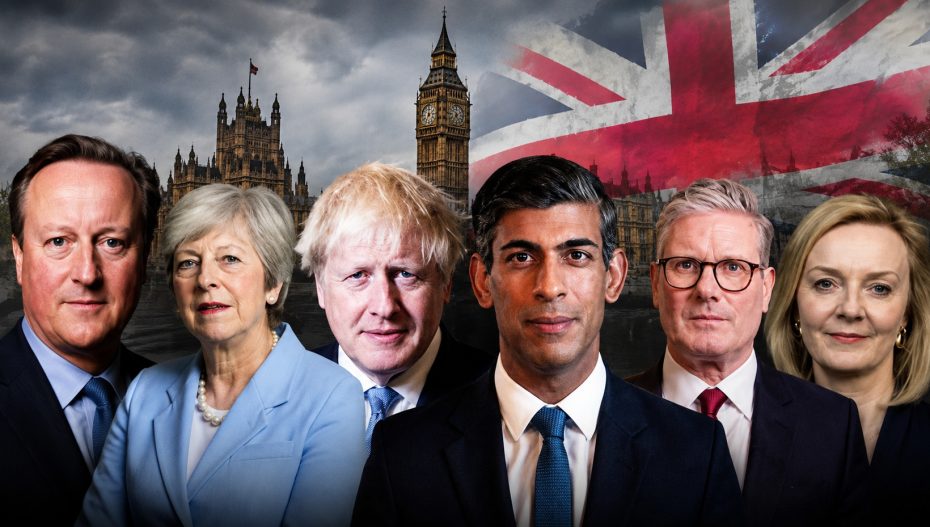
British Prime Minister Keir Starmer is expected to announce his resignation on Monday and outline a timetable for his departure, according to reports. The development comes amid growing pressure within the Labour Party, following senior resignations, disappointing local election results, and increasing calls from MPs for a leadership transition.
The United Kingdom is facing a period of political instability that has seen prime ministers come and go at an unusual pace. If Starmer leaves office and Labour installs a successor without a general election, Britain will have had six prime ministers in just eight years.
In most democracies, such rapid leadership turnover would be considered extraordinary. In modern Britain, however, it is beginning to feel routine. Since the Brexit referendum in 2016, a succession of prime ministers have entered Downing Street promising stability and solutions, only to leave office amid political crises, economic turmoil, scandals, internal rebellions, or electoral defeat.
The Revolving Door of Downing Street
Since 2016, the UK has seen a rapid turnover of leaders:
- David Cameron (2010–2016)
- Theresa May (2016–2019)
- Boris Johnson (2019–2022)
- Liz Truss (September–October 2022)
- Rishi Sunak (2022–2024)
- Keir Starmer (2024–Present)
Each leader entered office promising solutions and stability, but each eventually left or now faces pressure amid political crises.
David Cameron and the Brexit Gamble
The cycle began with David Cameron, who called the Brexit referendum in 2016. The vote resulted in Britain choosing to leave the European Union, and Cameron resigned after losing the referendum he had called.
His departure set off a chain reaction that continues to shape British politics.
Theresa May’s Impossible Task
Theresa May inherited the challenge of delivering Brexit. She attempted to negotiate Britain’s withdrawal from the European Union and secure parliamentary approval for her deal.
However, she failed three times to get her agreement through the House of Commons. Unable to deliver on the central promise of her premiership, May resigned in July 2019.
Boris Johnson’s Rise and Fall
Boris Johnson replaced May and promised to “get Brexit done.” He secured a large election victory in 2019 and initially appeared capable of bringing stability.
But his government was later rocked by scandals, including controversy surrounding gatherings in Downing Street during COVID-19 lockdowns. As ministers resigned and pressure mounted, Johnson was forced out by members of his own party in July 2022.
Liz Truss and the 44-Day Premiership
Liz Truss became prime minister in September 2022 but lasted only 44 days, making her the shortest-serving prime minister in British history.
Her mini-budget, which included unfunded tax cuts, triggered turmoil in financial markets. The pound fell sharply and mortgage rates surged. After reversing many of her policies and dismissing her own chancellor, Truss eventually resigned.
Rishi Sunak’s Difficult Challenge
Rishi Sunak took office promising stability after the chaos of the Johnson and Truss years.
Although he managed to bring inflation down, he struggled to shake the perception that he had inherited a government already in decline. He later lost the 2024 general election to Keir Starmer’s Labour Party.
Why Is Keir Starmer Under Pressure?
Keir Starmer entered office as a calm and methodical alternative to years of Conservative turmoil. However, less than two years later, he finds himself facing serious political difficulties.
According to the reports, the immediate trigger was controversy surrounding the appointment of Peter Mandelson as British ambassador to Washington. Questions emerged over security vetting, and Mandelson’s links to the late sex offender Jeffrey Epstein became a public issue.
The controversy was followed by a wave of resignations. Starmer’s chief of staff Morgan McSweeney resigned, as did his communications director. Health Secretary Wes Streeting also resigned.
By mid-May 2026, more than 95 Labour MPs had reportedly called on Starmer to resign or set out a timetable for his departure.
Labour has also lost more than 30 councils in local elections, while confidence in Starmer’s leadership appears to be weakening.
Recent reports suggest Starmer could announce his resignation and outline a timetable for departure, although discussions were reportedly still ongoing.
The Common Thread
Looking at the departures and crises surrounding Britain’s recent prime ministers, a pattern emerges.
David Cameron promised a referendum that would settle divisions within his party, but it deepened them. Theresa May promised to deliver Brexit but could not secure parliamentary support. Boris Johnson promised integrity and stability after Brexit but became engulfed in scandal. Liz Truss promised economic growth but instead triggered market chaos. Rishi Sunak promised trust and stability but failed to reverse his party’s decline.
According to the analysis, the problem is not simply individual failures. Britain’s political environment has become increasingly unforgiving, with party loyalty weakening and internal rebellions becoming more common.
Prime ministers can also be removed by their own parties without a general election, allowing leadership changes to happen quickly.
The Brexit Hangover
The analysis argues that no account of Britain’s political instability can ignore Brexit.
The 2016 referendum reshaped British politics and created divisions that continue to influence government. Successive leaders have struggled to manage the consequences of Britain’s departure from the European Union.
Rather than bringing closure, Brexit became the defining issue around which political careers rose and fell.
A System Struggling for Stability
Britain once projected an image of political stability and continuity. Today, Downing Street appears increasingly like a revolving door.
Prime ministers arrive promising renewal and stability but often leave weakened by crisis, scandal, rebellion, or public dissatisfaction.
Whether Keir Starmer survives the current pressure or not, the broader question remains the same: why has one of the world’s oldest democracies become so prone to changing its leaders?
The answer may lie not only with individual prime ministers, but with a political system that appears increasingly unable to sustain stable leadership for long.
Also Read: Curacao Versus India: Our Football Problem Is Not Talent. It Is the Ecosystem https://www.vibesofindia.com/curacao-versus-india-our-football-problem-is-not-talent-it-is-the-ecosystem/