

Ahmedabad’s worsening air quality reached a disturbing milestone on December 31, 2025, underscoring how winter pollution in the city has intensified year after year.
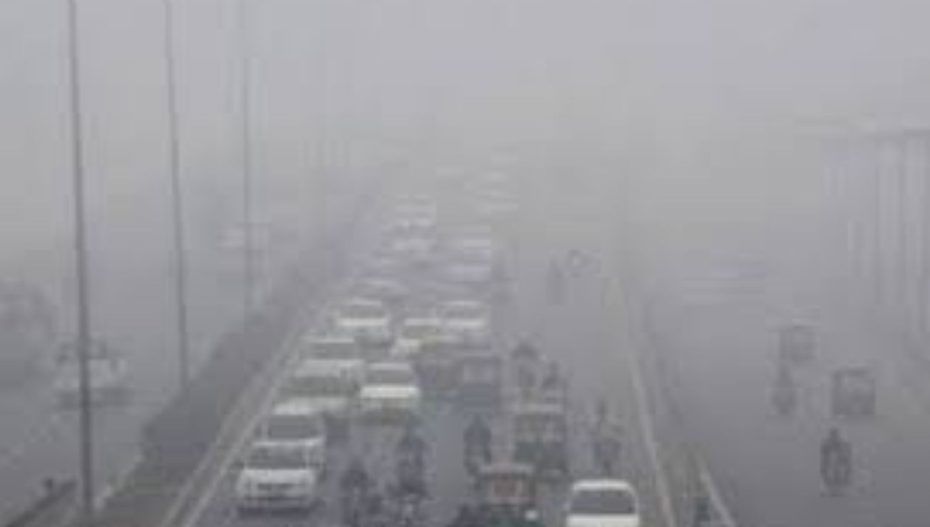
The city woke up that Wednesday cloaked in a thick gray haze, with the Air Quality Index (AQI) touching an unprecedented 429 at 8 AM, the highest level ever recorded since systematic AQI monitoring began.
Environmentalists blamed unplanned construction and traffic congestion for the spike. Talking to Vibes of India, environmentalist Mahesh Pandya said the city’s deteriorating air quality was driven primarily by poorly planned construction projects that have led to chronic traffic congestion and dust pollution. He alleged that construction activity is often undertaken without adequate planning and executed in a manner aimed at completion just ahead of elections.
Pandya said dust particles, traffic congestion, and the lack of adequate tree cover were the key contributors to the problem. While industrial pollution and a lack of civic sense among residents also play a role, he said the major concern remains unplanned construction and poor road conditions.
Citing Thaltej and Bopal as examples, he pointed out that despite the absence of industrial units in these areas, AQI levels remain alarmingly high. While wind direction can divert pollution, he said addressing unplanned construction is critical.
While several major cities across Gujarat also reported dangerously high pollution levels, Ahmedabad stood out for the severity and scale of deterioration. Gandhinagar recorded an AQI of 417, Surat 414, and Vadodara 401, all firmly in the hazardous category. Rajkot, though relatively better, still posted a worrying 374.
An AQI reading above 300 is classified as ‘hazardous’, while levels between 201 and 300 are considered ‘severe’, posing serious health risks to the general population.
Pollution data showed that particulate matter, especially PM2.5 and PM10, dominated the pollutant profile, remaining deep within hazardous limits throughout the morning.
Experts stressed that the smog blanketing Ahmedabad was far more than a visibility issue. According to historical records on AQI.in, the city’s previous highest AQI was 396 on December 23, 2021.
The December 31 reading of 429 marked a new and troubling peak. This is the worst air quality Ahmedabad has ever recorded, an expert noted, adding that such levels indicate a grave public health emergency.
Although Ahmedabad has crossed the AQI 300 threshold multiple times in recent winters, December 31 marked the worst day of the current season. Data from the past 45 days, starting November 15, show that the city experienced at least seven days with AQI levels exceeding 300, highlighting how prolonged and persistent the pollution episode has been this year.
The health implications were stark. As per AQI.in estimates, breathing Ahmedabad’s air on Wednesday was equivalent to smoking about 7.4 cigarettes in a single day, newspaper reports said.
A week of exposure translated to nearly 52 cigarettes, while a month in such conditions amounted to inhaling pollution comparable to 222 cigarettes.
Authorities advised residents to remain indoors as much as possible, wear N95 masks when stepping out, use air purifiers at home, and ensure vehicle cabin filters were clean.
Traffic congestion emerged as a key driver behind the spike. Ahmedabad adds an average of around 828 new vehicles every day, significantly increasing emissions. Traffic officials said pollution levels rose and fell in tandem with vehicular movement, pointing to a direct link between congestion and air quality deterioration.
Localised data highlighted just how extreme the situation became in certain pockets. In Thaltej, AQI crossed 400 as early as 6 AM, climbed to 467 by 7 AM, peaked at 494 around 9 AM, and then gradually fell to 265 by noon, still classified as ‘poor’.
Officials observed a brief dip in pollution levels around 5 PM., followed by another surge during evening rush hours.
Between 6 PM. and 9 PM, AQI rose again as traffic intensified, a trend worsened by New Year’s Eve celebrations that kept vehicles on the roads late into the night.
Government monitoring stations showed that AQI levels exceeded 400 across all parts of Ahmedabad between 7 AM and 10 AM.
Thaltej, particularly along SG Road, remained the worst-affected zone. In Juhapura’s Aeshan Park area, AQI peaked at 478 around 4 a.m., which officials attributed to the movement of heavy vehicles during the night. Ongoing construction activity, including road excavation near Iskcon and multiple bridge projects, further compounded emissions.
Healthcare professionals reported a noticeable rise in pollution-related ailments.
A national English daily quoted pulmonologist Dr Tushar Patel as saying that hospitals were seeing more patients with persistent cough, throat irritation, and breathing discomfort. “People with existing respiratory problems are especially vulnerable and must wear proper masks, particularly those who work outdoors. Polluted winter air can easily trigger bronchospasm,” he reportedly said.
Residents, too, felt the impact firsthand. Motera resident Shital Shah was quoted as saying that her mother-in-law developed a severe throat infection over the past two days. “Our air purifier usually shows indoor readings of 35 to 40, but it crossed 90 on Wednesday,” she said.
With PM2.5 and PM10 levels consistently in the hazardous range, December 31, 2025, served as a stark example of how Ahmedabad’s air quality has steadily worsened. The choking smog that has become a winter fixture is no longer just an environmental concern, it is a serious and escalating public health crisis.
Also Read: Is Mumbai Going The Delhi Way In AQI Matrix? https://www.vibesofindia.com/is-mumbai-going-the-delhi-way-in-aqi-matrix/